
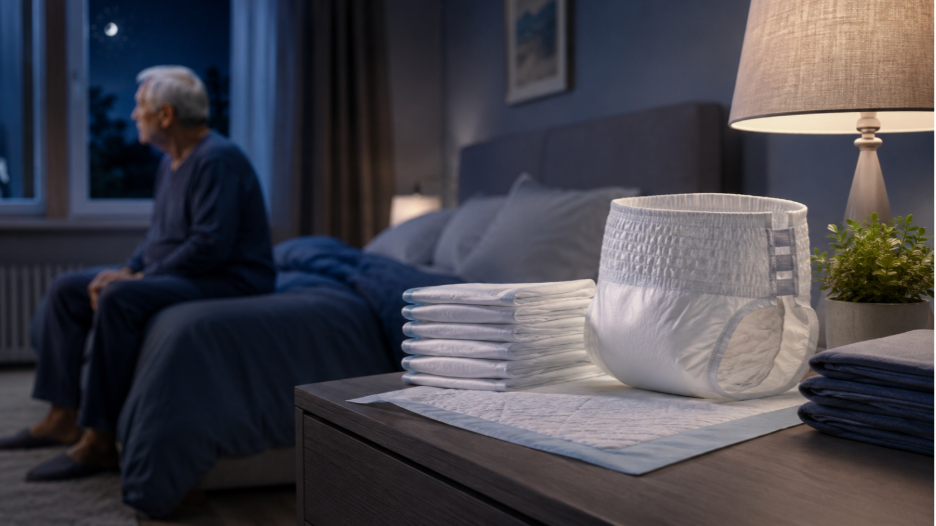

One of the most exasperating aspects of having Parkinson’s disease can be disrupted sleep. You can finally get into bed, only to wake up again and again with the urgency to urinate.
Absorbent products tend to be a significant component of nighttime management in such circumstances. Nevertheless, making the correct choice involves more than just selecting additional coverage. Absorbency capacity, moisture control, fit, and ease of use are some of the factors that can have a significant impact on comfort, skin health, and overnight reliability.
Due to the fact that nighttime bladder problems in Parkinson’s are usually associated with both functional and neurological difficulties, their treatment cannot be maintained only through a reactive method.
This article describes how one can strategically assess the absorbent solutions, ensure protection of the skin, and make more practical decisions regarding the nighttime management of the bladder.
Why Nighttime Urinary Problems are Different In Parkinson’s
Parkinson’s bladder symptoms at night are not an inevitable consequence of aging. In most instances, they are a consequence of neurological alterations that influence bladder control, urgency cues, and movement coordination. That is why the selection of suitable diapers for Parkinson’s patients should be considered as a part of a long-term night care plan and not a last-minute fix.
Parkinson’s may disrupt the communication of the brain with the bladder. Consequently, the bladder can fill up sooner than usual even without containing a lot of urine. This tends to cause nocturia, frequent nighttime urination, and sudden urgency.
The symptoms of movement also pose an additional challenge. Although you can notice the urge in time, stiffness, freezing, slowed transfers, or poor balance might become an obstacle to accessing the bathroom. As a result, there is leakage not due to lack of awareness, but due to the impossibility of mobility to correspond to urgency.
Nighttime symptoms can also be affected by the time of medication. Some individuals experience fluctuations in motor control depending on dosing schedules, which can make overnight bathroom trips less predictable.
The awareness of these intersecting aspects can help in understanding why the selection of products should not be based solely on absorbency but on their functionality.
Choose On Overnight Performance, Not Daytime Assumptions
Not every absorbent product is equally effective overnight. A solution that is satisfactory during daytime activity might be unsatisfactory during long-period nighttime wear, particularly when movement is restricted, and product replacement is less viable.
Absorbency capacity should be your first consideration. Overnight management usually needs products that are able to manage extra fluid volume over a longer duration. Products that lack adequate capacity can result in leakage, disturbed sleep, and unwarranted changes of bedding.
Moisture handling is also important. A liquid-absorbing product that keeps the skin moist may cause discomfort and predispose the skin to breakdown. Thus, practical aspects such as moisture-wicking layers and fluid distribution design are meaningful practical considerations.
Fit is equally critical. Even highly absorbent products may leak when there are gaps around the legs or the waist. Containment performance is particularly important since body positioning varies when one sleeps.
Protect Skin Health While Managing Overnight Moisture
Containment is not the only aspect of bladder management. The preservation of the skin is also critical, especially when exposure to moisture may be common during the night.
Long-term exposure to urine may compromise the skin barrier, exposing it to irritation, erythema, friction damage, and moisture-related skin damage. This may be more difficult to rectify promptly in individuals with Parkinson’s who might have lower mobility at night.
This makes dryness retention a practical clinical priority.
Absorbent products must assist in dispersing moisture off the skin as opposed to permitting a longer period of surface moisture. Nevertheless, regular hygiene practices should not be substituted with well-designed products.
An effective overnight skin care program can include:
- Cleansing skin thoroughly before bedtime
- Ensuring the skin is completely dry before applying a product
- Application of barrier creams where necessary
- Choosing the right product size to minimize friction
- Assessing skin regularly in case of repetitive overnight leakage
Match Product Strategy to Functional Needs
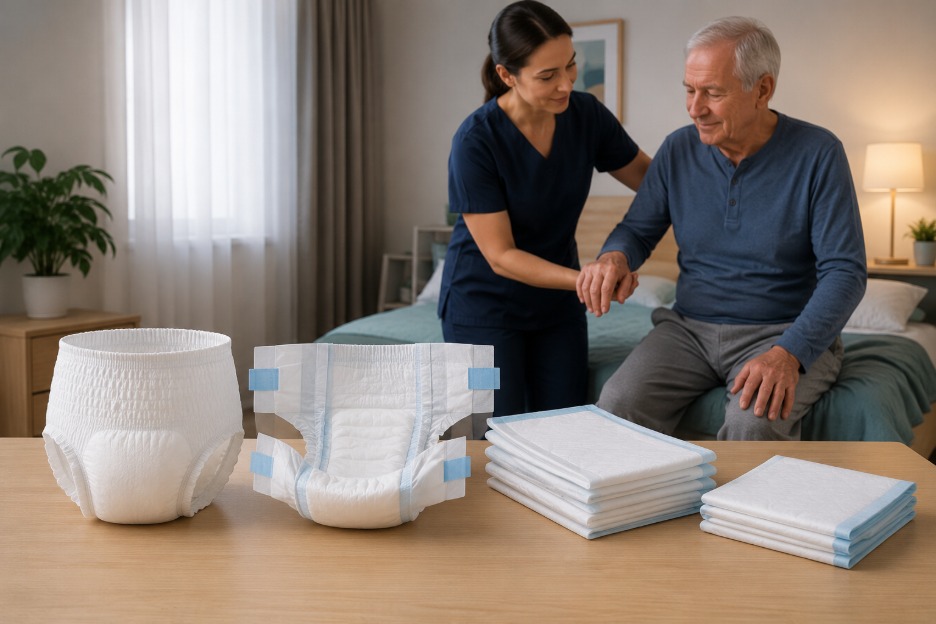
The most effective nighttime solution depends on how Parkinson’s affects daily function, mobility, and caregiving requirements. A one-size-fits-all approach rarely works well.
If you remain independently mobile and can reach the bathroom with minimal delay, lighter absorbent protection or pull-on styles may be sufficient as backup protection.
However, if urgency is severe or transfers are slow, higher-capacity containment may offer more dependable overnight protection.
For caregiver-assisted care, ease of changing becomes an important operational factor. Tab-style products may allow quicker repositioning and simpler replacement compared with pull-on alternatives.
If bed transfers are physically demanding, layered protection may improve efficiency. Combining a primary absorbent product with mattress protection can reduce full linen changes after accidental leakage.
For individuals with dual continence concerns, absorbent selection becomes more specialized. Products designed only for light urinary leakage may be inadequate.
It also helps to evaluate behavioral factors:
- Are bathroom trips becoming more frequent?
- Does leakage happen before reaching the toilet?
- Is sleep disrupted by product discomfort?
- Are skin changes appearing regularly?
- Is caregiver workload increasing?
These questions guide smarter product decisions.
Conclusion
Managing nighttime bladder symptoms in Parkinson’s requires a practical approach that considers neurological changes, mobility limitations, skin protection, and the realities of overnight care.
Rather than focusing only on leakage control, the goal should be to create a system that supports uninterrupted sleep, reduces discomfort, and makes nighttime care more manageable. When absorbent products are selected based on actual functional needs instead of general assumptions, they become a meaningful part of a broader care strategy.
With the right combination of protection, hygiene practices, and routine adjustments, nighttime bladder management can become more predictable, efficient, and far less disruptive for both patients and caregivers.
