
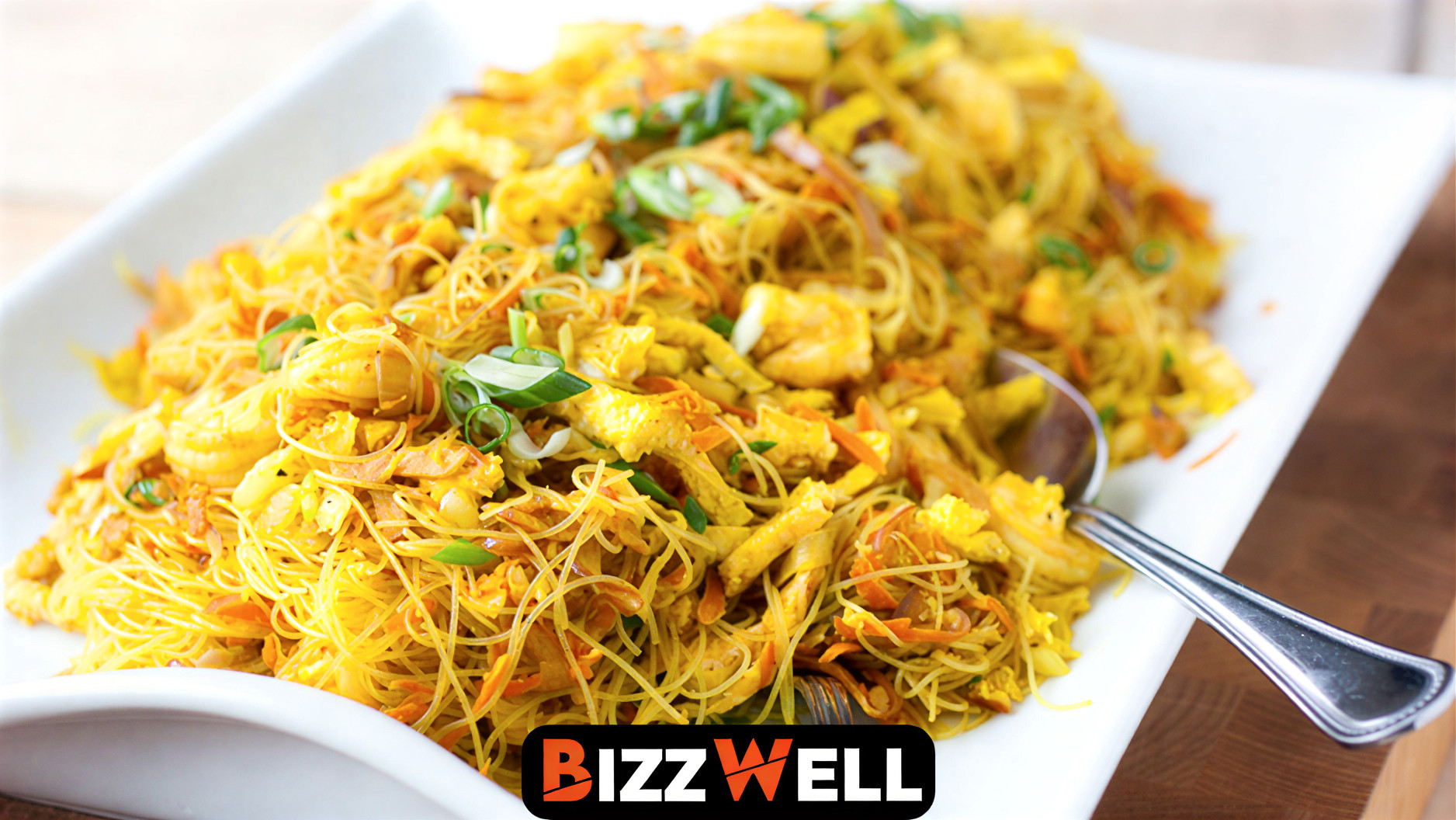

I still remember the first time I ordered Singapore Mei Fun. I wasn’t searching for it. I wasn’t curious about it. I just didn’t want the same fried rice or chow mein again. The name felt different, so I went with it. When the food arrived, the smell was the first thing that caught my attention. It wasn’t spicy. It wasn’t sharp. It was warm, slightly sweet, and comforting.
That first plate made me realize something simple. Singapore Mei Fun isn’t trying to impress you. It just wants to be good food.
What Singapore Mei Fun Really Is
At its heart, Singapore Mei Fun is a noodle dish made with thin rice noodles. These noodles are stir-fried with curry powder, vegetables, eggs, and usually shrimp or chicken. Some places use pork or beef, but shrimp is the most common.
The noodles are soft and light. They don’t sit heavy in your stomach. You finish the meal feeling full but not tired, which is honestly rare for noodle dishes.
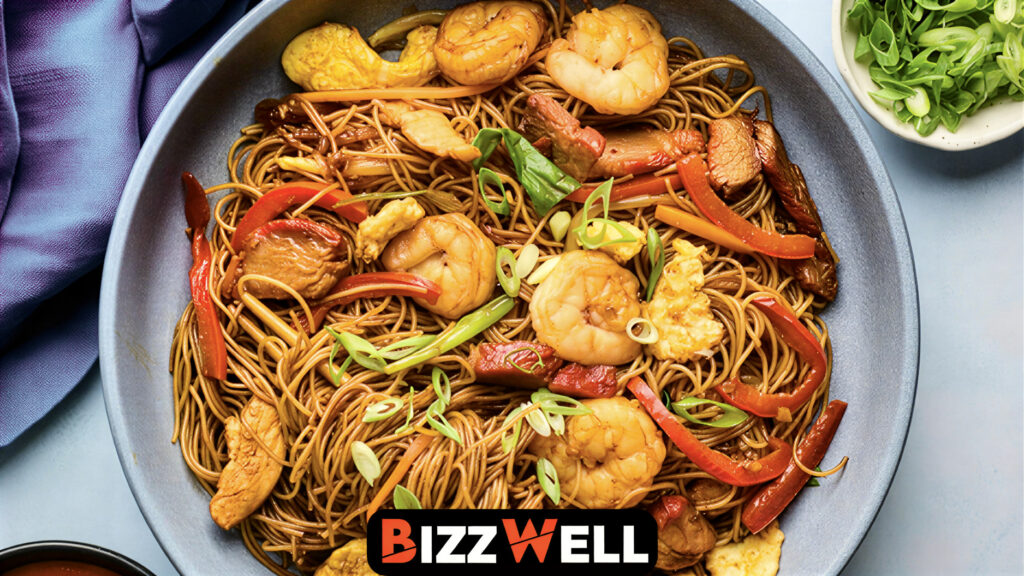
The Name Confuses Everyone
Let’s clear this up properly.
Singapore Mei Fun does not come from Singapore.
This dish was created by Chinese chefs in the United States. They wanted something different from regular soy-sauce-based noodles. Curry powder gave the dish a new flavor, and the name “Singapore” made it sound exciting and exotic. People noticed it, ordered it, and liked it. That’s how it stayed on menus.
The name stuck, even if the location didn’t.
Why People Keep Ordering It
People don’t order Singapore Mei Fun because it’s trendy. They order it because it’s reliable.
The flavor is balanced. The noodles are light. The vegetables don’t feel like an afterthought. You don’t need extra sauce or sides. Everything you need is already in the bowl.
Some foods shout for attention. This one doesn’t. It quietly does its job.
The Role of Rice Noodles
The noodles matter more than people think. Singapore Mei Fun uses rice vermicelli noodles. They’re thin and delicate, and they cook quickly. If overcooked, they can break. If cooked right, they’re soft and perfect.
These noodles absorb flavor instead of fighting it. That’s why the curry works so well here. And because they’re rice-based, they’re naturally gluten-free, which is a bonus for many people.
What Goes Into Singapore Mei Fun
Most versions of Singapore Mei Fun use similar ingredients. Rice noodles are the base. Curry powder is the main seasoning. Eggs add softness. Cabbage and carrots add crunch. Garlic and onions build flavor.
Protein depends on the restaurant. Shrimp and chicken are the most common. Some places mix proteins, some keep it simple. There’s no single “correct” version, and that flexibility is part of the dish’s charm.
Is Singapore Mei Fun Spicy?
This question comes up all the time.
The answer is simple: not really.
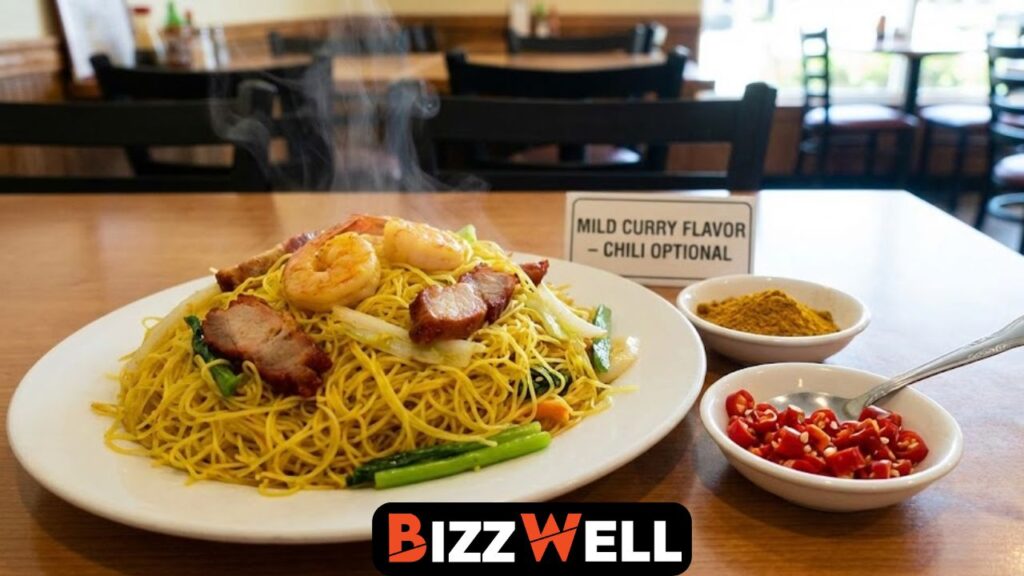
Singapore Mei Fun gets its flavor from curry powder, not chili peppers. That means warmth, not heat. Most standard versions are mild. If you want spice, you usually need to ask for it.
That mild flavor is why so many people enjoy it, even those who avoid spicy food.
Calories and Reality
Let’s be honest. Restaurant food usually uses more oil than home cooking. Singapore Mei Fun is no exception. A typical restaurant portion can range between 450 and 700 calories, depending on portion size and oil.
That said, the dish itself isn’t unhealthy by nature. Rice noodles, vegetables, and protein are a solid combination. At home, it’s easy to make a lighter version without losing what makes the dish enjoyable.
Is It Actually Healthy?
Singapore Mei Fun can be a good choice if eaten in moderation. It doesn’t rely on heavy sauces. It includes vegetables. It has protein.
The main issue is sodium and oil when ordered from restaurants. Cooking it yourself gives you control over both, which makes a big difference.
Gluten-Free or Not?
In most cases, yes.
Rice noodles do not contain gluten. The only thing to watch out for is soy sauce. Some soy sauces contain wheat. If gluten matters to you, it’s always worth asking or using a gluten-free version at home.
Singapore Mei Fun vs Regular Mei Fun
Regular mei fun simply refers to rice noodles. They can be cooked in many styles, from plain garlic noodles to soy-sauce-based dishes.
Singapore Mei Fun is a specific version. The curry flavor and yellow color are what make it different. Without curry, it’s just another noodle dish.
Making It at Home
Singapore Mei Fun looks harder to make than it really is. The noodles need to be soaked, not boiled. Vegetables and protein are stir-fried first. Eggs go in next. Curry powder follows. Noodles come last.
The whole process usually takes around 20 minutes. It’s fast, forgiving, and flexible.
Why It’s Such a Safe Takeout Choice
Some noodle dishes fall apart after delivery. The sauce dries. The noodles clump. The flavor disappears.
Singapore Mei Fun holds up. The noodles stay soft. The flavor stays balanced. That’s why people trust it when ordering takeout.
Frequently Asked Questions (FAQs)
Is Singapore Mei Fun actually from Singapore?
No. It was created by Chinese chefs in the United States, not in Singapore.
Is Singapore Mei Fun spicy?
No. It has a mild curry flavor, not strong heat. Spice can be added on request.
What noodles are used in Singapore Mei Fun?
Thin rice vermicelli noodles, also known as mei fun noodles.
Is Singapore Mei Fun gluten-free?
Usually yes, but soy sauce may contain wheat, so it’s best to check.
Can Singapore Mei Fun be made at home?
Yes. It’s a quick stir-fry dish that takes about 20 minutes to prepare.
Final Thoughts
Singapore Mei Fun is not fancy food. It doesn’t chase trends or try to look impressive. It’s warm, familiar, and dependable. That’s why it keeps showing up on menus year after year.
If you enjoy light noodles, mild curry flavor, and food that feels complete without being heavy, Singapore Mei Fun makes sense. Sometimes the best dishes are the ones that don’t try too hard. This is one of them.
“For more detailed information and to learn everything you need to know, please visit Biz Well.”
