
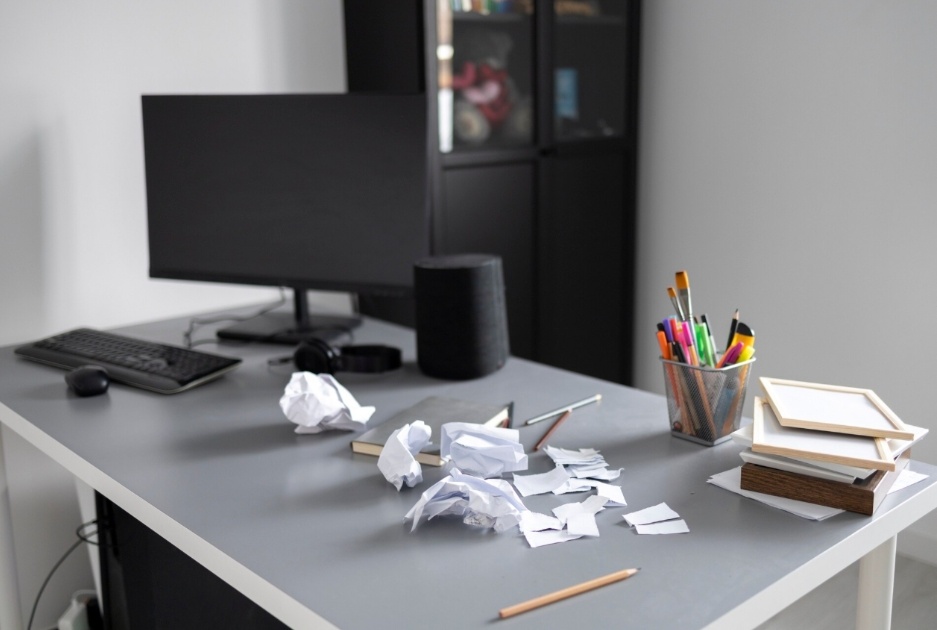

Most business owners track revenue, payroll, and overhead closely. Very few track the cost of an unclean workspace.
That cost is real. It shows up in sick days, lost clients, higher staff turnover, and lower output. None of those line items gets labeled “cleaning.” But they are directly connected to it.
A professional commercial janitorial services Denver provider does more than remove visible dirt. They maintain an environment where people can focus, clients feel respected, and illness does not spread through a team the week before a major deadline.
This article breaks down exactly what workplace cleanliness affects, backed by data, so you can make a clear-eyed decision about what it is worth to your operation.
Does Office Cleanliness Actually Affect Employee Performance?
Yes. The evidence is specific and consistent.
As cited by Gallup, found that unhealthy workplaces cost U.S. businesses over $150 billion annually through absenteeism, reduced output, and staff replacement.
That figure covers multiple variables, but indoor cleanliness is among the most controllable.
Dirty surfaces spread pathogens that cause respiratory illness, gastrointestinal infections, and skin conditions. Each sick day costs a company between $1,500 and $3,500 when productivity loss and temporary coverage are factored in. A single flu outbreak moving through a ten-person team can cost more than a year of professional cleaning services.
Beyond illness, the physical environment directly shapes cognitive function. Studies on workspace conditions consistently show that cluttered, dusty, or visually disorderly environments reduce concentration and increase error rates. People work better when the space around them is clean.
How Do Clients and Visitors Judge Your Business by Its Appearance?
First Impressions Happen in Seconds
A client walking into your office forms an opinion before sitting down. That opinion is shaped by what they see, smell, and touch.
Stained carpet, streaked glass, cluttered reception areas, and restrooms that do not meet basic hygiene standards all communicate the same thing: this organization does not attend to details.
That perception transfers directly to your product or service. If you do not care about your own space, a client reasonably wonders whether you care about their account.
The Restroom Signal
Facility managers and hospitality professionals use restroom condition as a proxy for overall operational standards. Clients do the same, even unconsciously.
A well-maintained, well-stocked restroom signals that the business runs with discipline. A neglected one signals the opposite.
This is not about luxury. It is about baseline standards that communicate organizational competence.
What Areas of a Commercial Space Need the Most Attention?
Not every surface carries equal risk or equal visibility. Knowing where to direct resources makes cleaning programs more effective and more cost-efficient.
High-Touch Surfaces
Door handles, elevator buttons, light switches, shared keyboards, and breakroom appliances harbor the most pathogens. These surfaces transfer bacteria and viruses person to person dozens of times per day.
Research from the University of Arizona found that a single contaminated surface in an office can spread to 50 percent of the building’s shared surfaces within four hours. Regular disinfection of high-contact points is the most direct way to reduce illness transmission in any shared workspace.
Restrooms and Kitchen Areas
These two zones require the most frequent attention and carry the highest hygiene stakes. Cross-contamination from poorly maintained kitchens is a documented source of gastrointestinal illness in workplaces.
Restroom neglect, beyond the client perception issue, creates genuine health risks for staff using the facilities multiple times each day.
Flooring and Air Quality
Carpeted floors trap allergens, dust mites, mold spores, and particulates that recirculate into the air every time someone walks through the space. Employees with allergies or respiratory conditions are most affected.
Hard floor maintenance and regular carpet extraction reduce the airborne particle load that affects breathing throughout the workday. In open-plan offices where air is shared across dozens of people, this matters significantly.
What Is the Difference Between In-House Cleaning and a Professional Service?
This is a genuine business decision, not just a preference question.
Cost Comparison
In-house cleaning appears cheaper on the surface. One part-time employee at $15 per hour, twenty hours per week, costs roughly $15,600 annually in wages alone before factoring in payroll taxes, supplies, equipment maintenance, and supervision time.
A professional contracted service covering the same scope typically runs $8,000 to $14,000 annually for a mid-sized office, with equipment, supplies, liability insurance, and trained staff included in the rate.
The math often favors professional contracting, especially when consistent performance, reliability, and specialized equipment are considered alongside the raw labor cost.
Consistency and Accountability
In-house staff call in sick, take vacations, and vary in performance without easy consequence. A contracted provider has replacement staff available, maintains quality standards across their entire client base, and operates under a service agreement that defines expectations clearly.
When standards slip, you have a defined recourse. That accountability structure is harder to maintain with an internal hire.
Specialized Equipment and Techniques
Professional cleaning companies use commercial-grade equipment and EPA-registered disinfectants that are not available through retail channels. HEPA filtration vacuums, electrostatic sprayers for surface disinfection, and commercial extractors for deep carpet cleaning all produce results that household-grade equivalents cannot replicate.
What Should a Business Look for When Hiring a Commercial Cleaning Company?
Insurance and Bonding
Every legitimate provider carries general liability insurance and workers’ compensation coverage. If an employee is injured on your property or causes accidental damage, the liability falls on the contractor, not your business.
Ask for certificates of insurance before signing any agreement. A company that hesitates to provide them is one worth avoiding.
Defined Scope of Work
Vague contracts produce inconsistent results. A professional agreement should specify which areas get cleaned, at what frequency, using which products and techniques.
“General cleaning” is not a scope of work. “Vacuuming all carpeted areas, disinfecting restrooms, emptying trash receptacles, and wiping down all hard surfaces in the open office three times per week” is a scope of work.
Communication and Response Time
Your cleaning provider is a vendor relationship. When something gets missed or a special request arises, response time matters.
Ask prospective providers how they handle service complaints and how quickly they respond to urgent requests. A quality company has a clear answer. A less reliable one gives vague reassurances.
Environmentally Responsible Products
Many businesses have sustainability commitments that extend to their vendor relationships. Green-certified cleaning products, reduced chemical use, and responsible waste disposal practices are all available from quality providers without sacrificing cleaning effectiveness.
If this matters to your organization, confirm it specifically before committing.
How Often Should a Commercial Space Be Professionally Cleaned?
Frequency depends on three factors: the number of people using the space, the type of business, and the specific areas being maintained.
A general guide for most office environments:
- Daily: Restrooms, kitchens, trash removal, and high-touch surface disinfection
- Three times weekly: Hard floor maintenance, vacuuming, reception area wipe-down
- Weekly: Glass and window cleaning, breakroom deep clean, conference room refresh
- Monthly: Carpet extraction, upholstery cleaning, deep restroom sanitization
Healthcare offices, food-adjacent businesses, and facilities serving vulnerable populations require more intensive and frequent programs than standard office environments.
Conclusion
Workplace cleanliness is an operational expense with a measurable return.
Reduced absenteeism, stronger client impressions, healthier staff, and lower long-term facility maintenance costs all follow from a consistently maintained workspace. The businesses that treat professional cleaning as a strategic investment rather than a grudge spend consistently outperform those that cut corners on it.
The cost of a dirty office does not appear as a single line on a balance sheet. It appears across a dozen other line items throughout the year. Recognizing the connection is the first step toward making a better decision.
