
Project: Orca Slicer
Choosing a slicer is one of the biggest “quality levers” in 3D printing. The right software can improve surface finish, dimensional accuracy, and print reliability—often without changing a single hardware part.
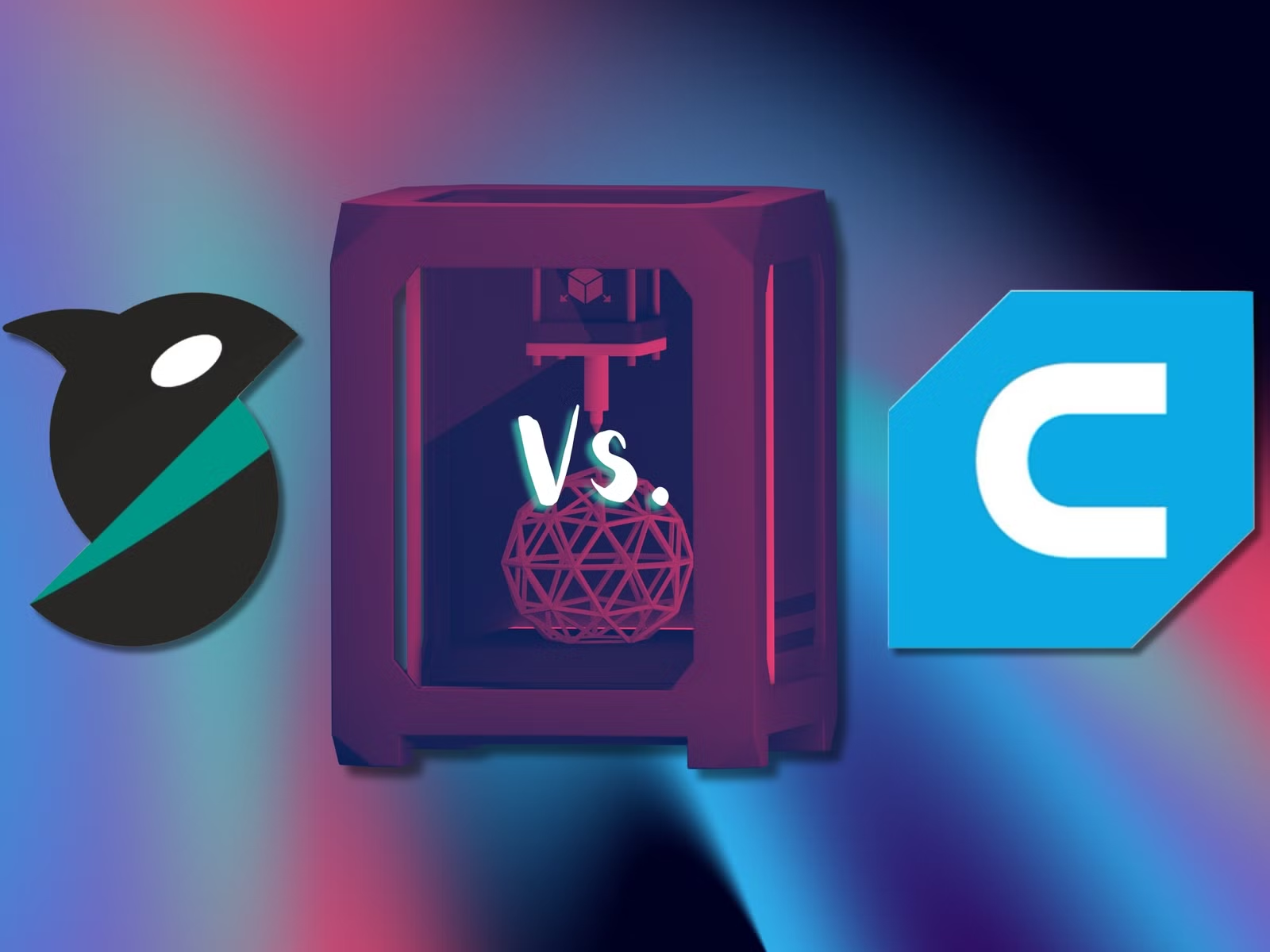
In this comparison, we’ll look at how Orca Slicer stacks up against other popular slicers like PrusaSlicer, Cura, Bambu Studio, and ideaMaker, focusing on performance, features, and real-world accuracy.
Rather than declaring one universal winner, the goal is to match slicer strengths to your printer, materials, and workflow—whether you’re printing functional parts, miniatures, or high-speed prototypes.
What “better” means in a slicer (and why it matters)
Most slicers can generate usable G-code, but the differences show up in day-to-day results. The most meaningful evaluation points usually fall into three buckets: print success rate, speed/efficiency, and dimensional consistency.
- Performance: how fast the slicer previews, slices complex models, and handles modifiers, supports, and multi-material setups.
- Features: calibration tools, variable layer height, ironing, seam control, supports, tree supports, and advanced cooling/acceleration tuning.
- Accuracy: dimensional fit, hole sizing, thin-wall handling, extrusion consistency, and first-layer reliability.
Performance: slicing speed, responsiveness, and workflow
If you routinely slice large STLs or detailed organic models, responsiveness is more than a convenience—it’s productivity. In general, modern slicers built on the PrusaSlicer/Bambu Studio family tend to feel snappier with complex projects, especially when using paint-on supports and multiple process regions.
Typical performance tendencies:
- Orca-style workflows: fast iteration for tuning-heavy users (profiles, calibration passes, quick adjustments).
- Cura: extremely flexible, but heavy projects can feel slower depending on plugins and settings complexity.
- PrusaSlicer/Bambu Studio: efficient UI for common tasks, strong preview tools, and consistent slicing behavior for most users.
- ideaMaker: powerful for process control; performance is solid, but the interface can feel more “engineering suite” than lightweight.
Feature depth: where each slicer tends to shine
Features are where slicers develop loyal followings. The best choice depends on whether you want maximum control, the smoothest beginner experience, or built-in tuning helpers for consistent results.
Calibration and tuning tools
If you print a variety of filaments (PLA, PETG, ABS/ASA, TPU) or switch nozzles often, built-in calibration can be a huge time-saver. Look for tools that help with:
- Flow/extrusion multiplier tuning
- Pressure/linear advance equivalents (where supported)
- Temperature and retraction towers
- Max volumetric flow checks for high-speed printing
Supports, seams, and surface finish controls
Support generation and seam management often separate “good enough” from “production-ready.” Many users prioritize:
- Paint-on supports: place support only where needed for cleaner undersides.
- Organic/tree supports: reduced scarring on curved models.
- Advanced seam control: hide seams on corners or less-visible faces.
- Ironing and monotonic infill/top surfaces: smoother top layers on functional parts.
Accuracy: dimensional fit, holes, and real-world tolerances
Accuracy isn’t just a slicer setting—it’s a system outcome involving extrusion, cooling, mechanics, and motion limits. That said, slicers differ in how clearly they expose the settings that matter most, and how easy it is to create repeatable profiles.
For functional prints, these are the accuracy pain points to test regardless of slicer:
- Hole sizing: print a hole test; evaluate if holes come out undersized and whether the slicer makes compensation straightforward.
- Thin walls: see how well single-wall features and narrow ribs are preserved without gaps or over-extrusion.
- First-layer consistency: check whether brims, elephant-foot compensation, and initial flow are easy to dial in.
- Fit tolerance: print a simple clearance gauge (0.1–0.4 mm) and lock in a profile that repeats.
Which slicer to choose for your printer and goals
The “best” slicer is usually the one that matches your workflow and keeps your profiles stable. Here are practical pairing ideas based on common search intent like “best slicer for accuracy” or “fastest slicer for high-speed printing.”
- If you want fast iteration and strong tuning controls: choose a slicer that emphasizes calibration, profile management, and advanced extrusion handling.
- If you want a broad plugin ecosystem and maximum configurability: Cura remains a strong choice, especially for unusual printers.
- If you want a clean experience with reliable defaults: PrusaSlicer-style workflows are hard to beat for consistency.
- If you run an integrated ecosystem: manufacturer-aligned slicers can streamline presets, filaments, and device management.
FAQ
Q: Is Orca Slicer more accurate than Cura or PrusaSlicer?
A: Accuracy usually depends more on calibration and profile quality than the slicer name. Orca-focused workflows can make tuning easier, which often leads to better real-world dimensional results when profiles are well dialed in.
Q: What settings most affect dimensional accuracy in any slicer?
A: Flow/extrusion multiplier, line width, cooling, minimum layer time, acceleration limits, and first-layer settings (including elephant-foot compensation) typically have the biggest impact on fit and hole sizing.
Q: Which slicer is best for high-speed printing?
A: Look for strong control over volumetric flow, cooling, pressure/linear advance behavior, and speed/acceleration coordination. A slicer that supports repeatable profiles and quick calibration cycles is usually the most effective for high-speed setups.
Conclusion
Orca Slicer and other leading slicers can all produce excellent prints, but they differ in how quickly you can get to a tuned, repeatable result. If you value streamlined calibration, iterative tuning, and modern controls for speed and surface quality, Orca-style workflows are especially compelling.
The smartest way to decide is to run the same calibration set—hole test, clearance gauge, temperature tower, and a support-heavy model—across two slicers. The one that reaches your target accuracy and finish with fewer tweaks is the slicer you’ll trust for the long haul.
