
When you have been running an online campaign, you must have heard about display ads, native ads and search ads. But do you not know the difference? More importantly, do you know when to use any of the types efficiently?
The digital advertising is about the ability to address the right audience at the right time. Selecting the incorrect form of advertising may cost you some money and decrease your chances of succeeding. Never mind, however, as soon as you realise the aim of each you find it far less difficult.
Display Ads | What Are Display Ads?
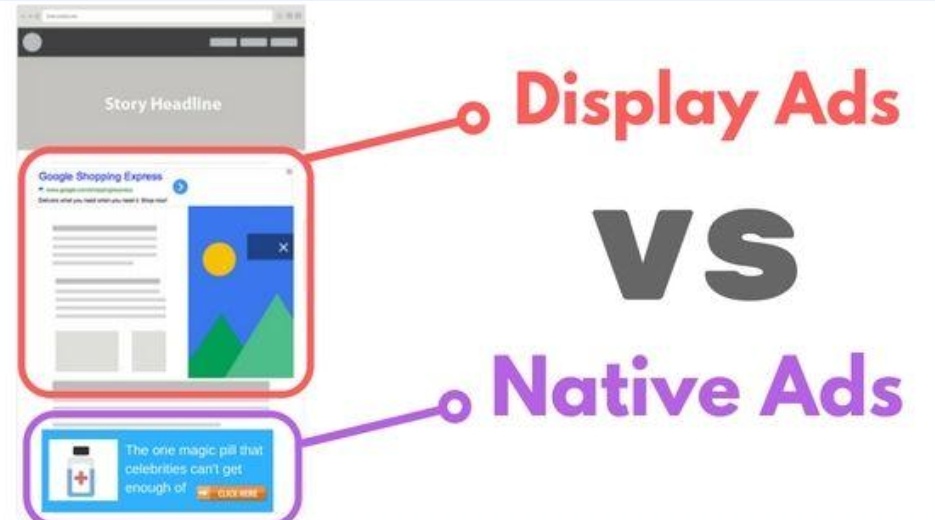
The banners, pop-ups and sidebars that you find on the websites are display ads. They are attractive in look and they are meant to attract attention. These advertisements are excellent in terms of brand awareness, as they target individuals as they do their browsing as they may not necessarily be interested in purchasing something at the time.
But here is a question Have you ever clicked a banner ad? You see, they do not necessarily generate instant sales, as you know with them. This is why display advertisements are the most effective at the very beginning of the funnel- introducing your brand, and keeping it in minds of people. Your next viral ad might just come from an AI image ad generator, not a design team.
When Display Adverts Should Be Used
Display advertisements will be ideal in case you want to gain exposure. As an illustration, display advertising can be employed by a new startup to create awareness in a short period of time. They are also good to remarketize-ads to people who had already visited your site.
Imagine that it is a visual footprint on the internet. Individuals might not make purchase instantly but a consistent exposure creates credibility.
What are Native Ads?
Native advertisements are a part of the surrounding content. It is likely that you have come across them in the form of sponsored content on a news outlet or in-feed advertisements on social media. The point here is that they do not interfere with the user experience.
Native ads are effective since they are natural. They neither scream at the audience but rather recount a story or add value to it but in the background advertise a product or service.
When Should Native Ads be Used?
Native advertising is the most suitable when it comes to engagement and trust. In case you are sharing tips, guidelines or entertaining material, native advertisements will draw readers who will be interested in it.
As an example, a fashion brand may place a native advertisement in a lifestyle blog where there is a style guide. Readers are exposed to the content and can have a chance to explore the products.
It is less obtrusive than conventional advertisements and will usually lead to increased interaction rates.
Search Ads | What Are These?
Search advertisements come up when one enters a query in a search engine. The most typical one is Google Ads. These advertisements appear on the top of the search results and target the users who are interested in something in particular.
The advantage? Intent. Individuals who are clicking on the search ads are usually willing to purchase or make a move. It is as though one has just struck them in the right time.
In Which Cases to Use Search Ads?
Search advertisements would be best in conversions. Search ads tend to be the most successful in case you want to make sales or get leads. They align what people are seeking and offer that.
As an illustration, when selling running shoes a search advertisement with the query of the best running shoes to use as a beginner will get someone who already has the interest to buy. The outcomes are short term and quantifiable.
Decision Making Display, Native, and Search Ads
Your campaign goals determine the kind of type to select. Question: Do I need to create awareness, involve users or make direct sales?
- Awareness: Display advertisements are the most suitable.
- Engagement & Trust: Go for native ads.
- Conversions & Leads: Search advertisements are the most effective.
In some cases, a combination of these types of advertisements is even better.
Evaluating Success among Various Adverts
The metrics of different ads are different. In the case of display and native ads, measure impressions, clicks and engagement. In the case of search advertising, emphasis should be placed on the click-through and conversions.
Testing is key. Test little campaigns, determine which type of advertisements works best with your audience, and then expand. One type does not fit all businesses- hardly ever.
Final Thoughts
The display, native, and search ads are vital to every marketer. They have different functions and can be used in a strategic manner to save money and enhance the outcome.
It is important to remember that display advertising creates awareness, native advertising creates engagement, and search advertising creates conversions. Once you are aware of your campaign objectives and the aim of your audience, it is much easier to make the appropriate choice of ad.
The key takeaway? Do not randomly select the type of ad. Consider your goals, audience and stage within the customer journey. That is the way in which you convert clicks into real.
