
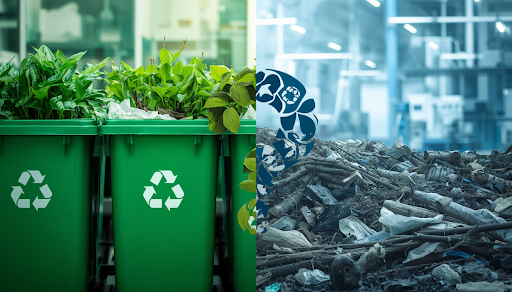

Sustainability is one of those topics people talk about a lot in business as well as everyday life, and waste management is basically right at the center of it. A lot of folks assume that if they pop the right items in the right bins, then arrange for regular pickups, that’s it, they’ve done their part.
But, the real situation feels messier than that, the provider you end up choosing to take care of your waste makes a big difference to how Eco-friendly the whole disposal process really is, even if you’ve carefully separated your materials in the first place. If your operator sends most of the collected waste straight to landfill, uses outdated or inefficient vehicles, or can’t show credible certifications for their so called green promises, they may cancel out the good you were trying to do with recycling.
Whether you’re a homeowner facing a one off clean out or a business manager handling ongoing waste arrangements, this piece will show you how to ask the proper questions, catch the red flags, and get a clearer idea of what genuine environmental accountability looks like across the waste management industry including what to check when choosing a skip hire Cardiff provider, that actually matches the eco-friendly claims they make.
The Difference Between Green Claims and Reality
Today almost each waste provider drops the words “eco-friendly” “sustainable” or “committed to the environment” somewhere in their marketing. But the thing is, text on a website is easy to put there, and sort of hard to actually verify. There also can be a real gap between what they say they do with your waste, and what happens in practice. Getting a feel for that difference is the very first step, and honestly also the most important, if you want to make a genuinely informed call about who handles your waste.
Why marketing language rarely tells the full story
Like many other industries, the waste management industry has learned that environmental credentials are good for business – so much so that green language has become so commonplace that it’s almost meaningless without evidence to back it up. The websites of providers whose actual practices differ greatly use words like “responsible disposal”, “Eco-conscious collection” and “committed to sustainability”, so it really is hard for customers to tell the difference between those who walk the walk and those who only talk the talk.
A provider could quite rightly re-use some of the waste they pick up, but still send most of it to landfill, yet refer to themselves in terms that suggest a much more rigors environmental commitment. The only way to get beyond this is to look beyond the marketing and start asking specific questions based on evidence about what really happens to waste once it’s collected – questions that a truly eco-friendly provider should be able to answer clearly and confidently.
Landfill Diversion Rates: The Only Number That Matters
If you want one metric that will tell you more about a waste provider’s environmental performance than any other, it’s their landfill diversion rate – the percentage of collected waste that is diverted away from landfill through recycling, recovery or reuse. This one number cuts through the marketing speak and tells you what is really happening to the material once it leaves your property.
How to tell where your rubbish is really going
One of the most telling numbers you can ask a provider for, is their landfill diversion rate, but it’s one that’s rarely really highlighted on websites or during sales talks. Usually the fast way to get a feel for how serious they are about their environmental responsibilities is to ask straight up – “What percentage of the waste you collect goes to landfill ?” In most cases, genuinely good, true green providers can share a concrete figure, and often it comes with reporting data or third party verification. Many also like to push those high diversion rates as a differentiated.
If a provider can’t answer the question cleanly, or responds with something kind of foggy, or they only point you toward recycling intentions instead of real outcomes, then that’s often a hint about the gap between what they say and what they do. For companies, knowing where the waste actually ends up is getting more important, not just for environmental reasons but also for reporting, since the sustainability expectations from clients and partners keep climbing.
Certifications & Accreditation’s: What Should You Look For
In a world where anyone can slap the label “eco-friendly” on their website, third party certification, and accreditation is one of the best ways (at least, mostly) to make sure a provider’s environmental claims have some merit. If you can sort which certifications are actually meaningful, versus the ones that are kinda decorative, you can end up making a big difference in how you evaluate your options, really.
Credentials that mean something vs. Green washing badges
Not all certifications are created equal, and the waste management industry is no exception, with its share of rigors accreditation’s and less demanding badges that offer more reassurance than they perhaps should. The key credentials to look out for in the UK are registration with the Environment Agency as a licensed waste carrier, ISO 14001 certification for environmental management systems and membership of recognized industry bodies that hold their members to specific standards of practice.
They’re not just labels they mean continuous auditing, documented processes, and a level of accountability that is more than a provider can just claim for themselves. Other providers, meanwhile, show generic badges of sustainability or self-declared Eco-ratings with no independent verification at all. A good way to tell real commitment from just collecting credentials is to have a provider explain what their certifications actually mean in terms of what they’re supposed to do, instead of just taking their certifications as proof of environmental performance.
Vehicle Emissions and Fleet Efficiency
Waste collection is very vehicle intensive and the environmental footprint of those vehicles is something that is rarely discussed when talking about eco-friendly waste management – but it can be a major part of a provider’s overall environmental impact. If the waste is collected in an ageing fleet of high-emitting diesel trucks that make inefficient routes, then the cleanest recycling operation in the world is somewhat undermined.
Why the trucks that pick up your trash are more important than you think
The transport part of waste management is often omitted in environmental assessments. However, for operators of large fleets, covering wide territories, vehicle emissions can account for a large percentage of their total environmental footprint. Providers that have invested in newer, cleaner vehicles whether low-emission diesel, hybrid or electric – are making a real commitment to reducing their footprint that goes beyond simply sorting waste at the processing end.
Another consideration is route optimization, with providers using technology to plan efficient collection routes, which reduces unnecessary mileage and has environmental and cost benefits. It may seem like a detailed question to ask a waste provider about the composition of their fleet, but the answer can be telling both about their actual environmental performance and about how seriously they take sustainability beyond the marketing department. The ones that are really serious about clean transportation will generally be happy to talk about it.
Waste processing transparency
This is a part of the process that most customers never see and slightly less prudent suppliers can take advantage of. What happens to miles of waste once it’s collected? One of the most obvious traits of a supplier who has nothing to hide about their environmental performance is transparency often treatment methods, holiday centres , recycling outcomes When choosing a skip hire Swansea service, it is miles well worth finding a supplier who is open about how waste is handled chairman.
How to know if a provider is transparent about what happens after collection
A true eco-friendly waste provider should be able to give you a clear idea of where your waste goes once it leaves your premises which facility, how it’s treated, how much is recycled and how much eventually ends up in landfill or energy recovery. This level of transparency is not a nice to have, it’s a reasonable expectation from any provider making environmental claims.
Some providers go further by providing waste reporting to business clients (documents that show the breakdown of collected waste by material type and destination, allowing businesses to track their own environmental performance over time). Providers who are vague about processing, who deflect questions about destination facilities, or who can’t produce any documentary evidence of their waste outcomes are signaling, intentionally or not, that scrutiny is not welcome. On the other hand, providers that voluntarily volunteer this information without being asked – are exhibiting a level of confidence in their environmental performance that is more likely earned than performed.
Recycling Infrastructure: What They Really Have
Saying you recycle waste is one thing, having the actual infrastructure, partnerships, and processing capacity to do it at scale is another. The difference in real world environmental outcomes between a provider that actually has recycling capability, and one that just sends waste to a general processor with limited recycling infrastructure can be huge.
The difference between saying you recycle and having the infrastructure to do it
A waste provider’s recycling capability is only as good as the facilities and partnerships it can access, and this is an area where the gap between large, well-resourced providers and smaller operations can be significant. A provider with real recycling infrastructure will tend to have relationships with specialist processors for different waste streams separate facilities for metals, paper and cardboard, plastics, electronics, timber and so on rather than routeing everything through a single general waste facility and hoping for the best.
Some providers have their own materials recovery facilities, which gives them direct control over how waste is sorted and processed after collection. Others work with a network of specialist partners whose credentials can be independently validated. The real question is not only “do you recycle?” but “what materials do you recycle, what facilities do they go to, and can you show the results?” A provider that can answer this question in detail is far more likely to be creating real environmental value than someone whose recycling claim is just a line on their website.
Handling Hazardous and Special Waste
How a provider deals with hazardous or specialist waste streams is perhaps the best test of their real commitment to the environment, because not all waste is easy to dispose of responsibly. Mishandling hazardous materials not only damages the provider’s green credentials, but can have real effects on soil, water and local ecosystems.
How responsible hazardous waste disposal reveals a provider’s true standards
Hazardous waste, such as paint, solvents, batteries, asbestos, some electronics and fluorescent lighting, needs to be handled carefully, processed by specialists and disposed of through documented routes that meet environmental regulations. And a provider who handles hazardous waste with the same cavalier attitude as they do general trash isn’t just compromising the environment, they’re potentially putting themselves and their clients at legal risk.
You should be able to ask truly eco-friendly providers about the processes they use to identify, segregate and dispose of hazardous materials via licensed specialist routes – they’ll have clear, documented processes and will be happy to talk you through them in detail. They will also usually give customers advice, in advance of collection, about what counts as hazardous waste and how to deal with it correctly, rather than just accepting what is presented to them. How a provider discusses hazardous waste whether it’s a serious responsibility or a minor administrative detail often says a lot about their overall approach to environmental accountability in their entire operation.
Community and Local Environmental Impacts
Environmental responsibility is not just about what happens to the waste itself – it also covers how a provider operates within and impacts the local community and environment. Providers with a sustainability mindset typically extend that commitment beyond their immediate service offering in a visible and verifiable way.
How a provider’s broader environmental behaviour exposes their true values
You can often get a feel for the attitude a waste provider has toward the local environment, by peeking past their main service. Like, how do they handle spillages when they’re collecting? Do their vehicles and tools look properly looked after , and do they bother to keep noise and emissions down, especially in residential areas? Also, do they show up in any local environmental initiatives, or is it all a bit “no comment” kind of situation.Some firms even put effort into community recycling education, back nearby environmental projects, or run take-back schemes for materials that could otherwise end up being disposed of the wrong way.
And sure, it can sound like the usual PR stuff , but it really points to a wider organization culture . One where environmental responsibility is treated as a genuine value , not just a marketing line. If you’re a business choosing a waste partner, it also helps to see how that provider is viewed locally through reviews, word of mouth, or what local press might mention. That can add another angle on whether their so called “green” reputation is earned , or if it’s mostly there for show.
Contracts, Flexibility and Environmental Responsibility
The structure of a waste management contract can tell you a lot about how a provider approaches accountability both commercially and environmentally. Providers with nothing to be ashamed of in their environmental performance tend to structure their offers in a way that makes them accountable, whereas providers with less to be proud of tend to prefer arrangements that make their performance more difficult to scrutinize.
How to Find a Waste Contract that Holds Your Provider Accountable
A well-structured waste management contract should include more than just collection schedules and pricing it should include provisions about environmental performance that give you visibility and recourse if standards aren’t met. Look for reporting obligations that show where your waste goes and how much you’re recycling, clearly defined service levels with consequences for non-performance, and flexibility to alter the arrangement if your waste volumes or types change.
Some providers will also put environmental targets into their contracts for example commitments to hit or beat landfill diversion rates during the life of the contract which shows a real willingness to be held to account on environmental issues, rather than just making promises in the sales process. Most providers are unwilling to put any performance or reporting provisions in their contracts, or only make vague commitments to “best practice”. This is because it would be difficult for them to make specific commitments. Having measurable environmental accountability in any waste management contract is not an unreasonable expectation – it is a core indicator of whether a provider’s green claims are real.
How to Switch to a Truly Eco-Friendly Provider
After you’ve worked through the questions, credentials, and the usual considerations that separate genuinely green waste providers from those who only use the wording, the practical thing is, what a switch actually looks like in the real world, and is it really worth the hassle? For most households, and likewise businesses , the response is a resounding yes. Also, the whole switching process is usually simpler than folks think, and it tends to move along quicker than expected.
How to assess your current provider and switch with confidence
The first step to changing your waste provider is honestly assessing your existing one – asking the questions this article tackles and weighing the answers up against what a genuinely green provider should be able to deliver. If your current provider can’t provide clear answers on landfill diversion rates, can’t provide certification documentation, or is vague on where the cars are being processed, or shows no evidence of investment in cleaner vehicles or better infrastructure, that’s a meaningful signal that a better option is likely out there.”
By getting quotes from alternative providers and asking them all the same set of questions, you paint a comparative picture that makes the right choice much clearer. For businesses, this could mean looking at the notice periods in contracts and making sure that any new arrangement is in place before the current one ends. The time spent on this process is well worth it not only from an environmental perspective, but because providers serious about sustainability tend to be serious about service quality, transparency and communication to customers in general. One of the simplest ways to bring your waste management in line with the values most households and businesses already hold, is to choose a waste partner that truly earns their eco-friendly credentials.
Modern Green Waste Management: The Role of Technology
Technology is changing almost every industry and waste management is no exception. Those providers that are truly committed to environmental performance are increasingly deploying digital tools, data analytics and smart systems to improve their sustainability results in ways that far surpass the capabilities of traditional collection and disposal. Understanding how a provider utilities technology can speak volumes to how much they care about the operational part of their environmental commitment.
How smart systems and data are driving improved environmental outcomes
The most forward thinking waste providers are basically leaning into technology at just about every stage, you know from GPS tracked vehicles that optimize their collection routes in real time , so there’s less avoidable mileage and emissions, to digital weighing setups that produce pretty precise info on the waste volumes and the different types picked up from each customer. A few of them even go further with sensor based observation on bins and skips, in order to tell when an emptying action is actually required rather than just doing it on a fixed timetable, no matter how full things really are. This tends to cut down the amount of pointless collection trips and the extra emissions that come with those runs.
Then on the processing side, advanced sorting tools like optical scanners and automated separation systems give materials recovery facilities the chance to recover a higher share of recyclable materials from mixed waste streams than anything that relied on purely hands on, manual sorting could do before. The tech first approach, especially for business customers, often also comes with access to detailed digital reporting dashboards that basically let them see exactly what was collected , how it ended up being processed, and what environmental results followed. With that kind of visibility, businesses can use the data to monitor their progress, satisfy reporting obligations, and also spot additional angles for improvement.
Before You Commit: Asking the Right Questions
Most people make the decision to choose a waste provider relatively quickly, usually based on price and convenience, without asking the questions that would reveal whether the provider’s environmental claims are genuine. Knowing what to ask and what the answers should look like can be the difference between a choice that actually supports your environmental goals and one that just seems like it does.
Critical questions all customers should ask their waste provider
There is a kind of core bundle of questions that can quickly sort out real Eco friendly operators from the ones using marketing language only. Before you commit to any waste provider , you might want to ask stuff like this , not just nod along.
First ask them to give you their landfill diversion rate as a specific percent (and yes, use recent data to back it up), not some vague “we divert a lot” line. Next ask what certifications they have and what they keep requiring over time, on an ongoing basis. Then check where they actually take the trash they pick up, and confirm if those places are licensed and independently audited , because “trust us” isn’t an answer. Also ask how they treat hazardous or specialist waste streams. Can they show you documentation proving compliant disposal routes for your materials, like in writing not just in conversation.
After that, ask about their vehicle fleet, and what they’re doing to cut transport emissions. Ask whether they provide waste reporting for customers, and if they do , how often it comes, and in what format. And finally ask for references from current customers who can vouch for the service quality and whether the provider ’s environmental claims line up with reality.
The provider that can answer all of these clearly, confidently, and with real evidence to support it has basically earned the Eco friendly label. That mix of transparency and accountability, it’s pretty much what responsible waste management should look like.
