

Introduction
Modern electronics are typified by lithium batteries. They supply power to phones, cameras and flashlights among others. The reason why people like them is because they are light, powerful and long lasting.
With numerous product lines utilizing lithium batteries, the question remains the same with numerous users querying: Can I charge a lithium battery with a regular charger? At first, it may seem simple. Should work, provided there is a charger that fits the battery. As a matter of fact, it is more dangerous to charge lithium batteries. It must have a charging method, voltage and safety controls.
Wrong charger may reduce or even damage the battery life. This paper describes the charging method of lithium batteries, the reason behind possible failure of normal chargers, and the alternative that you need to use. It is aimed at assisting you to charge your batteries safely and extending their lifespan.
Understanding Lithium Battery Types
There are a number of types of lithium batteries. Lithium-ion (Li-ion) and lithium iron phosphate (LiFePO4) are the most widespread ones. The various types require varying charging requirements.
An illustration is that there is a high number of portable devices that use lithium-ion cells. The special charging process is needed in these cells. The charger has to have the ability to regulate the voltage and the current in the charge cycle. There are also lithium household batteries.
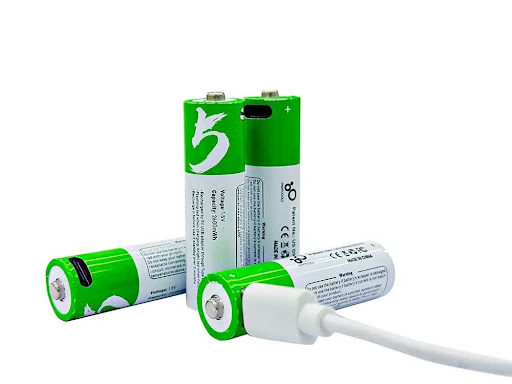
Such products as Rechargeable Lithium AA Batteries are made to substitute the alkaline AA batteries. They have greater energy content, and they are reusable repeatedly. They however require an appropriate charger with lithium chemistry.
When charging the lithium battery, you can have a charger designed to charge a different type of battery, e.g. NiMH or NiCd, and could not charge the lithium battery appropriately.
How Lithium Batteries Charge
There are two phases of charging the lithium batteries. The initial mode is constant current and the second one is constant voltage.
During the first stage, the charger provides a constant stream of current to the battery. This accelerates the energy level of the battery. On attaining a specific voltage on the battery, the charger changes to the second stage.
During the second stage, the charger maintains the voltage constant as a slight decrease in current.
This enables the battery to achieve full capacity without the battery overheating. This is a regulated process. In case of an increase in the voltage, the battery may wear out or break down.
Safety circuits have been built to stop this by good chargers. This is the reason why lithium batteries require lithium chemistry chargers.
What Is a Normal Charger?
A normal charger is typically a charger designed to fit older type batteries. Such are nickel-metal hydride (NiMH) or nickel-cadmium (NiCd) batteries.
These are the chargers that employ another method of charging. They do not control voltage carefully, but usually sense the variation in temperature or voltage drop to halt charging.
This technique is effective with nickel and not with lithium. Voltage limits need to be accurate in lithium batteries.
A charger with no voltage control can keep on charging even when it is not needed to. Due to this disparity, lithium batteries should not use many standard chargers.
Risks of Using the Wrong Charger
There are a number of issues that may arise due to using the incorrect charger. The problem that occurs first is overcharging. In case a charger delivers excessive voltage, the battery can overheat.
Heating destroys the inner system of the battery. In the long run, this decreases capacity and battery life. In severe cases it may lead to swelling or leaking. The other danger is undercharging.
Other chargers can shut off prematurely due to failure to pick up on lithium battery signals. This results in a battery that is half charged. There is also the risk of safety hazards. The lithium batteries hold a lot of energy.
Uncontrolled charging can give rise to fire or battery failure. Due to these reasons, manufacturers advise to use the chargers that are designed to be used on lithium batteries.
How to Choose the Right Charger
It is not hard to pick the right charger provided you are aware of what to look at. First, check the battery type. The charger has to be able to facilitate the lithium chemistry in question. Second, examine the voltage rating.
There are strict voltage limits on lithium batteries. The charger should be of the correct voltage required by the battery. Third, think of safety functions. Protection against overcharging, overheating as well as short circuits are the good lithium chargers.
These characteristics also aid in the security of the battery and the device. A good number of the current chargers are smart chargers. They automatically make the process of charging according to battery condition.
This enhances the safety and battery life. Product specifications must be read before purchasing a charger. This is to make sure it matches your battery.
Best Practices for Charging Lithium Batteries
Battery life could be significantly increased with the help of proper charging habits. A good practice is not to subject any part to extreme temperatures during charging. Battery performance is influenced by heat and cold.
The other tip is that one should use the original charger as much as possible. Chargers are designed to go with the batteries manufactured by the manufacturers. Do not leave charging batteries that are already full to charge long.
A lot of intelligent chargers automatically cease their operation, though it is still beautiful to follow the procedure. It is also useful to keep batteries that are half charged in the event that they are not going to be used for a long period.
This assists in keeping the batteries healthy. Lastly, never forget to examine batteries prior to charging. Should you find any swelling, damage or leakage, then do not use the battery.
Conclusion
It takes the correct equipment and proper care to charge the lithium batteries. It may be tempting to use a normal charger but in the majority of cases, it will not be recommended. Lithium batteries are dependent on an accurate charging process which some older chargers are not able to offer.
Assistance with the right charger helps in preventing overcharging, overheating, and wearing out of the battery. It also aids in increasing the life span and the performance of the battery. In order to read more about products as Rechargeable Lithium AA Batteries, which are aimed at long usage.
These batteries can be reliable power providers through the right charger and safe charging practices. Simply, one should always ensure that there is a fitting between the charger and the battery. Such a simple measure guarantees safety and efficiency and increases the battery life.
