
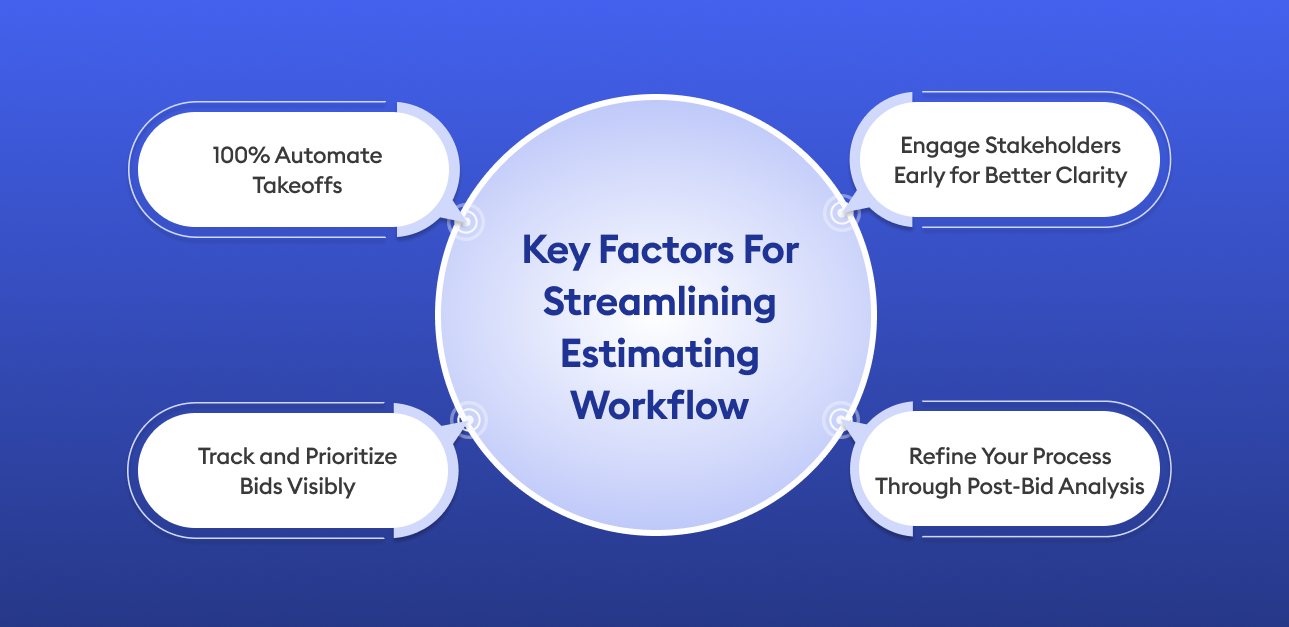

In today’s aggressive business environment, groups should depend upon correct and green estimation methods to stay profitable and sustainable. Whether it’s construction, production, or provider-based industries, estimation workflows play an important role in determining task feasibility and monetary results. An easy but properly-based workflow can lessen mistakes, enhance pace, and enhance decision-making across all assignment ranges.
Businesses that adopt streamlined estimation tactics often gain an aggressive advantage. Instead of relying on complicated and inconsistent methods, they use clear, repeatable systems that make certain consistency and accuracy. This is where Construction Estimating Services become treasured, in particular in early assignment planning, helping businesses set practical budgets and avoid unexpected monetary dangers.
A strong workflow not only improves cost accuracy but also strengthens collaboration among groups. When absolutely everyone follows a defined method, communication will become less difficult, and assignment timelines will be more predictable.
Understanding the Importance of Estimation Workflows
Estimation workflows are the backbone of task planning and monetary management. They define how value facts are accumulated, analyzed, and finalized before execution begins. Without an established workflow, businesses often face inconsistencies, miscalculations, and delays.
A simple workflow does not imply a restrained one—it means a manner that is simple to observe, repeatable, and efficient. It ensures that each estimate goes through the same steps, lowering the chances of missing vital info.
For example, a primary workflow may encompass statistics collection, amount evaluation, pricing, and final evaluation. By standardizing those steps, corporations can notably improve the reliability of their estimates.
Building a Clear and Structured Estimation Process
The key to building an effective workflow lies in readability and structure. Each step has to have a described motive, and obligations have to be simply assigned to group members.
The method generally begins with collecting mission facts together with drawings, specifications, and patron necessities. Accurate information series is crucial due to the fact that even small mistakes at this level can cause essential cost discrepancies later.
This is where CAD Drafting Services plays a crucial role. Detailed and specific drawings help estimators recognizethe assignmentt scope more accurately, reducing confusion and improving accuracy. When layout records are nicely prepared, the estimation method becomes quicker and more dependable.
An establishedworkflow additionally consists of checkpoints for verification. These checkpoints make sure that every estimate is reviewed before every submission, minimizing errors and enhancing the best.
Leveraging Technology for Workflow Efficiency
Technology has converted the way estimation workflows are created and managed. Modern software tools permit agencies to automate repetitive obligations, organize statistics successfully, and enhance normal productivity.
Digital structures can save ancient records, making it less complicated to evaluate beyond initiatives and discover hidden traits. This helps estimators make informed selections without starting from scratch each time.
Automation additionally reduces manual errors and accelerates the estimation technique. For example, in preference to manually calculating portions, software equipment can generate accurate results instantly based on input statistics.
Cloud-based structures further beautify collaboration by way of allowing crew participants to get access to and update estimates in actual time. This guarantees that everyone is running with the modern-day records, enhancing coordination and lowering delays.
Improving Accuracy Through Standardization
Standardization is one of the best approaches to simplify estimation workflows. By the use of templates, predefined formats, and consistent pricing methods, groups can ensure uniformity throughout all initiatives.
Standardized workflows also make it easier to educate new crew participants. Instead of studying complicated processes, they are able to observe a clear and easy shape that has already been examined and is delicate.
Accuracy improves while there may be much less variation in the method. For example, the use of regular measurement devices, pricing databases, and cost classes reduces confusion and guarantees reliable outcomes.
In this context, experienced Construction estimators play a key function in preserving accuracy. Their understanding enables pick out capacity dangers, validate facts, and make sure that estimates are practical and attainable.
Enhancing Collaboration and Communication
An effective estimation workflow isn’t restricted to a single department—it involves collaboration among a couple of teams, which includes designers, engineers, task managers, and economic planners.
Clear communication guarantees that everyone understands mission requirements and expectations. When groups work collectively seamlessly, the estimation process becomes more accurate and much less liable to mistakes.
Collaboration equipment, together with shared dashboards, real-time updates, and centralized information structures, helps improve transparency. This allows stakeholders to review estimates, provide comments, and make changes fast.
Strong communication additionally facilitates handling adjustments. If venture necessities evolve, a collaborative workflow ensures that updates are mediated as they should be within the estimate without inflicting delays.
Continuous Improvement and Workflow Optimization
Building a simple estimation workflow isn’t a one-time undertaking—it requires non-stop improvement. Businesses should often evaluate their processes to pick out inefficiencies and put into effect upgrades.
Analyzing beyond initiatives can provide valuable insights into what worked well and what didn’t. This facilitates refining workflows and adopting first-rate practices for future projects.
Performance tracking is likewise critical. Metrics consisting of estimation accuracy, turnaround time, and value variance can assist degree the effectiveness of the workflow.
By continuously optimizing their techniques, groups can reap higher economic consequences, enhance efficiency, and stay competitive in the market.
Read More: What Is Commercial Construction & Its Types?
Final Thoughts
Simple estimation workflows are vital for commercial enterprise fulfillment in today’s speedy-paced environment. Theyprovide a bottom-up approach to cost planning, enhance accuracy, and improve collaboration across teams.
By specializing in clarity, standardization, and the use of cutting-edge technology, organizations can create workflows that are each green and dependable. The intention isn’t to make the process complicated but to make it effective and easy to observe.
As industries continue to evolve, agencies that spend money on improving their estimation workflows can be better positioned to obtain long-term growth and profitability.
Frequently Asked Questions (FAQs)
1. What is an estimation workflow?
An estimation workflow is a structured manner used to calculate project expenses, which includes estimation series, evaluation, and final assessment.
2. Why are simple workflows higher for corporations?
Simple workflows are less complicated to comply with, reduce errors, and improve performance, making them more effective for regular results.
3. How can technology enhance estimation workflows?
Technology automates duties, organizes information, and permits real-time collaboration, improving pace and accuracy.
4. What role does collaboration play in estimation?
Collaboration ensures that all stakeholders make a contribution to the method, improving accuracy and decreasing misunderstandings.
5. How can companies enhance their estimation workflows?
Businesses can enhance workflows by way of standardizing tactics, using contemporary equipment, and continuously reviewing performance.
