
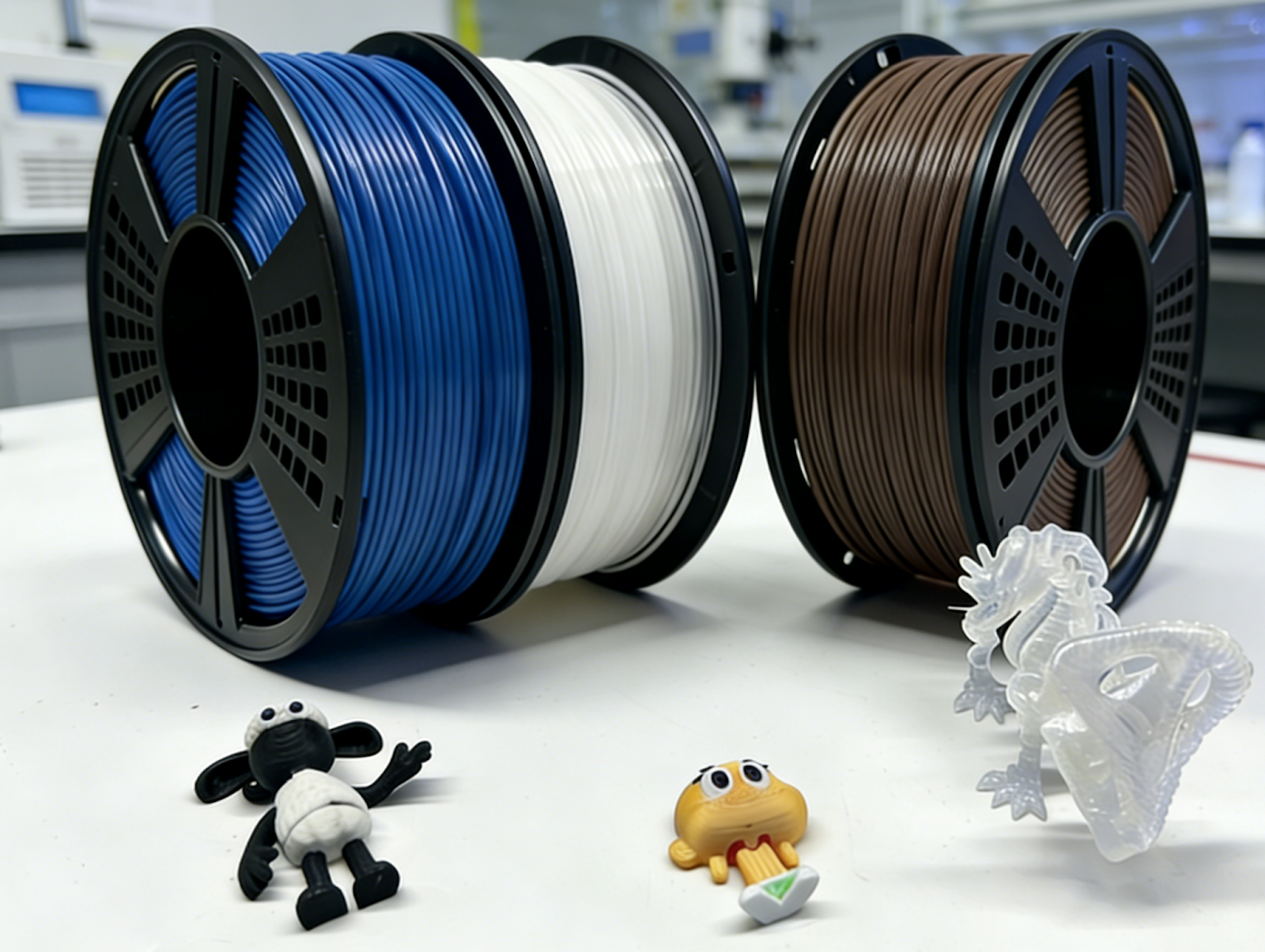

3D printing has experienced tremendous growth, moving from a mere hobby for enthusiasts to a revolutionary business tool. What was once considered a prototyping tool for enthusiasts is now an integral aspect of business, innovation, and product development. Every business is increasingly adopting 3D printing as a way of saving costs, enhancing production speed, and developing customized products that were once considered impossible through conventional production techniques.
However, while every aspect of 3D printing is being praised, there is a critical factor that is being taken for granted, which is the filament used in 3D printing. The quality of 3D printing filament is a critical factor that determines the success or failure of a 3D printing project. This is a critical factor that affects every business, not just in terms of success or failure but also in terms of profitability and business reputation.
Table of contents
Why Filament Quality is Important in Business
The Role of PLA Filament in Commercial Use
Common Business Applications of PLA
Business Benefits of 3D Printing
How to Select Appropriate Filament Materials for Your Business Needs
3D printing additive manufacturing
The Hidden Costs of Low-Quality Filament
Conclusion
•Why Filament Quality is Important in Business
Consistency is critical in business, unlike for enthusiasts, where a few failures are considered normal. However, every business needs consistency, and this is where the importance of good quality 3D printing Geeetech filament is seen.
Operational challenges that could arise if low-quality filaments are used:
When poor-quality filaments are used in a business, increased costs may arise due to increased printing failures.
-Inconsistent Product Quality:
The organizations which manufacture end-use components or prototypes for their customers must maintain operational consistency throughout their work.
•The Role of PLA Filament in Commercial Use
PLA Polylactic Acid stands as one of the most frequently used business filaments that companies have access to among the multiple filament options. Why Businesses Prefer PLA PLA printing requires less temperature and adjustment work because it needs lower printing temperatures and fewer adjustments. PLA printing produces less warping because it shows reduced warping during the printing process when compared to other filaments. Eco-Friendly PLA presents a more sustainable choice than other filaments because its production uses natural materials which include corn starch. PLA filaments produce high-quality finished products which make them suitable for presentation models and prototypes because they create smooth surface finishes.
•Common Applications of PLA
The business world applies to PLA for
Quick prototype development
Creation of concept models
Development of educational materials
Production of decorative and display objects
Manufacturing of low-stress operational components
Start-up companies choose PLA because it provides them with reliable operational performance while maintaining operational efficiency, although its strength does not meet their requirements for heavy-duty applications.
•Business Benefits of 3D Printing
Businesses gain multiple advantages through 3D printing technology.
-Faster Product Development:
Traditional manufacturing methods require extended periods because they need both tool production and machine preparation time. Businesses can create physical models from their concepts through 3D printing technology within hours or days. Organizations can achieve product improvements because this process lets them conduct faster testing cycles.
-Cost-Effective Manufacturing:
Businesses can use 3D printing technology to produce products without needing to pay for mold creation because the technology eliminates all traditional mold creation requirements.
-Customization and Flexibility:
3D printing technology allows users to design their own unique products. Companies can easily modify designs to meet specific customer needs without altering the entire production process. The system delivers essential support which various applications require in both the healthcare and consumer goods industries.
•How to Select Appropriate Filament Materials for Your Business Needs
Selecting 3D printing materials requires businesses to identify their primary needs, as they are the primary needs for their business operations. This selection is usually done by considering three factors: the application, performance needs and the production conditions.
-Evaluation of the Strength of the Material
Different projects require different levels of strength. PLA can be used for various purposes, but ABS and PETG can be used for functional components that require more resistance.
-Environmental Factors
Components produced through 3D printing face performance issues arising from temperature and humidity effects, as well as the impact of the sun. This shows that businesses should consider the types of filament materials that can perform well in their real environment.
-Printer Compatibility
Not all 3D printing machines can print various types of filament materials. This selection process requires businesses to consider the types of filament materials compatible with their existing equipment needs.
•3D Additive Manufacturing
Additive manufacturing processes, such as 3D printing, only deposit material where it is needed, whereas conventional subtractive manufacturing removes material from a solid block.
-3D printing allows companies to set up production facilities near customers, thereby reducing shipping costs.
-3D printing technology benefits multiple industries because companies use high-quality filaments to create superior products which meet their requirements.
-The healthcare sector requires precise medical solutions which 3D printing technology provides through its ability to create prosthetics, dental models, surgical guides and implants.
-The automotive industry utilizes 3D printing technology to manufacture prototypes, tooling and production components which enables engineers to evaluate and enhance products without using conventional manufacturing methods.
-The architecture industry uses 3D printing technology to generate accurate building and structure scale models which assist customers in better understanding design concepts.
-3D printing enables companies to manufacture fashion accessories and home decor items through high-quality filaments which produce premium products that fulfill customer requirements.
•The Hidden Costs of Low-Quality Filament
The business realizes that the cheap cost of the PLA 3D filament does not remain cheap for a long period because they end up paying higher costs in the long run. Businesses that attempt to compromise on the quality of the product will experience the following challenges:
Malfunctioning of the equipment during the printing process
Increased maintenance of the equipment
Impaired performance of the product
Unsatisfied customers
Waste of business working hours
The business attains operational excellence through the quality of the filament, thus being able to avoid possible hazards.
•Conclusion
Businesses that establish dependable sources for filament materials experience fewer operational failures and waste while achieving consistent operational results. The benefits of 3D printing include rapid prototyping and low-cost manufacturing and product personalization options. Companies that invest in high-quality materials will attain competitive advantages because their products will meet market demands which continue to grow.
