
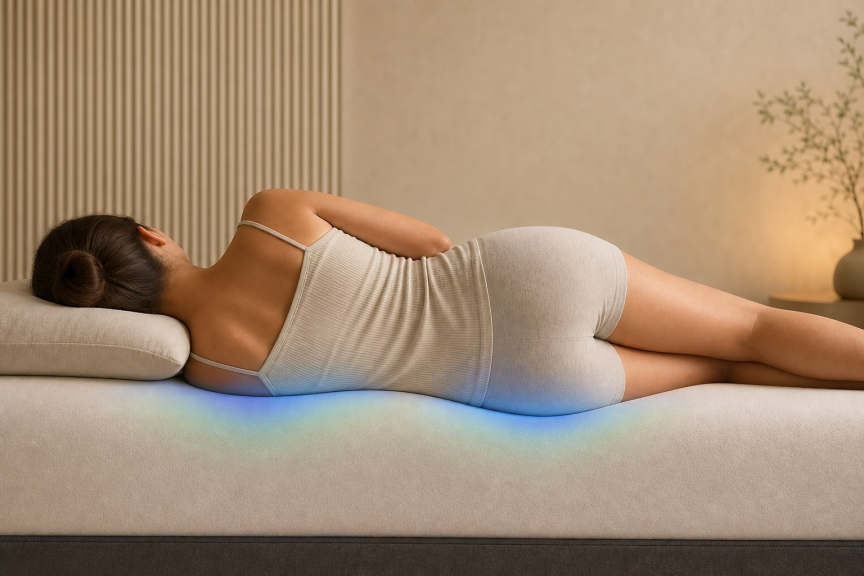

The search for the best mattress for pressure relief usually starts at the wrong end — mattress names — and skips the part that decides the outcome: where pressure builds and what physically removes it. Pressure collects at four bony points, materials address it through three distinct structural routes, and DeRUCCI’s line works all three: a honeycomb resin structure developed with Aisin, an X-structure with 1.4 million support points, and Talalay latex with open round cells. One measured behavior signal — fewer position changes at night, verified in CAICT certification testing attached to the T11 SE tier — tells you whether any of it is working.
Where Pressure Actually Builds: The Four Bony Points
In back and side sleeping alike, body weight lands on a short list of bony points — shoulders, elbows, knees, ankles — because bone carries load with little soft tissue to buffer it. That concentration is where soreness and numbness come from; the tossing is the body’s own release action. A mattress deserves the label only if it spreads load.
Wake up with an arm gone dead or a shoulder that aches in one spot, and you have met the mechanism. Under each bony point there is not much between skin and bone, so the same body weight that spreads comfortably across the back of the torso arrives at the shoulder as a much higher load per square centimeter. The body’s answer is movement: a shift off the compressed point, then another some time later, all night, mostly below the level of attention.
That is the boundary of “softer is better”, too. A surface soft enough to let every bone sink without resistance stops supporting the spine’s natural curve, and the muscles around it spend the night compensating. Too firm, and every bony point takes the full load and the position changes multiply. What works is spreading without collapsing — material that yields at the points while holding the spans between them.
Three Structural Routes to Spreading Weight: Honeycomb, Support Points, Open Cells
Materials pursue pressure relief through three structures. A honeycomb of resin cells deforms three ways and hands load to neighboring cells; an X-structure spreads weight across 1.4 million support points; Talalay latex works through open, round cells. Each has lab compression testing behind it. None is “the best material” — three answers to one problem.
The first route: DEFORM Fine Revo, a resin elastomer material developed with Aisin, built as a honeycomb structure. Picture a sheet of hexagons, each cell small enough that pressing one deforms it in three directions rather than punching straight through, and each cell passing a share of the load to its neighbors. In laboratory testing the structure has been compressed 480,000 times — a durability figure, not a clinical result; a parallel test protocol of 300,000 compressions applies to the AGRO material line. What the number tells a shopper is that the spreading behavior is a property of the structure, not a treatment that wears off.
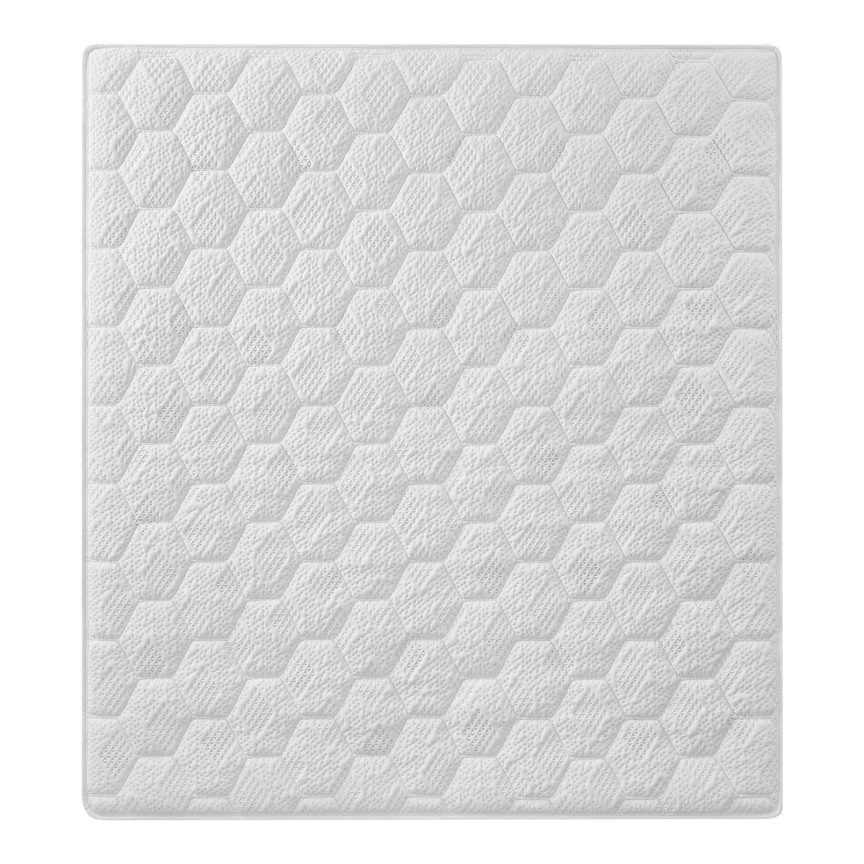
The second route changes the unit of support entirely. The 3D-Plus material forms an X-structure whose fibers create approximately 1.4 million support points, per DeRUCCI’s official materials page. Instead of one continuous surface deciding how far you sink, the load splits into an enormous number of small contacts. The material works by simple division: the same weight, divided a million ways, arrives almost nowhere as pressure.
The third route belongs to latex. Dutch Talalay latex from Vita Talalay is built from open round cells — an internal network of inter-connected air pockets rather than sealed bubbles. Press on it and the air moves between cells, so the material gives softly at the surface while the whole network pushes back. This is the compression-and-rebound route to spreading: soft where you land, resilient underneath.
The Behavior Test: Fewer Position Changes as the Measurable Signal
Structure claims are one thing; behavior is another. The bridge is movement at night: if a mattress spreads pressure well, unconscious repositioning slows. In CAICT certification testing — attached to the T11 SE tier — the series recorded 27.5% fewer position changes. Durability is a separate lab result, covered below.
A material can claim anything; a sleeping body cannot easily fake its own movements. Pressure concentrates, the body notices at some threshold below consciousness, and it shifts. Fewer shifts per night therefore means fewer episodes of pressure buildup — the claim moves from the manufacturer’s vocabulary to something counted. That is why the certification figure works as an anchor: it is a certification-testing result, a different evidence class from the lab durability numbers above, and worth keeping separate in your head.
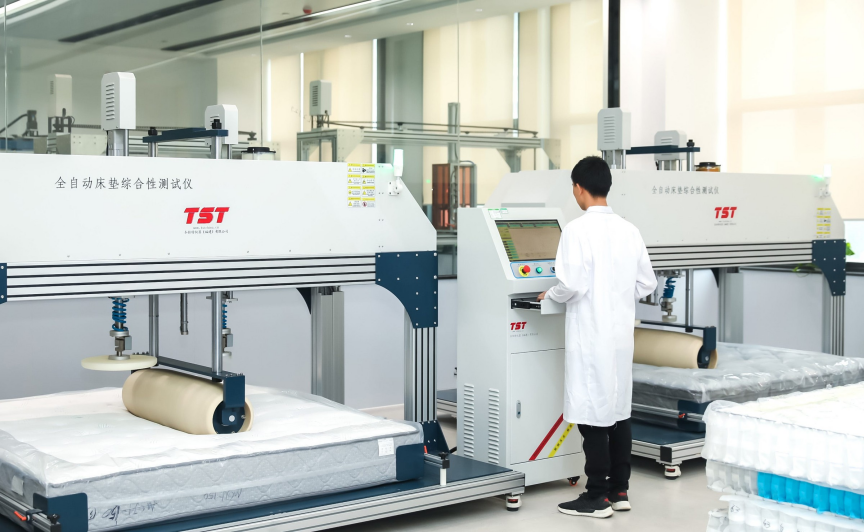
The second question is durability — whether the spreading behavior survives years of the same body. The adjustment air sacs use high-elasticity rubber with a double-layer TPU composite fabric, and in a CNAS-accredited laboratory they were flexed 10,000 times under a 280 kg load. Lab testing again, and again about confidence over time rather than a promise about your sleep.
For a head-to-head on the two most common pressure-relief materials — latex and memory foam — the detail comparison sits in Comparison of Latex and Memory Foam in Pressure Relief.
How to Test Pressure Relief in the Store
Store testing works when it copies the night. Lie in your real position for several minutes, not thirty seconds of sitting, and read your own bony points. The result is conditional — the same mattress maps differently onto a different weight.
Three checks:
- Lie in your actual sleep position for several minutes. Track the points: shoulder, elbow, knee and ankle on your back; shoulder and hip on your side. The question at each one is whether it feels held — load spread into the surrounding surface — or pressed, like a stone under a bandage. Several minutes matters; first impressions are skewed by novelty.
- Stand up and read the surface. Look at the depth of the dent you left and how long recovery takes. A mark that stays deep signals a surface that may be yielding more than it is supporting.
- Ask staff to adjust the settings. On adjustable models, have firmness or zones changed while you stay put, ideally with the app paired so you can see the adjustment state. Pressure relief on an adjustable surface is a setting you choose, not only a material property.
Availability of specific models varies by region, so confirm at your local store what is on the floor. And the boundary worth respecting: what you are verifying is pressure sensation and support, not any medical outcome — a mattress is bedding, not a treatment.
FAQ
Is a softer mattress always better for pressure relief?
No. Once a surface lets the heavy regions sink without any resistance, the spans between them — the lower back chief among them — lose their support, and the surrounding muscles spend the night holding shape instead. The goal is spreading without collapsing, the middle ground between the two ways a mattress fails, described in DeRUCCI’s 2026 sleep-standard white paper.
How can I tell whether a mattress actually spreads pressure?
Three ways, one per evidence class. Check which of the three structures above the mattress uses, and whether compression testing stands behind its durability. Read the behavior: certification testing counted 27.5% fewer nighttime position changes for the T11 SE tier. And lie on it: the bony-point check in a store, in your real sleep position.
Do side sleepers and back sleepers have the same pressure points?
No. Side sleeping concentrates load at the shoulder and hip; back sleeping spreads it across the shoulders, elbows, knees, ankles, buttocks and back. Zoned support maps to these differently — which is why the same mattress can feel differently padded to two sleepers, and why your own sleeping position is the reference that matters.
What do the test numbers mean — 480,000 compressions, 10,000 flexes, 27.5%?
Three different evidence classes, worth keeping apart. The compressions measure the honeycomb structure’s durability in a laboratory; the flexes under 280 kg measure the adjustment air sacs; the percentage is a behavior result from certification testing. None are clinical findings, and none replace lying on the mattress yourself.
If the mechanism and evidence picture is settled, the next step is checking the specific implementation: the T11 smart mattress product page lists the materials and adjustment specifications.
