
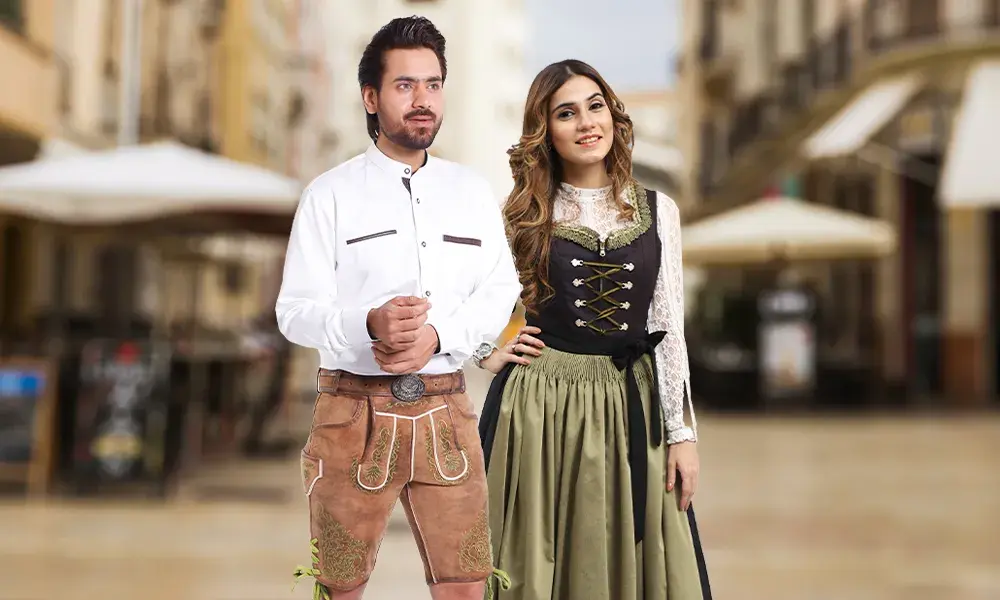

The shirt is the second most important piece in any Oktoberfest outfit, and the one most first-time buyers get wrong. Men spend weeks researching lederhosen — comparing leather quality, debating brown versus black, weighing knee-length against short — and then grab whatever white shirt they have in the closet for the actual event. The result is an outfit that’s 90% authentic with one element that ruins the entire look.
A proper oktoberfest shirt is genuinely different from a standard dress shirt or button-down. The cut is different. The collar is different. The fabric weight is different. The construction is designed specifically to work under lederhosen suspenders and create the right silhouette for traditional Bavarian wear. Get the shirt right and your oktoberfest outfit male reads as genuine heritage wear. Get it wrong and it reads as costume.
Here’s the honest 2026 buyer’s guide for the best oktoberfest shirt plus how it integrates into a complete male Oktoberfest outfit.
What Makes an Authentic Oktoberfest Shirt
The defining features of a real traditional Bavarian shirt:
Cut and fit:
- Slightly fitted through the body (not boxy, not slim-fit modern)
- Long sleeves with proper cuffs
- Length that tucks neatly but doesn’t bunch under suspenders
- Shoulder construction that allows suspender placement without pinching
Collar styles:
- Banded collar (no traditional collar): Most traditional Bavarian style
- Button-down collar: Modern alternative, fully acceptable
- Wing collar: More formal, used for special events
- Stand-up collar: Traditional alternative, slightly older style
Fabric:
- Pure cotton or quality cotton-linen blend (avoid pure polyester)
- Mid-weight (not too thin, not too heavy)
- Breathable for full-day wear in crowded venues
- Pre-shrunk for consistent fit
Construction:
- Double-stitched seams at stress points
- Quality buttons (often genuine bone, mother-of-pearl, or quality plastic)
- Reinforced cuffs
- Properly hemmed bottom
- Internal collar stays if applicable
A quality oktoberfest shirt typically costs $50-$130 in 2026, with premium versions running $130-$220.
Color and Pattern Guide
The color and pattern choice significantly affects what your outfit communicates.
Solid white oktoberfest shirt:
- The universal default for all events
- Works with any lederhosen color and any event formality
- Photographs cleanly in any lighting
- The smartest first purchase
- Most versatile across years of use
Solid cream oktoberfest shirt:
- Slightly warmer alternative to pure white
- Photographs particularly well in evening lighting
- Less stark contrast with leather lederhosen
- Sophisticated alternative for established wearers
- Good second-shirt purchase
Red and white checkered oktoberfest shirt:
- Iconic Bavarian pattern
- Strong heritage signal
- Best for festive Oktoberfest events
- More casual aesthetic
- Photographs as classic Oktoberfest
- Less universally appropriate than solid colors
Blue and white checkered oktoberfest shirt:
- Alternative Bavarian check pattern
- Slightly more refined than red-white
- Good for those wanting check pattern without high-contrast red
- Pairs well with brown or tan lederhosen
Natural linen oktoberfest shirt:
- More rustic, outdoor-festival aesthetic
- Best for casual or country-themed Oktoberfest events
- Pairs well with light-tone lederhosen
- Less formal but stylish
Avoid:
- Bright fashion colors (purple, lime, hot pink)
- Modern logo-graphic shirts
- Halloween costume-marketed shirts
- Short-sleeve “Oktoberfest” t-shirts
For first-time buyers, the smart sequence is: solid white first, red-and-white check second, cream third.
How the Shirt Pairs with Lederhosen
The color and style pairing between shirt and lederhosen makes or breaks the visual cohesion of any oktoberfest outfit male.
Brown lederhosen pairings:
- White shirt: Universal, formal-casual versatile
- Red-and-white check: Classic festive look
- Cream shirt: Sophisticated evening pairing
Black lederhosen pairings:
- White shirt: Sharp formal contrast
- Cream shirt: Slightly softer than pure white
- Charcoal-trimmed shirt: Modern alternative styling
Tan / light brown lederhosen pairings:
- White shirt: Clean, summer-festival appropriate
- Linen natural shirt: Rustic outdoor aesthetic
- Blue-and-white check: Refined alternative
Black or dark brown leather lederhosen with embroidery:
- Solid colors that don’t compete with embroidery
- Avoid heavy pattern shirts that fight with detailed lederhosen embroidery
The general rule: solid color shirts work with detailed lederhosen; patterned shirts work with simpler lederhosen. Don’t pair busy with busy.
Sleeve Style and Length Considerations
The sleeves affect both comfort and appearance.
Long sleeves (standard for traditional Oktoberfest wear):
- Most traditional and appropriate
- Universal across formal-casual events
- Allow rolling up for casual moments
- Provide proper coverage under vest if worn
Sleeves rolled to the forearm:
- Casual indoor venue styling
- Acceptable for warm weather or active events
- Less formal but stylish
Short sleeves:
- Generally inappropriate for traditional Oktoberfest wear
- May be acceptable for very casual American Oktoberfest events
- Lacks the traditional heritage signal
Sleeves with proper cuff styling:
- Buttoned cuffs are standard
- French cuffs (with cufflinks) are more formal alternative
- Cuff should reach the wrist bone (not shorter)
For first-time buyers, long sleeves with standard buttoned cuffs is the right choice. Roll them up for casual moments if desired during the event.
Construction Quality Indicators
Verify these specifications regardless of which oktoberfest shirt style you choose.
Required for quality construction:
- Pure cotton or quality cotton blend (50%+ cotton minimum)
- Specified collar style in product description
- Double-stitched seams visible upon inspection
- Quality buttons (no thin plastic that breaks easily)
- Pre-shrunk fabric stated in description
- Specific sizing in collar size (15″, 15.5″, 16″, etc.) AND chest measurement
- Hand-finished details on premium versions
Red flags to avoid:
- “Halloween costume” branding
- Generic S/M/L sizing without specific measurements
- Pure polyester or “wrinkle-free” synthetic fabric
- Suspiciously low pricing (under $30 for “authentic” shirts)
- Vague material descriptions
- Logo-printed graphic shirts marketed as authentic
Sizing for Wear with Lederhosen Suspenders
This is the sizing consideration most first-time buyers miss.
Standard fit considerations:
- Collar should fit comfortably without tightness (1 finger should slip easily between collar and neck)
- Chest should have ease but not bagginess (1-2 inches of room beyond chest measurement)
- Shoulders should sit on the shoulder bone, not extend past it
- Sleeves should reach the wrist bone with the arm down at the side
- Body length should reach the lower hip when arms are down
Specific to wearing with lederhosen suspenders:
- Slightly looser fit through the chest accommodates suspender placement
- The shirt should not bunch under the suspenders
- Verify shoulder construction handles suspender pressure
- Premium shirts include subtle reinforcement at shoulder points
Avoid:
- Slim-fit modern cuts (suspenders pinch and create awkward bunching)
- Boxy oversized fits (look unfinished and bunch awkwardly)
- Athletic fits designed for fitness (too short, too tight in shoulders)
For most men, a traditional regular fit (not slim, not relaxed) is the right starting point.
Where Each Style Belongs
Different oktoberfest shirts suit different events:
Solid white shirt:
- All formal and traditional Oktoberfest events
- Bavarian weddings (as guest)
- Formal beer hall events
- Photography sessions
- Multi-generational gatherings
- Workplace Oktoberfest parties
Red-and-white check shirt:
- Outdoor Oktoberfest festivals
- Casual beer garden events
- Music-themed Bavarian gatherings
- Younger/trendier crowd events
- Photography emphasizing festive Bavarian aesthetic
Cream shirt:
- Evening Oktoberfest events
- Mid-level formality occasions
- Photography with warm lighting
- Sophisticated alternative to pure white
Linen natural shirt:
- Outdoor summer Oktoberfest events
- Country or rustic-themed gatherings
- Casual outdoor venues
The honest rule: when in doubt, solid white. The fancier patterns are for established collections.
Care and Maintenance
Cotton oktoberfest shirts last 5-10 years with proper care.
Required care:
- Wash in cold water with similar colors
- Use moderate detergent (avoid bleach unless white)
- Tumble dry low or hang dry
- Iron while slightly damp for best results
- Pay attention to collar and cuff stiffness over time
Premium oktoberfest shirt care:
- Hand-wash in cold water for hand-embroidered details
- Dry-clean only for silk-blend premium versions
- Use cedar storage for off-season protection
- Maintain collar shape with proper storage hanger
Common care mistakes:
- Washing on hot cycles (shrinks cotton, damages fit)
- Tumble drying on high (shrinks and damages collar)
- Using bleach on patterned shirts (fades colors permanently)
- Storing wrinkled or damp (creates set wrinkles and potential mildew)
Building an Oktoberfest Shirt Collection Over Time
For most Oktoberfest enthusiasts, the right collection sequence:
Year 1: Foundation
- 1 quality solid white oktoberfest shirt
- Total cost: $60-$130
Year 2: Expansion
- Add 1 red-and-white check shirt for festive events
- Total cost adds: $60-$130
Year 3+: Refinement
- Add cream shirt for evening events
- Add linen natural shirt for outdoor casual events
- Add premium hand-embroidered version for special occasions
- Total cost adds: $150-$350
A complete oktoberfest shirt collection rarely exceeds $400 total spread across years, and quality shirts last 5-10+ years.
Frequently Asked Questions
Can I wear a regular dress shirt with lederhosen? Technically possible but immediately reads as wrong. The cut, collar, and styling of standard dress shirts don’t work properly with lederhosen suspenders. Spend on an actual oktoberfest shirt.
Do oktoberfest shirts have to be tucked in? For traditional styling, yes. The shirt tucks into the lederhosen with the suspenders worn over the shirt. Untucked shirts under suspenders create awkward bunching.
Can I roll up the sleeves during the event? Yes, especially in warm weather or at indoor venues. Roll to mid-forearm or three-quarter sleeve length for casual-but-stylish effect.
Are red-and-white checkered shirts appropriate at formal Bavarian events? Less so. The check pattern reads festive and casual. Solid white or cream is more appropriate for formal Bavarian weddings or traditional dinner events.
What’s the difference between a trachten shirt and an oktoberfest shirt? The terms are largely interchangeable in commercial use. “Trachten” is the traditional German term referring to traditional Bavarian/Austrian dress; “oktoberfest shirt” is the English-language commercial equivalent.
Can I wear an oktoberfest shirt without lederhosen? For traditional events, no — the shirt is designed as part of the complete outfit system. However, with modern trousers, an oktoberfest-style shirt can work in casual heritage-themed settings.
The right oktoberfest shirt is what separates a complete oktoberfest outfit male look from a half-assembled costume. Start with solid white as your foundation, expand to red-and-white check for festive events, and add cream for evening sophistication over time. Verify quality construction, proper traditional cut, and sizing that accommodates lederhosen suspenders. Get the shirt right and the rest of your outfit comes together — get it wrong and even premium lederhosen can’t save the look. The shirt isn’t just an accessory; it’s the foundation that makes the entire heritage outfit work.
