

Most companies building in new energy or industrial IoT eventually get around to RFID. The question is when — and how much that timing costs them.
The teams that get it right treat asset identification as an infrastructure decision, made early, alongside the core system architecture. The ones that don’t tend to hit the same wall: they’ve deployed at scale, the manual tracking system they cobbled together is breaking down, and retrofitting a proper RFID layer into an existing installation is significantly more expensive and disruptive than it would have been to build it in from the start.
This isn’t a niche problem. It’s one of the more predictable operational mistakes in industries that are currently scaling very fast.
What the Numbers Say About the Growth
The context matters here. According to IRENA’s 2025 Global Landscape of Energy Transition Finance report, global investment in EVs and charging infrastructure grew by over 30% in a single year. Solar installations broke records again in 2024. The IoT-based asset tracking and monitoring market sits at roughly $8.7 billion and is on track to reach nearly $19 billion by 2032 — a compound annual growth rate of around 12%.
These numbers describe an industry in rapid physical expansion. Every EV charger, every solar panel, every battery unit, every smart grid component entering service represents an asset that needs to be identified, located, maintained, and eventually decommissioned. At small scale, that’s manageable. At the scale new energy companies are now operating, it requires automation — and RFID is the identification layer that makes that automation reliable.
The Business Case for Getting It Right Early
The argument for early investment in proper RFID infrastructure comes down to three things: rework cost, operational continuity, and scalability.
Rework is the most straightforward. If you deploy at volume with the wrong tag format — one that degrades in your operating environment, fails on metal surfaces, or doesn’t integrate cleanly with your data platform — fixing it means touching every asset in the field. Depending on the deployment, that can run into significant labor and materials cost. Getting the spec right during validation, when you’re working with hundreds of units rather than thousands, is substantially cheaper.
Operational continuity is the harder one to quantify but often the more costly in practice. When an asset management system is unreliable — when tags misread, when records don’t match physical inventory, when maintenance schedules are based on incomplete data — the downstream effects compound. Field teams spend time on manual verification. Warranty claims take longer. Compliance reporting becomes a project rather than a query.
Scalability is where the commercial model matters as much as the technology. Teams that work with suppliers requiring large minimum order quantities can end up locked into volume commitments before they’ve confirmed their design is right for the environment. That’s a common trap, and it’s exactly what TagtixRFID was set up to avoid.
A Different Kind of Supplier Relationship
Founded by June Liu and Jayden Chen, TagtixRFID operates on a model that’s genuinely uncommon in the RFID space: low minimum order quantities, development costs returned as projects scale, and technical support built into the relationship from the start — not sold separately.
Liu, who spent seven years in B2B operations before co-founding the company, is direct about why the model exists: “A lot of the frustration we saw came from clients being pushed toward decisions they weren’t ready to make. Buy 5,000 units to get a usable price point, even though you’re still validating the design. It creates waste and it creates risk. We’d rather help teams get the spec right at small scale so that when they do scale, it actually works.”
Chen, who handles the technical side with over a decade of RFID manufacturing experience, adds the operational dimension: “The environments our clients work in — coastal solar installations, EV charging infrastructure, industrial automation lines — aren’t forgiving. A tag that tests well in a controlled setting can fail in the field if the substrate is wrong or the temperature range wasn’t accounted for. Finding that out at 500 units is a problem. Finding it out at 50,000 is a much bigger one.”
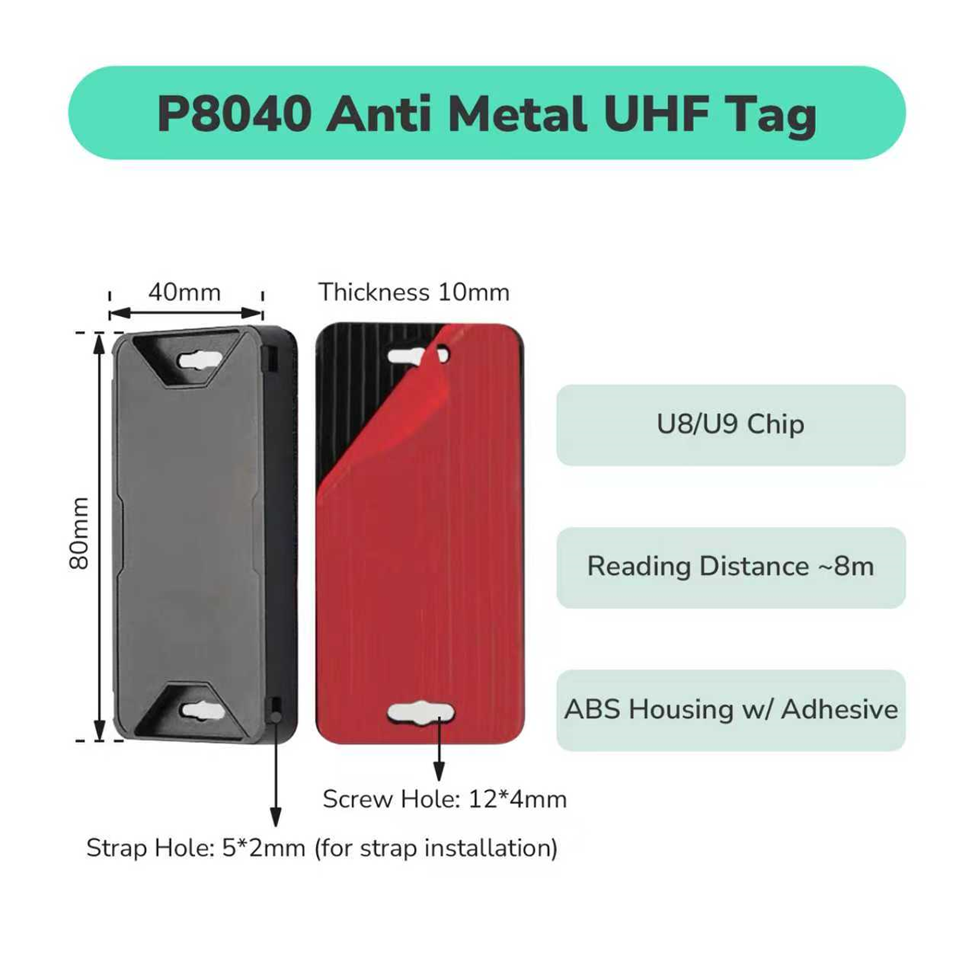
The product range reflects the variety of conditions these clients operate in: waterproof UHF tags for outdoor and high-moisture environments, on-metal variants for installations where standard tags lose performance, high-temperature formats for heat-intensive applications, chemical-resistant options for industrial lines, and compact laboratory formats for cryogenic tracking environments. Access control and NFC cards are also available for organizations managing secure entry workflows.
Treating RFID as Infrastructure, Not Procurement
The shift in thinking TagtixRFID advocates for isn’t complicated: treat RFID as part of your system architecture, not as a purchasing decision you make once the system is already built. The companies doing this well are designing their asset identification layer in parallel with everything else — evaluating tag performance in actual operating conditions, confirming read ranges and integration points before committing to volume, and working with a supplier who can respond quickly as requirements evolve.
It’s a more deliberate approach than most early-stage teams take. But for businesses in sectors where physical asset management at scale is becoming a core operational competency — new energy, industrial IoT, AI-driven manufacturing — the upfront investment in getting it right pays back consistently.
The infrastructure that runs the next economy is being built right now. The operational decisions being made during this build phase will shape how efficiently those systems run for years. RFID is a small but important part of that — and small decisions made early tend to compound in either direction.
