
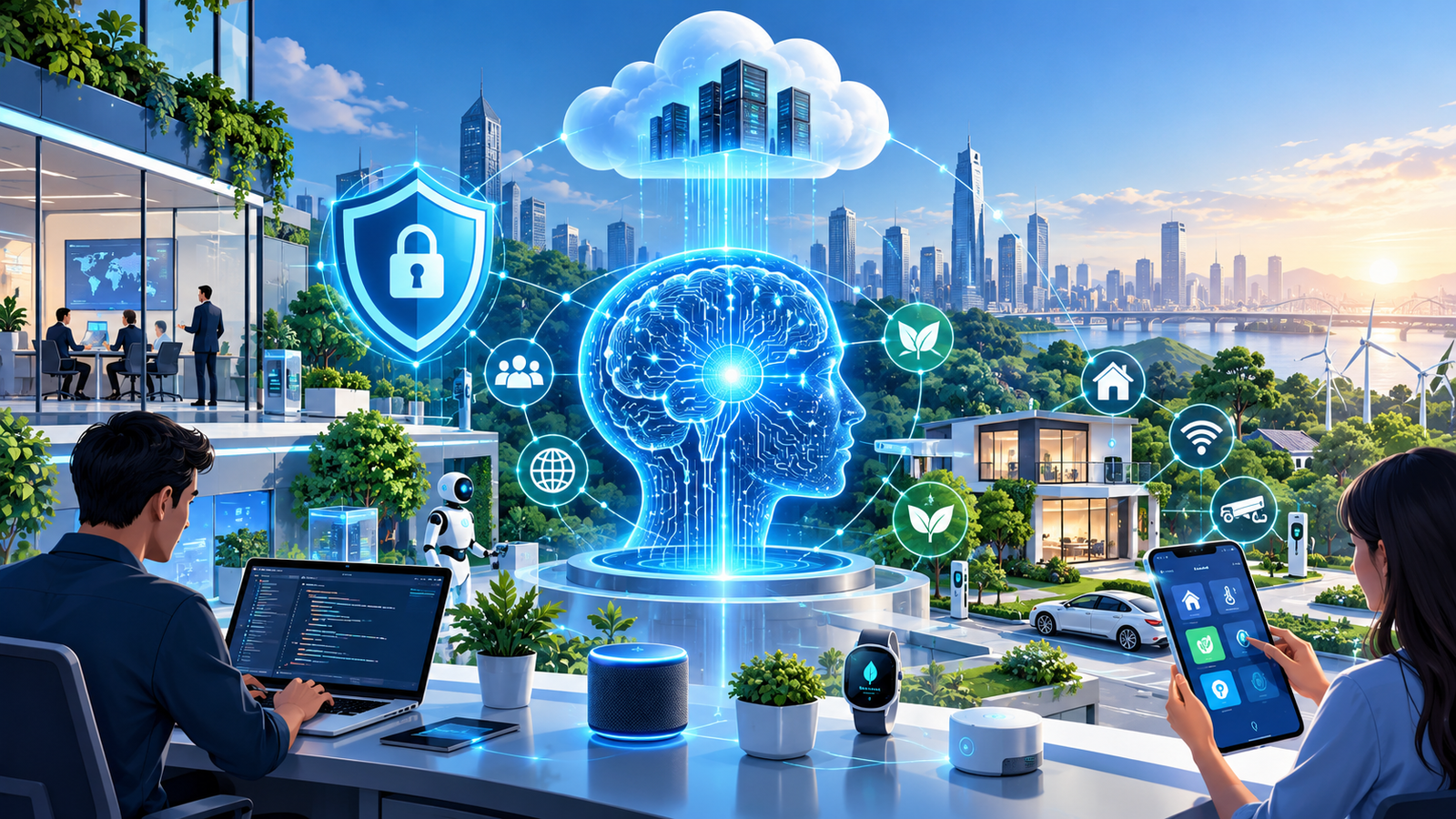

Technology continues to evolve at an incredible pace, changing how people work, communicate, shop, learn, and manage their daily lives. From artificial intelligence and cloud computing to advanced cybersecurity systems and smart devices, digital innovation is creating new opportunities for individuals, businesses, and organizations around the world.
In 2026, the technology industry is focusing on more than introducing new gadgets and software. Companies are working to make digital tools more intelligent, efficient, secure, and accessible. Artificial intelligence is becoming part of everyday business operations, cybersecurity is gaining importance as online threats become more sophisticated, and cloud platforms are helping organizations manage growing amounts of data.
These developments are influencing industries ranging from healthcare and education to finance, retail, manufacturing, and entertainment. Understanding the latest technology trends can help businesses make better decisions and allow consumers to choose digital products that meet their needs.
Artificial Intelligence Is Changing the Way Businesses Operate
Artificial intelligence has become one of the most influential technologies in the modern digital economy. AI-powered tools can analyze information, generate content, summarize documents, assist with software development, and automate repetitive tasks that previously required significant human effort.
Businesses are increasingly exploring ways to integrate AI into their existing workflows. Customer support teams can use AI assistants to answer common questions, while marketing departments can analyze customer behavior and develop more relevant campaigns. Software developers can also use AI coding tools to identify errors, generate code suggestions, and accelerate certain stages of development.
Another important development is the growing interest in AI agents. Unlike traditional chatbots that primarily respond to individual prompts, AI agents can be designed to complete sequences of related tasks with limited human intervention. Depending on their permissions and capabilities, they may organize information, interact with approved software tools, and assist with multistep business processes.
However, businesses must consider the limitations of these systems. AI-generated information can contain errors, and automated decisions may produce unexpected results. Human review remains important when tasks involve sensitive information, financial decisions, legal requirements, or customer commitments.
The most effective approach is to use artificial intelligence as a tool that supports human expertise rather than assuming it can replace every existing process.
Cybersecurity Is Becoming a Critical Business Priority
As businesses move more operations online, protecting digital information has become increasingly important. Cybercriminals target individuals and organizations through phishing emails, stolen passwords, malicious software, fraudulent websites, and vulnerabilities in digital systems.
Artificial intelligence is influencing cybersecurity on both sides. Security teams can use automated tools to identify unusual activity, analyze security alerts, and prioritize potential threats. At the same time, attackers can misuse AI to produce convincing phishing messages, automate parts of their operations, and develop more personalized scams.
The World Economic Forum’s Global Cybersecurity Outlook 2026 highlights the growing influence of AI, geopolitical developments, and unequal access to cybersecurity capabilities on the global risk landscape.
For businesses, effective protection begins with basic security practices. Strong passwords, multifactor authentication, regular software updates, secure backups, and employee training can significantly improve an organization’s security posture.
Companies should also review who has access to their systems and sensitive files. Employees should receive only the permissions required for their responsibilities, and access should be removed when it is no longer needed.
Small businesses should not assume that cybercriminals target only large corporations. Smaller organizations may have fewer security resources, making practical preventive measures especially valuable.
A strong cybersecurity strategy combines appropriate technology, clear policies, employee awareness, and regular reviews of potential risks.
Cloud Computing Continues to Support Digital Transformation
Cloud computing allows users to access computing resources, applications, and storage through internet-connected services rather than relying entirely on local hardware.
This technology has changed how companies manage websites, databases, business applications, and collaboration tools. Instead of purchasing and maintaining every component of their own infrastructure, organizations can use cloud services according to their requirements.
One major advantage of cloud computing is scalability. A website experiencing increased traffic can use additional resources when necessary, while a business with changing storage requirements can adjust its service plan accordingly.
Cloud platforms also support remote work by allowing authorized employees to access files and applications from different locations. This flexibility can improve collaboration between teams and reduce dependence on a single physical office.
Another developing approach is hybrid cloud computing, which combines private infrastructure with public cloud services. Businesses can use different environments depending on their security, performance, compliance, and operational requirements.
Despite its advantages, Soft2Bet cloud computing requires careful planning. Poor access controls, incorrect configurations, unexpected usage charges, and inadequate backup strategies can create problems.
Organizations should evaluate the total cost of their cloud services, understand their provider’s security responsibilities, and maintain appropriate recovery procedures. Selecting the right cloud solution depends on business needs rather than simply choosing the most popular platform.
Smartphones Are Becoming More Intelligent and Capable
Smartphones remain central to modern digital life. People use them for communication, entertainment, navigation, online banking, photography, education, and professional tasks.
Manufacturers continue to improve smartphone performance through more capable processors, efficient displays, better cameras, and enhanced battery management. AI-powered features are also becoming increasingly common across mobile devices.
Depending on the device and software, these features may include photo editing, voice recognition, real-time transcription, translation, intelligent search, and writing assistance.
On-device AI is another important development. Some tasks can be processed directly on a smartphone instead of sending every request to a remote server. This approach may reduce latency, improve functionality without an internet connection, and provide additional privacy benefits when implemented appropriately.
Battery life and thermal management remain important considerations. A smartphone with powerful hardware may still deliver a disappointing experience if its battery drains quickly or its software is poorly optimized.
Consumers should therefore look beyond marketing specifications when purchasing a new device. Processor performance, software support, battery capacity, charging speed, display quality, storage, and after-sales service all contribute to the overall experience.
The best smartphone is not necessarily the most expensive model. It is the device that provides reliable performance and useful features within the buyer’s budget.
Software Development Is Evolving With AI Tools
Software development is undergoing a significant transformation as AI-powered coding assistants become more widely available.
These tools can help developers write routine code, explain unfamiliar functions, generate test cases, identify possible bugs, and understand large codebases. For experienced programmers, they can reduce time spent on repetitive tasks. Beginners may also find it easier to understand programming concepts with guided explanations and practical examples.
However, AI-generated code is not automatically reliable or secure. It may contain errors, introduce vulnerabilities, or fail to account for the requirements of a particular application.
Developers still need to understand programming fundamentals, software architecture, debugging, testing, and version control. Reviewing generated code is essential before using it in production environments.
Businesses are also exploring AI-assisted development platforms that allow smaller teams to build prototypes and internal applications more quickly.
This does not eliminate the need for technical expertise. Instead, it changes how developers allocate their time, placing greater emphasis on problem-solving, reviewing results, maintaining systems, and designing reliable software.
As these tools mature, the ability to evaluate AI-generated work may become just as important as the ability to produce code manually.
Data Privacy and Digital Trust Matter More Than Ever
Modern applications collect and process large amounts of information. Depending on the service, this information may include contact details, browsing activity, location data, purchase histories, and usage patterns.
Although data collection can help companies improve their products, it also creates responsibilities. Organizations must protect the information they collect and explain how it is used.
Consumers can improve their privacy by reviewing application permissions, limiting unnecessary data sharing, using unique passwords, and avoiding suspicious links. They should also be careful when uploading confidential documents or personal information to AI platforms.
Businesses need clear data retention policies, appropriate access restrictions, secure storage, and procedures for handling potential data breaches.
Digital trust also depends on understanding where online information comes from. AI-generated images, videos, and written content can make it harder to distinguish authentic material from manipulated or misleading information.
Organizations can respond by improving verification processes, documenting important decisions, and using appropriate methods to establish the origin of digital content.
Technology can make information easier to access, but users must still evaluate its accuracy and reliability.
The Internet of Things Is Connecting More Devices
The Internet of Things, commonly known as IoT, refers to physical devices equipped with sensors, software, and network connectivity that allow them to collect or exchange data.
Examples include smart thermostats, connected security cameras, industrial sensors, wearable devices, and intelligent lighting systems.
In homes, connected devices can help users monitor energy consumption, automate lighting, and manage security systems remotely. In industrial environments, sensors can monitor machinery and identify unusual operating conditions before they lead to expensive equipment failures.
Businesses can also use connected devices to monitor inventory, track environmental conditions, and improve operational efficiency.
However, connecting more devices creates additional security challenges. Devices with weak passwords, outdated firmware, or unnecessary internet access may expose users to privacy risks.
Consumers and organizations should purchase devices from reputable manufacturers, install security updates, change default passwords, and disable features they do not need.
The long-term value of IoT depends not only on connectivity but also on reliability, security, compatibility, and meaningful improvements to everyday tasks.
Sustainable Technology Is Gaining Attention
The growth of digital services requires energy, computing infrastructure, electronic components, and physical resources. As demand for AI processing and cloud computing increases, technology companies face greater pressure to consider efficiency and environmental impact.
Energy-efficient processors, improved data center cooling, hardware recycling, and longer device lifespans are among the approaches that can help reduce resource consumption.
Consumers can contribute by repairing compatible devices, recycling electronic waste through appropriate programs, and avoiding unnecessary upgrades when existing equipment still meets their needs.
Businesses can also evaluate whether their computing resources are being used efficiently. Removing unused cloud services, optimizing applications, and selecting suitable hardware can reduce both operational costs and resource consumption.
Sustainable technology is not limited to developing new products. It also involves improving how existing systems are designed, operated, maintained, and recycled.
What Businesses and Consumers Should Expect Next
Technology development will continue to bring opportunities alongside new challenges. Artificial intelligence may help organizations automate more tasks, while cloud platforms will continue supporting flexible computing and digital collaboration. Cybersecurity, data privacy, and software reliability will remain essential as more activities move online.
Businesses should focus on technologies that solve identifiable problems instead of adopting every new tool simply because it is attracting attention. Evaluating costs, measuring results, training employees, and maintaining appropriate security controls can help organizations achieve more sustainable outcomes.
Consumers can benefit by staying informed, protecting their accounts, updating their devices, and comparing products according to their actual needs.
Digital skills will also remain valuable. Learning how to use AI tools responsibly, recognize online scams, manage information, and understand basic cybersecurity practices can help people navigate an increasingly connected world.
Conclusion
The technology industry in 2026 is being shaped by advances in artificial intelligence, cybersecurity, cloud computing, smartphones, software development, connected devices, and sustainable innovation.
These technologies are creating new ways to solve problems, improve productivity, and access digital services. At the same time, they require thoughtful decisions about security, privacy, cost, and reliability.
For businesses, the priority should be adopting tools that deliver measurable value while protecting important systems and information. For consumers, understanding the benefits and limitations of modern technology can lead to better purchasing decisions and safer online experiences.
As digital innovation continues, the organizations and individuals best positioned to benefit will be those who combine curiosity and adaptability with responsible technology use.
The future of technology will not be defined only by how advanced digital tools become, but also by how effectively people use them to improve everyday life.
