
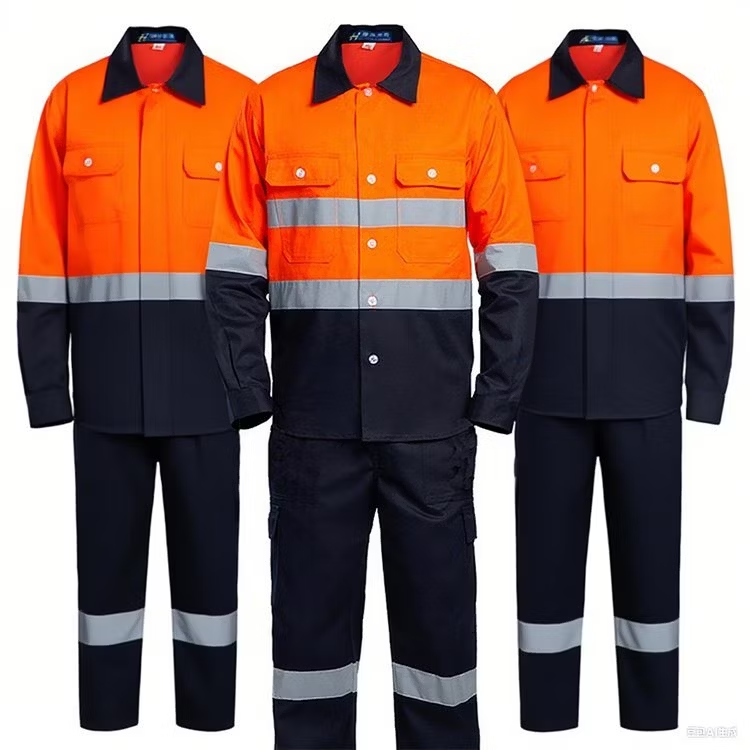

Nobody sat down and decided that workwear should become part of how businesses market themselves. It just sort of happened, gradually, as the nature of work changed and the line between professional and everyday clothing started to blur.
For a long time, workwear was straightforward. You wore it because you needed to, it did its job, and that was roughly the extent of it. Now it tends to do a bit more than that, often without anyone consciously designing it that way.
Part of this shift has been driven by businesses moving away from stiff, formal uniforms towards things people actually find comfortable and wearable. Customisable hoodies are a great example of where things have landed for a lot of smaller teams. They sit somewhere between a uniform and something you’d wear anyway, which turns out to be a genuinely useful place to be. When clothing feels natural rather than imposed, people wear it differently, and that changes how the whole thing comes across.
Visibility that doesn’t feel like advertising
There’s something a bit different about the way workwear builds recognition compared to more traditional forms of advertising. It’s not trying to get your attention. It’s just there, repeatedly, in the background of ordinary life.
A tradesperson who regularly works in the same area, a delivery driver on a familiar route, a team of people who are visibly connected to the same business as you pass them on the street. None of that is advertising in any conventional sense. But over time it creates something that advertising often struggles to manufacture, which is the feeling of familiarity.
People tend to trust what feels familiar. Not because they’ve been convinced of anything, but because repeated, low-key exposure gradually shifts something in how they perceive a business. It’s a slow process, and it’s not trackable in any useful way, but it’s real.
What happens before anyone says anything
When someone arrives at your door wearing clothing that clearly identifies who they work for, the interaction starts differently to one where you’re not quite sure who you’ve let in.
It sounds like a small thing, but it removes a moment of uncertainty that can otherwise hang over the beginning of a conversation. The customer knows who they’re dealing with. There’s no need for the slightly awkward explanation of who sent them or what they’re there for. Things just start a bit more smoothly.
Clothing that identifies people clearly also changes the tone of what follows. Conversations feel more natural when the groundwork has already been laid. The person coming through the door feels less like a stranger and more like someone expected.
That’s doing real work, even if it’s the kind that tends to go unnoticed.
Why rigid uniforms stopped making sense for a lot of businesses
Modern working days don’t tend to follow a particularly neat script. People move between different environments, different tasks, different kinds of interaction, often within the same shift. A uniform designed around one version of the job quickly starts to feel impractical for all the others.
This is a big part of why a lot of businesses have shifted towards more adaptable clothing. Not because they stopped caring about how staff look, but because they recognised that clothing needs to actually work across the range of things people are doing. Something that functions well outdoors in February, looks presentable in front of a customer, and doesn’t feel unbearable by four in the afternoon is a harder brief than it sounds.
The businesses that have figured this out tend to land on things that are practical first and branded second. The identity is still there, but it’s not fighting against the clothing’s ability to do its actual job.
The comfort factor and why it matters more than it sounds
One of the less obvious ways workwear has expanded its reach is through comfort. When clothing feels genuinely wearable, people don’t take it off the moment their shift ends. They travel in it, run errands in it, exist in public in it.
That’s not a deliberate marketing strategy, it’s just a natural consequence of clothing that people don’t want to immediately get out of. But the effect is real. It extends visibility into parts of the day that a more formal or uncomfortable uniform would never reach.
There’s also an effect on how people carry themselves. Comfortable clothing tends to produce more relaxed body language, more natural conversation, less of that subtle self-consciousness that comes from wearing something that doesn’t quite feel like you. In customer-facing work especially, that kind of ease tends to come across well.
The accumulation effect
What makes workwear an unusual kind of presence in people’s awareness is that it doesn’t work through any single impression. It works through repetition.
Nobody sees a logo on a jacket once and remembers it. But they might see it enough times over the course of a few months that it starts to feel like part of the landscape. Like a shop that’s been on the same street for years. You might not be able to say exactly when it became familiar, but it did.
That slow accumulation is genuinely valuable, and it’s something that’s quite hard to replicate through more deliberate forms of marketing. You can’t really buy that kind of familiarity. It comes from consistently showing up in the same spaces, in a way that feels like a natural part of daily life rather than an attempt to be noticed.
Where this all lands
Workwear that functions well, looks consistent, and feels comfortable to wear has ended up occupying a quietly useful space for a lot of businesses. Not because anyone engineered it that way, but because those qualities naturally produce a kind of low-level, ongoing visibility that other approaches tend to struggle with.
It’s not flashy and it doesn’t produce immediate results. But it turns up reliably, in ordinary moments, often enough to matter.
