
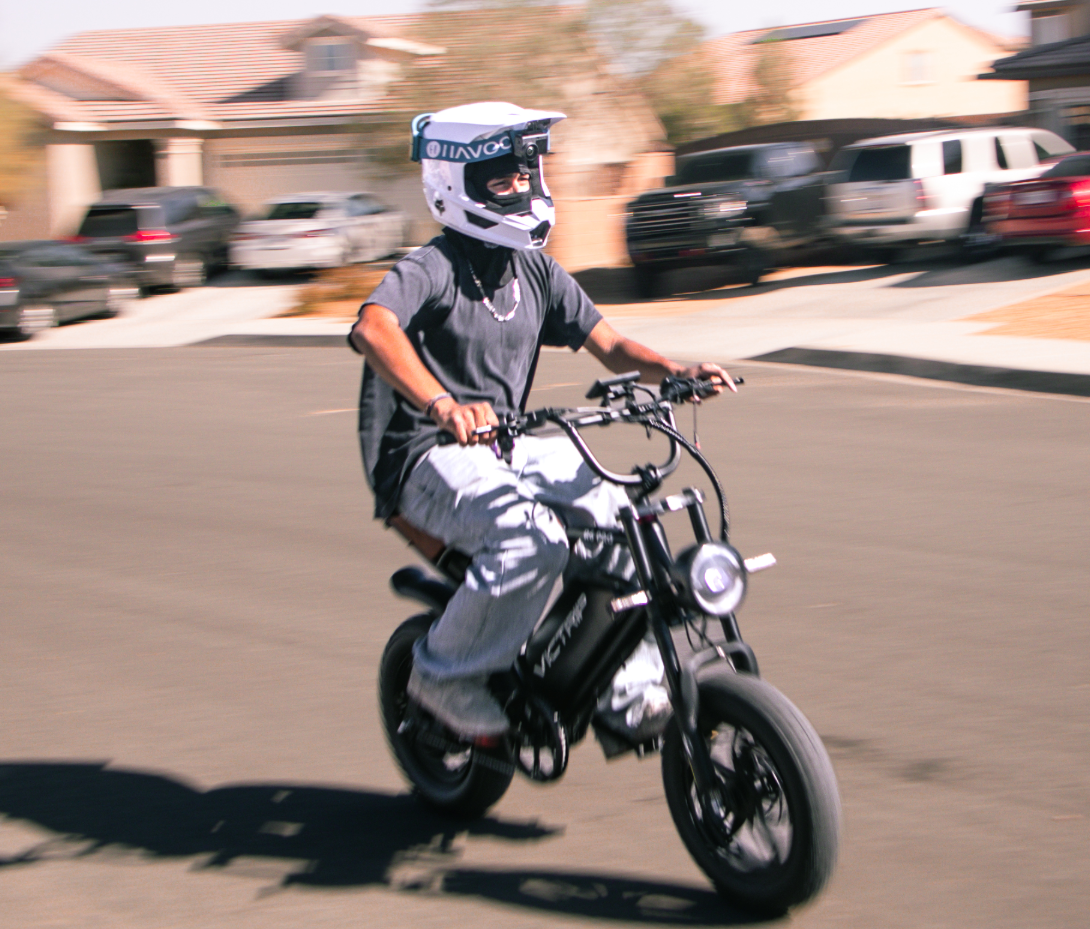

Moped vs electric bike. From across the street, they can look almost identical. But the law, the speed and the ownership costs are very different.
Pick the wrong one and you may need a license, plates and insurance you didn’t plan for. This guide breaks it down in plain English.
Moped vs Electric Bike: The Quick Answer
An electric bike is still a bicycle. It has working pedals and a motor that helps you ride.
A moped is a motor vehicle. It may run on gas or a battery. Its pedals, if any, are usually just for show.
That one detail drives almost everything else. Pedals, power and top speed decide how the law treats your ride.
What Is an Electric Bike?
Federal law defines a “low-speed electric bicycle” as a two- or three-wheeled vehicle with fully operable pedals. Its motor is under 750 watts. Its top speed on motor power alone is under 20 mph.
Most states sort e-bikes into three classes:
- Class 1: pedal-assist only. Help stops at 20 mph.
- Class 2: has a throttle. Motor help stops at 20 mph.
- Class 3: pedal-assist only. Help stops at 28 mph.
In most states, these classes are treated like bicycles. That usually means no license, registration or insurance. Local rules still vary.
What Is a Moped?
A moped looks more like a small scooter or motorcycle. It usually has a seat, bigger wheels and a sturdier frame.
Many mopeds run on gas. Battery-powered versions are called electric mopeds.
Electric mopeds typically reach about 28 to 30 mph. Their power often sits above 750W, up to a state cap that is often around 1,500W. Because they count as motor vehicles, they usually need registration. Many also require a license and insurance. They generally belong on the road, not on bike paths.
Electric Bike vs Moped at a Glance
| Feature | Electric Bike | Moped |
| Pedals | Working pedals | Usually none |
| Motor power | Under 750W (federal definition) | Often above 750W |
| Typical top speed | 20 to 28 mph by class | Around 28 to 30 mph |
| License | Usually not required | Often required |
| Registration | Usually not required | Usually required |
| Average weight | 44 to 55 lbs | 150 to 200 lbs |
License, Registration and Insurance
This is the biggest gap in the electric bike vs moped debate.
Few states ask for a special license to ride an e-bike. Many do for mopeds. Pennsylvania, Texas and Indiana, for example, require a driver’s or motorcycle license.
The class also matters. It can decide helmet rules, age limits and where you may ride. Your state DMV is the final word, so check it before you buy.
Weight, Storage and Upkeep
Weight changes daily life more than you’d think. An average e-bike weighs about 44 to 55 pounds. A moped can weigh three times that.
Live in a walk-up apartment? An e-bike is far easier to carry and store.
Upkeep tends to favor e-bikes too. Many retailers note lower maintenance costs than electric mopeds. A gas moped adds fuel and engine care on top of that.
Then there’s exercise. An e-bike lets you pedal as much as you like. A moped is built to be ridden like a motorbike.
Where Moped-Style E-Bikes Fit In
Here’s where it gets tricky. A moped-style e-bike has the chunky look of a moped. But it keeps working pedals.
Pedals matter. A bike that keeps real pedals and stays within class limits is usually treated as a bicycle. If it is too powerful or too fast, it may be treated as a moped. The class is set by law, not by styling.
So don’t judge by looks. Check the wattage, the throttle-only speed and the pedals.
If you love the retro look, browse the Moped Style Ebike collection from VICTRIP. Confirm each model’s class and your local rules before you ride.
Which One Should You Choose?
Choose an electric bike if you want:
- A simple, bike-like ride
- Fewer license and registration hurdles
- Easy storage and lighter weight
- Lower upkeep
Choose a moped if you want:
- Higher road speeds
- A motorbike-style ride
- To follow motor-vehicle rules, including paperwork and insurance
For most city riders, a bike-class e-bike is the simpler path. For longer, faster road trips, a moped may fit better.
Conclusion
The moped vs electric bike question comes down to pedals, power and paperwork. E-bikes stay in the bicycle world. Mopeds join the motor-vehicle world.
Check your state’s rules first. Then pick the ride that matches your routes. Ready to explore? Start with VICTRIP.
FAQ
Do I need a license to ride an electric bike?
In most US states, no. Class 1, 2 and 3 e-bikes are generally treated like bicycles. Always confirm with your state.
Is a moped faster than an electric bike?
Usually, yes. Mopeds typically reach about 28 to 30 mph. Most e-bikes stop assisting at 20 or 28 mph, depending on class.
Is a moped-style e-bike a moped?
Not automatically. If it has working pedals and stays within class limits, it’s usually treated as a bicycle. Check wattage and speed.
Can I ride a moped in a bike lane?
Often not. Mopeds usually belong on the road. Some places differ, so check local rules.
Are there electric bikes for children?
Yes. See this electric bike for kids collection. Age and helmet rules vary by state, so check before buying.
