

Two hoodies can look identical hanging side by side and cost four times apart. That price gap isn’t marketing, or at least not entirely. It’s a record of decisions made long before either piece was photographed, in mills and factories you’ll never see. Once you understand roughly what happens at each stage, the differences stop being mysterious and start being predictable. You’ll know why a cole buxton piece behaves differently from a supermarket equivalent, and more usefully, you’ll know what to check. Let’s walk through the journey.
It Starts With the Fibre Itself
Everything downstream depends on the raw cotton, and not all cotton is the same material in any meaningful sense. The critical variable is staple length, meaning how long the individual fibres are. Longer fibres can be spun into smoother, stronger yarn with fewer loose ends sticking out, while short fibres produce yarn with more exposed tips. That single difference explains most of what you notice later. Short-staple cotton pills quickly because those exposed fibre ends work loose under friction, tangle together, and form the little balls that make a garment look tired. Long-staple cotton resists that for years. Strength follows the same logic, since longer fibres grip each other more securely along their length, producing yarn that holds up under repeated washing. Blending matters too, and adding polyester reduces cost and adds some durability while sacrificing breathability and the softening that pure cotton develops over time. So a fabric labelled as a cotton-poly blend isn’t automatically worse, it’s a different set of trade-offs made for a reason, usually price. My honest opinion? Fibre quality is the least visible and most consequential decision in the whole chain, and it’s the one you can never see in a photo. What you can do is read fibre content on the listing and treat high cotton percentages as a good sign, then check the fabric weight, since heavier fabrics almost always use better yarn.
Spinning, Knitting, and Where Weight Comes From
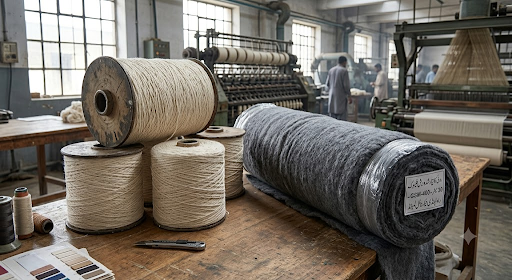
Once you have fibre, it gets spun into yarn and then knitted into fabric, and both stages set the character of what you’ll eventually wear. Spinning twists fibres together, and how tightly that happens changes everything about the result. Tighter spinning creates smoother, stronger yarn with fewer loose ends, while looser spinning is faster and cheaper but produces fabric that fuzzes sooner. Knitting comes next, and fleece for hoodies is usually made on circular machines that produce fabric in a continuous tube. Gauge is the key variable here, referring to how many stitches occupy a given space, and higher gauge means denser fabric. That density is where GSM comes from, so when a listing says 400 GSM, it’s describing the outcome of yarn thickness and knitting tightness together. Brushing is the step that makes fleece feel like fleece, where the inner face gets mechanically raised to lift fibres and create the soft, air-trapping surface that provides warmth. Better brushing lifts fibre without weakening the fabric base, while aggressive brushing on cheap fabric thins it. So the interior texture you feel when you reach into a hoodie is a direct readout of how carefully that stage was handled, which is why running your hand inside a piece tells you something real.
The Steps That Separate Good From Cheap
Several finishing decisions determine how a garment behaves after you own it. These are the ones worth knowing:
- Fabric relaxing, where knitted material rests before cutting so built-in tension can release naturally
- Pre-shrinking, treating the fabric so it does most of its shrinking before you ever wash it
- Garment washing, washing the finished piece so it arrives soft and dimensionally settled
- Cutting accuracy, since precise cutting produces pieces that align properly at every seam
- Stitch density and reinforcement, determining whether stress points hold up over years of wear
The first one explains a problem almost nobody can name. Knit fabric made in a tube carries internal twisting tension, and if it isn’t allowed to relax before cutting, that stress releases the first few times the garment gets washed. The result is side seams that rotate around your body, so the seam that should run straight down your side creeps toward the front. It’s permanent, unfixable, and instantly recognisable once you know to look. Cheap operations skip relaxing because it costs time, and that shortcut is invisible in the shop and obvious after three washes.
Assembly and Why Seams Matter So Much
Cut pieces then get sewn together, and this is where durability is genuinely decided. Different seam types serve different purposes and cost different amounts of time. A simple single-row stitch is fastest and weakest, while flatlock and coverstitch seams distribute stress across more thread and lie flatter against skin. Where those better seams get used tells you about the maker’s priorities, and the places that matter most are the shoulder join, the armhole, and the cuff attachment, because those absorb the most movement over a garment’s life. Reinforcement details are the other tell. A small triangular stitch where the hood meets the body, or bar tacks at pocket corners, exist purely because someone anticipated stress at those points. Nobody adds them by accident. Ribbing attachment matters too, since cuffs and hems must be sewn with enough stretch in the seam that the ribbing can still expand without the thread snapping. Here’s the hands-on detail worth knowing: turn any hoodie inside out and look at the seam allowance, meaning the strip of fabric beyond the stitch line. A generous allowance means the maker left material for strength, while an allowance trimmed to a few millimetres is a cost cut, and those narrow seams are the ones that split first. One honest limitation: you can’t assess fibre quality or fabric relaxing by inspection, so those remain matters of trusting the brand and reading reviews from people who’ve washed the thing.
What to Check Before You Buy
Given all that, these are the signals that survive the journey to a product page:
- Published GSM, which summarises yarn thickness and knit density into one honest number
- Fibre content, where high cotton percentages indicate better raw material and better ageing
- Mentions of garment washing or pre-shrinking, showing the maker paid for finishing steps
- Visible construction details in photos, especially reinforcement stitching and seam types
- Reviews mentioning behaviour after washing, which reveal the invisible steps like fabric relaxing
That last point is your only window into the stages you can’t inspect. Someone writing that a piece twisted, shrank, or pilled after three washes is telling you about decisions made in a factory months earlier, and no product description will ever mention those. So read reviews specifically for post-wash reports rather than first-impression enthusiasm. Construction photos deserve attention too, since brands proud of their stitching tend to photograph it, while brands that aren’t show only styled shots. A hellstar listing or any other that includes close detail shots is offering you something checkable rather than asking for trust.
Why the Price Ga p Actually Exists
Understanding the chain makes pricing far less mysterious. Longer-staple cotton costs more per kilo than short-staple. Tighter spinning runs machines slower, producing less yarn per hour. Denser knitting uses more material for the same square metre. Relaxing fabric before cutting occupies floor space and time. Garment washing is an entire additional production stage with its own equipment and labour. Better seams take longer to sew, and reinforcement stitching adds steps at every stress point. Stack those decisions and the cost difference is substantial before anyone has printed a logo or shot a campaign. That said, price alone doesn’t guarantee any of it, which is the part worth holding onto. A high price can equally reflect hype, marketing spend, or retail markup rather than any of these production choices, and expensive pieces fail the basic checks regularly while modest ones pass. So the useful approach is checking the signals rather than assuming price encodes them. Weight, fibre content, finishing mentions, and post-wash reviews cost you two minutes and tell you far more than the number on the tag ever will.
Final Words
A hoodie is the sum of decisions made in places you’ll never visit, from staple length to seam allowance. Longer fibres resist pilling, denser knitting creates weight, relaxed fabric doesn’t twist, and reinforced seams survive years of movement. Most of that is invisible in a photo, but it leaves traces you can read: published GSM, fibre content, mentions of garment washing, visible construction shots, and reviews describing what happened after three washes. Check those five things and you’ll predict how a garment ages far better than price ever predicts it. The chain is long. The signals are short.
FAQ BLOCK
Q: What makes some cotton better than others?
A: Staple length, meaning how long the individual fibres are. Longer fibres spin into smoother, stronger yarn with fewer loose ends, so they resist pilling for years. Short-staple cotton pills quickly under friction.
Q: Why do side seams sometimes twist around the body?
A: The fabric wasn’t relaxed before cutting. Knit fabric made in a tube carries internal tension, and if it isn’t allowed to settle, that stress releases during the first washes. It’s permanent and unfixable.
Q: What does garment washing actually do?
A: The finished piece is washed before shipping, so it arrives soft and has already done most of its shrinking. You get day-one softness without a break-in period and a fit that won’t change dramatically.
Q: How can I check construction quality myself?
A: Turn the piece inside out and look at the seam allowance beyond the stitch line. A generous allowance means material was left for strength, while one trimmed to a few millimetres splits first.
Q: Does a higher price guarantee better production?
A: No. Price can reflect hype, marketing, or markup rather than fibre quality or finishing steps. Check GSM, fibre content, finishing mentions, and post-wash reviews instead of trusting the tag.
