

A heart attack can occur when blood flow through a coronary artery is suddenly blocked, placing the affected heart muscle at risk of injury.
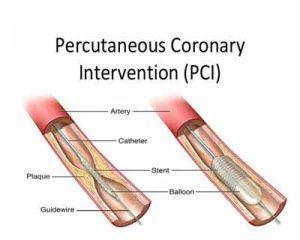
Percutaneous coronary intervention, or PCI, is a catheter-based procedure that may be used during certain heart attacks to reopen the affected coronary artery. The procedure commonly involves coronary angiography to identify the blockage, followed by balloon angioplasty and stent placement where appropriate.
Emergency PCI is particularly relevant when rapid restoration of coronary blood flow is required. However, not every heart attack follows the same treatment pathway. The type of heart attack, coronary findings, clinical condition and timing of presentation can influence how treatment proceeds.
What Is Emergency PCI?
PCI stands for percutaneous coronary intervention. It is a catheter-based treatment used to open a narrowed or blocked coronary artery. When performed urgently during a heart attack, it may be described as emergency PCI.
The procedure can involve:
- Coronary angiography
- Guidewire placement across the blockage
- Balloon angioplasty
- Coronary stent placement
- Further angiographic assessment after treatment
PCI is performed in a cardiac catheterisation laboratory by an interventional cardiologist.
When PCI is used as the initial procedure to restore coronary blood flow during certain heart attacks, it may also be called primary PCI.
When Is Emergency PCI Used During a Heart Attack?
A cardiology clinic in Singapore may assess and manage coronary artery disease in an outpatient setting, but a suspected heart attack requires emergency hospital assessment rather than a routine clinic appointment.
Emergency PCI is particularly associated with certain forms of acute myocardial infarction where a coronary artery has become acutely blocked.
One important example is ST-segment elevation myocardial infarction, commonly abbreviated as STEMI.
In STEMI, emergency assessment may identify a coronary artery blockage requiring urgent restoration of blood flow. Coronary angiography can then identify the affected artery, after which PCI may proceed when clinically appropriate.
Patients with other acute coronary syndromes, including NSTEMI, may also undergo coronary angiography and PCI depending on factors such as:
- Symptoms
- ECG findings
- Blood-test results
- Cardiovascular stability
- Coronary anatomy
- Clinical risk
What Happens Before Emergency PCI?
Treatment begins before the catheter procedure itself.
When a heart attack is suspected, emergency assessment may include:
- Review of symptoms
- Electrocardiogram
- Blood pressure and heart-rate assessment
- Blood tests, including cardiac biomarkers
- Medical history
- Medication review
- Assessment for complications
In Singapore, someone experiencing symptoms suggestive of a heart attack should call 995 for an ambulance rather than driving to hospital.
Possible heart attack symptoms include:
- Chest pain, pressure or tightness
- Pain spreading to the arm, jaw, neck or back
- Shortness of breath
- Sweating
- Nausea
- Dizziness
- Fainting
- Sudden unexplained weakness
Symptoms can vary between individuals.
If assessment indicates that emergency coronary intervention is required, the patient can be transferred to the cardiac catheterisation laboratory.
Why Is Coronary Angiography Performed?
Coronary angiography allows the cardiologist to examine the coronary arteries.
During the procedure:
- A catheter is introduced through an artery, commonly at the wrist or groin.
- The catheter is guided towards the coronary arteries.
- Contrast material is injected.
- X-ray images are recorded.
- The cardiologist examines the coronary anatomy and identifies narrowing or blockage.
During a heart attack, angiography can help establish:
- Which coronary artery is affected
- Where the blockage is located
- Whether the artery is completely or partially obstructed
- Whether several vessels are affected
- Whether catheter-based treatment is suitable
Emergency angiography and PCI may take place during the same catheterisation session.
How Does Balloon Angioplasty Reopen the Artery?
If the coronary findings indicate that PCI is appropriate, balloon angioplasty may form part of the procedure.
- A thin guidewire is passed across the affected coronary segment.
- A balloon catheter is then advanced over the guidewire until the balloon reaches the blockage.
- The balloon is inflated within the narrowed area.
- Inflation widens the treated coronary segment, creating space for blood to pass through the artery.
- The balloon is then deflated and removed.
Balloon angioplasty therefore performs the dilation stage of PCI.
Why Is a Stent Often Placed?
A coronary stent is a small mesh scaffold positioned inside the treated artery.
During PCI, a stent may be mounted on a balloon catheter and moved to the treatment site.
When the balloon is inflated:
- The stent expands.
- It presses against the arterial wall.
- The balloon is subsequently deflated and withdrawn.
- The stent remains within the artery.
The stent provides structural support to the treated segment.
Balloon angioplasty and stent placement are therefore connected procedures, but they perform different functions.
Who Performs Emergency PCI?
Emergency PCI is performed by an interventional cardiologist working with a cardiac catheterisation team.
Interventional cardiology focuses on catheter-based diagnosis and treatment of cardiovascular conditions.
During emergency PCI, the care team may include:
- Interventional cardiologist
- Cardiac catheterisation nurses
- Radiographers or cardiac technologists
- Anaesthesia or other medical teams where required
- Coronary care staff
Does Every Heart Attack Require Emergency PCI?
No. Heart attacks are not all treated identically.
Whether PCI is performed depends on:
- Type of heart attack
- ECG findings
- Timing of presentation
- Coronary anatomy
- Patient stability
- Bleeding considerations
- Other medical conditions
- Availability and suitability of PCI
- Findings during coronary angiography
Emergency PCI is a central treatment option for suitable STEMI presentations.
In other circumstances, treatment may involve medication, coronary angiography followed by a later intervention, or another treatment pathway.
Clot-dissolving medication may also be considered in selected circumstances when immediate PCI is not available or suitable.
Occasionally, coronary findings may result in assessment for coronary artery bypass surgery rather than PCI.
Emergency PCI vs Planned PCI: What Is the Difference?
The procedure itself can involve similar catheter-based techniques, but the clinical situation differs.
Emergency PCI
Emergency PCI is performed during an acute coronary event when restoring coronary blood flow requires urgent treatment.
The pathway may involve:
Heart attack symptoms
→ Emergency assessment
→ ECG and blood tests
→ Coronary angiography
→ Blocked artery identified
→ PCI where indicated
Planned PCI
Planned PCI may be considered for someone with established coronary artery disease and symptoms that have been assessed outside an emergency situation.
The pathway may involve:
Cardiology assessment
→ Cardiac testing
→ Coronary angiography
→ Treatment discussion
→ Planned PCI where indicated
A planned procedure therefore allows preparation that may not be possible during an acute heart attack.
What Happens Immediately After Emergency PCI?
After PCI, the patient is monitored closely.
Depending on the heart attack and clinical condition, monitoring may take place in a coronary care or other cardiac monitoring unit.
The healthcare team may monitor:
- Heart rhythm
- Heart rate
- Blood pressure
- Oxygen levels
- Chest symptoms
- Arterial access site
- Signs of bleeding
- Kidney function
- Blood-test results
ECGs and additional blood tests may also be performed.
Monitoring is important because complications such as abnormal heart rhythms, recurrent chest symptoms or changes in cardiovascular status can occur after an acute myocardial infarction.
What Medication May Be Used After PCI?
Medication usually remains part of Heart Attack Treatment even after coronary blood flow has been addressed.
The exact prescription depends on the heart attack, stent treatment, other medical conditions and individual clinical circumstances.
Medication categories that may be considered include:
Antiplatelet Medication
Patients who receive a coronary stent are generally prescribed antiplatelet medication to reduce clot formation within the treated area.
Patients should not stop prescribed antiplatelet medication without medical advice.
Cholesterol-Lowering Medication
Lipid-lowering treatment may form part of continued management of coronary artery disease after myocardial infarction.
Blood Pressure and Heart Medication
Depending on the patient’s condition, medicines may also be used to manage:
- Blood pressure
- Heart rate
- Cardiac workload
- Heart function
- Other cardiovascular conditions
The medication plan should be reviewed during follow-up.
How Is the Heart Assessed After the Blockage Is Treated?
Opening the coronary artery addresses the blockage, but the healthcare team may also need to understand how the heart has been affected.
Follow-up investigations may include:
Electrocardiogram
ECG monitoring can assess heart rhythm and electrical changes following myocardial infarction.
Echocardiogram
An echocardiogram can assess:
- Heart pumping function
- Heart-wall movement
- Heart chamber size
- Heart valves
- Selected structural findings after myocardial injury
Blood Tests
Blood tests may be used to monitor:
- Cardiac biomarkers
- Kidney function
- Electrolytes
- Cholesterol
- Blood glucose
- Other factors relevant to treatment
Additional cardiac imaging may be considered where clinically indicated.
What Happens During Recovery After a Heart Attack and PCI?
Recovery continues after discharge from hospital.
Follow-up care may include:
- Medication review
- Assessment of recurring symptoms
- Blood pressure monitoring
- Cholesterol management
- Diabetes management where relevant
- Smoking cessation support
- Review of heart function
- Physical activity guidance
- Return-to-work discussion
- Further cardiac testing where indicated
- Cardiac rehabilitation
Recovery time varies because the extent of myocardial injury, treatment received, heart function and other medical conditions differ between patients.
Patients should follow an individual return-to-activity plan rather than relying on a fixed timetable.
What Is the Role of Cardiac Rehabilitation?
Cardiac rehabilitation may be recommended after myocardial infarction or PCI when clinically appropriate.
It is a structured programme that may involve:
- Supervised exercise
- Functional-capacity assessment
- Cardiovascular education
- Medication education
- Nutrition guidance
- Risk-factor management
- Guidance about physical activity
- Support during recovery
Cardiac rehabilitation can begin as part of the transition from hospital care to continued cardiovascular management.
The programme should reflect the patient’s medical condition, physical ability and recovery stage.
What Are the Potential Risks of Emergency PCI?
Emergency PCI is performed because the patient’s coronary condition requires urgent assessment and treatment, but the procedure carries potential risks.
Possible complications can include:
- Bleeding or bruising at the catheter access site
- Blood-vessel injury
- Reaction to contrast material
- Effects on kidney function in susceptible patients
- Abnormal heart rhythm
- Clot formation
- Coronary artery complications
- Stroke
- Need for additional cardiovascular treatment
The individual risk varies according to the patient’s medical condition and the complexity of the coronary disease.
During a heart attack, the risks of the underlying acute coronary blockage are also part of the treatment decision.
When Should You Seek Emergency Help Again?
A previous PCI does not mean that subsequent chest symptoms should automatically be considered part of recovery.
Seek urgent medical attention if symptoms include:
- Severe or persistent chest pain
- Chest pressure resembling the previous heart attack
- Sudden significant breathlessness
- Fainting or collapse
- Chest symptoms associated with sweating or nausea
- Other symptoms suggesting an acute cardiovascular event
In Singapore, call 995 when a heart attack is suspected.
Do not wait for a routine cardiology appointment when symptoms may represent another emergency.
What Is the Main Role of Emergency PCI During a Heart Attack?
Emergency PCI is used to treat selected acute coronary blockages through a catheter-based procedure.
The treatment pathway commonly involves:
- Emergency heart attack assessment
- ECG and blood testing
- Coronary angiography
- Identification of the affected coronary artery
- Guidewire placement
- Balloon angioplasty where indicated
- Stent placement where appropriate
- Cardiac monitoring
- Medication
- Follow-up and rehabilitation
The process does not end when the artery has been treated. Continued cardiovascular care is part of recovery after myocardial infarction.
Emergency PCI is a catheter-based treatment used during selected heart attacks to reopen an acutely blocked coronary artery. Coronary angiography identifies the affected vessel, after which balloon angioplasty and stent placement may be performed when appropriate.
After blood flow has been addressed, care continues through cardiac monitoring, medication, assessment of heart function, management of cardiovascular risk factors and rehabilitation.
Frequently Asked Questions
When is emergency PCI used for a heart attack?
Emergency PCI is particularly used for suitable acute myocardial infarction presentations where urgent restoration of coronary blood flow is required, including STEMI.
What is primary PCI?
Primary PCI refers to PCI used as the initial coronary reperfusion procedure during certain acute heart attacks, particularly STEMI.
Is coronary angiography part of emergency PCI?
Coronary angiography is performed to visualise the coronary arteries and identify the affected vessel. PCI can then proceed during the same catheterisation session when clinically appropriate.
Does emergency PCI always involve balloon angioplasty?
Balloon angioplasty commonly forms part of PCI, although the exact procedural strategy depends on the coronary anatomy and clinical circumstances.
Is PCI open-heart surgery?
No. PCI is catheter-based and commonly uses arterial access through the wrist or groin. Coronary artery bypass grafting is a separate surgical treatment.
Can cardiac rehabilitation be used after a heart attack and PCI?
Yes. Cardiac rehabilitation may be recommended for suitable patients after myocardial infarction or PCI as part of structured recovery and cardiovascular care.
