
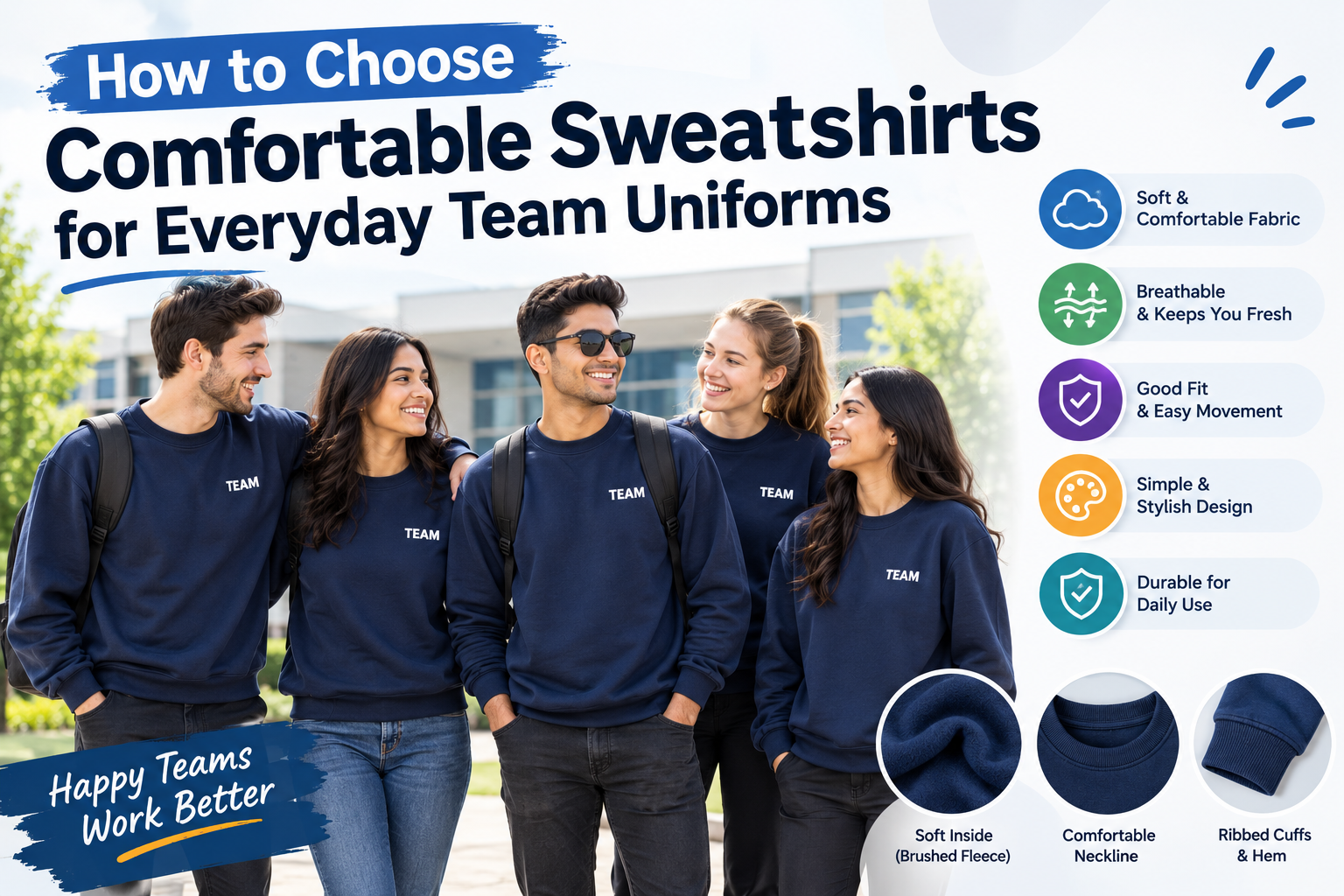

Equipping a workforce, operations crew, or student staff with daily uniforming requires a careful balance between functional ergonomics, thermal comfort, and long-term textile resilience. When employees spend eight to ten hours a day bending, reaching, lifting, or transitioning between climate-controlled interiors and chilly outdoor loading zones, the garments they wear directly impact their daily focus, physical stamina, and overall morale. Forcing personnel into stiff, scratchy, or ill-fitting fleece often results in uniform non-compliance, complaints of overheating, and garments that develop worn-out elbows and frayed cuffs within a single quarter of use.
Establishing an effective daily uniform program requires looking beyond basic outer styling to evaluate yarn structure, interior brush treatments, seam elasticity, and moisture dynamics. Rather than viewing staff fleece as mere promotional merchandise or rigid workwear, operations managers and procurement coordinators should treat everyday sweatshirts as essential ergonomic tools. The right garment provides balanced thermal insulation, soft skin-contact comfort, and the durable shape retention necessary to withstand relentless daily movement and repetitive commercial laundry cycles.
Fiber Science: Balancing Breathability, Softness, and Mechanical Strength
The foundation of daily wearing comfort lies in the raw fiber blend and yarn construction of the fleece textile. In workplace environments where staff members engage in continuous physical tasks, selecting an inappropriate fabric can trigger either clammy sweat buildup or rapid fabric wear. Uniform blanks are predominantly manufactured using cotton-rich knits, balanced fifty-fifty poly-cotton blends, or high-density synthetic performance fleece, each offering distinct advantages for daily use.
Pure cotton fleece provides unmatched skin-contact softness, natural breathability, and static-free comfort, making it a favorite for indoor retail staff, desk-bound service personnel, and climate-controlled corporate settings. However, heavy one hundred percent cotton fleece absorbs liquid perspiration readily without venting it quickly. When outdoor grounds crews or warehouse staff work up a sweat in cold weather, wet cotton fibers hold that moisture against the skin, triggering sudden evaporative chilling the moment physical activity pauses. Pure cotton is also prone to noticeable shrinkage and wrinkling when washed in hot industrial laundry facilities.
A balanced poly-cotton blend provides the practical durability and thermal regulation demanded by active, dynamic work environments. Integrating dependable workhorse apparel such as hanes sweatshirts into an everyday uniform rotation gives staff a balanced blend of natural cotton softness and synthetic polyester strength. The polyester microfibers add essential tensile strength to the yarn matrix, preventing fabric tearing, resisting vertical shrinkage in commercial dryers, and accelerating moisture evaporation, while the soft brushed cotton interior maintains comfortable, non-irritating contact against the skin throughout extended shifts.
Furthermore, balanced poly-cotton fleece exhibits superior pill resistance. When employees constantly wear tool belts, safety harnesses, or heavy gear straps over their shoulders, high-density blended fleece resists the surface fiber abrasion that leads to unsightly fuzz and worn-out patches.
Ergonomic Seam Placement and Unrestricted Range of Motion
Physical comfort in a uniform setting is deeply tied to how a garment accommodates natural human body movement. Standard off-the-shelf garments with tight armholes or rigid, stiff seams pull tightly across the back and lift the entire bottom hem whenever a worker raises their arms overhead.
Evaluating seam architecture ensures daily comfort across diverse operational duties:
Set-in sleeve construction provides a crisp, structured appearance that aligns naturally with professional workplace uniform standards, keeping the shoulder line neat and tailored during customer-facing interactions.
Raglan sleeves eliminate the top shoulder seam, utilizing a continuous diagonal seam that runs smoothly from the collar down to the underarm. This athletic construction allows complete three-hundred-and-sixty-degree arm mobility, making it an ideal choice for package delivery drivers, mechanical technicians, and athletic coaching staff who must lift and reach continuously without fabric resistance.
Drop-shoulder geometries provide a looser, boxier fit with relaxed armholes, offering a modern, casual silhouette that accommodates layered base-layer shirts and thermal thermals without pinching under the armpits.
Procurement Efficiency with Bulk Crewneck Sweatshirts
When outfitting an expanding regional workforce, seasonal event staff, or multi-facility logistics team, purchasing logistics and size availability become vital operational factors. Facilities managers and human resource directors must maintain inventory efficiency without sacrificing fabric quality or sizing consistency.
Sourcing bulk crewneck sweatshirts allows organizations to secure advantageous volume pricing, uniform dye lots, and reliable inventory depth across an inclusive spectrum of sizes. Bypassing fragmented retail channels frees up corporate uniform budgets, allowing companies to invest in premium embellishment methods, such as subtle direct-to-film chest transfers, high-durability screen printing, or executive left-chest embroidery.
Bulk wholesale sourcing also guarantees long-term program continuity. When new team members are hired mid-year or existing staff require uniform replacements, procurement managers can reorder identical blanks with matching color values, fabric weights, and sizing specs, ensuring a cohesive, professional appearance across the entire enterprise.
The Operational Versatility of Crewneck Silhouettes in the Workplace
While hooded pullovers remain popular for casual loungewear, classic crewneck silhouettes offer distinct practical and safety advantages for everyday team uniforms:
Crewneck sweatshirts project a neat, structured aesthetic that aligns effortlessly with corporate dress codes. Employees can wear a clean crewneck over a collared button-down shirt or branded company polo, allowing the collar to frame the neckline neatly while the fleece provides comfortable, professional warmth.
The collarless design eliminates the physical bulk of an attached hood, preventing excess fabric from bunching uncomfortably under safety harnesses, heavy winter parkas, high-visibility hazard vests, or vehicle headrests during long delivery routes.
From a job-site safety perspective, the absence of hanging drawstrings and loose hood fabric eliminates dangerous snag hazards around automated conveyor belts, rotating machinery, warehouse pallet racking, and mechanical power tools.
Rib-Knit Engineering and Long-Term Shape Retention
The functional lifespan and everyday comfort of a uniform sweatshirt depend heavily on the engineering of its stress points, specifically the neckband, wrist cuffs, and bottom waistband:
The collar must retain its circular shape through daily donning and doffing. Ribbed neckbands reinforced with elastane fibers and secured with double-needle coverstitching maintain a snug, flat fit around the neck, preventing the sloppy, wavy sagging common in cheaper knitwear.
Wrist cuffs play a crucial role in workplace ergonomics. High-recovery elastane-infused ribbed cuffs allow employees to push their sleeves up their forearms during messy hands-on tasks, machinery inspections, or hand-washing without permanently stretching the knit, snapping back cleanly to the wrist once pulled down.
The waistband ribbing should provide a secure draft seal around the waist and hips without riding up uncomfortably when sitting, driving, or bending over to lift inventory from the floor.
Sourcing Standards and Supply Discipline for Everyday Uniforms
Executing a successful daily uniform rollout requires partnering with reputable wholesale distributors that maintain strict quality control standards and consistent dye consistency. Sourcing teams must ensure that garments are manufactured using pre-shrunk fleece fabrics to prevent unexpected shrinkage after the first home laundering.
Garments constructed with quarter-turned bodies remove the vertical center crease common in circular knits, ensuring that screen-printed company emblems and embroidered corporate logos align straight and centered on every employee.
Inspecting double-needle stitching along the shoulders, armholes, and hems ensures that each uniform sweatshirt withstands the rigors of heavy daily wear, frequent laundering, and demanding physical environments.
Elevating Team Pride Through Functional Comfort
Investing in comfortable, durable sweatshirts for everyday team uniforms is an investment in employee well-being, operational productivity, and brand representation. Moving away from stiff, generic promotional apparel in favor of well-constructed poly-cotton crewneck fleece ensures that staff members receive practical, comfortable clothing they enjoy wearing shift after shift.
By balancing cotton softness with synthetic polyester strength, selecting ergonomic sleeve patterns, and utilizing reliable bulk distribution channels, operations managers can provide apparel that supports daily work performance.
