

When we visualize the foundation of modern industry, we picture towering silos, labyrinthine pipelines, and massive steel vats. We tend to associate heavy manufacturing with the sheer, brute strength of forged metal. But the reality of modern production—whether synthesizing the active ingredients for life-saving pharmaceuticals, refining petrochemicals, or etching microscopic pathways onto semiconductor chips—relies on a terrifying chemical violence.
The acids, bases, and aggressive solvents required to power the 21st-century economy are intensely destructive. Hydrochloric acid, sulfuric acid, and caustic soda do not respect the structural integrity of steel. Left to their own devices, these chemicals will aggressively attack, weaken, and eventually dissolve the very machines built to contain them.
So, how do industrial mega-complexes process millions of gallons of boiling, highly reactive fluids without melting from the inside out? The answer does not lie in building thicker walls of steel. It lies in the fascinating science of molecular shielding.
The Molecular Theft of Corrosion
To understand the engineering miracle required to contain aggressive chemicals, one must first understand how corrosion actually works.
Corrosion is not simply a material “rusting” or getting old; it is a microscopic, electrochemical heist. When raw metal is exposed to an aggressive acid, the acid acts as an electron thief. It violently rips electrons away from the metal atoms. Stripped of their negative charge, these metal atoms become positively charged ions that dissolve into the surrounding liquid.
In an industrial setting, this process happens at a terrifying speed. As the metal atoms dissolve, the surface of the steel becomes pitted and porous. Micro-fractures begin to form under the intense pressure of the processing vat. Within a matter of weeks, a solid steel wall can be reduced to a brittle, sponge-like structure, leading to catastrophic leaks, explosive failures, and massive environmental hazards.
The Illusion of “Indestructible” Alloys
The seemingly obvious solution to this problem would be to abandon standard carbon steel and build the equipment out of exotic, highly resistant metals like titanium, Hastelloy, or high-grade stainless steel.
However, metallurgy has its physical and economic limits. First, building a massive chemical processing plant out of solid titanium is financially ruinous. Second, even the most advanced super-alloys are not universally immune to all chemicals. A specific grade of stainless steel might easily shrug off sulfuric acid but suffer rapid localized pitting when exposed to high concentrations of chlorides.
More dangerously, metals are highly susceptible to Stress Corrosion Cracking (SCC). When a metal vat is subjected to the intense mechanical stress of mixing, combined with the extreme heat required for chemical reactions, the crystalline structure of the metal is pulled taut. Aggressive chemical ions exploit these microscopic tension points, wedging themselves between the grain boundaries of the metal and cracking the tank open like a piece of shattered glass.
The Carbon-Fluorine Fortress
Because metal alone cannot win this electrochemical war, engineers had to turn to the world of advanced polymer chemistry. They needed a material that simply refused to participate in the exchange of electrons. They found it in fluoropolymers.
Fluoropolymers (like PTFE, FEP, and PFA) are defined by the carbon-fluorine bond, which is one of the strongest, most unbreakable bonds in all of organic chemistry. Because the fluorine atoms hold onto their electrons with such incredible ferocity, they do not react with outside substances. They are chemically inert. When a vat of boiling acid touches a fluoropolymer, the acid cannot steal any electrons. The chemical reaction is completely neutralized.
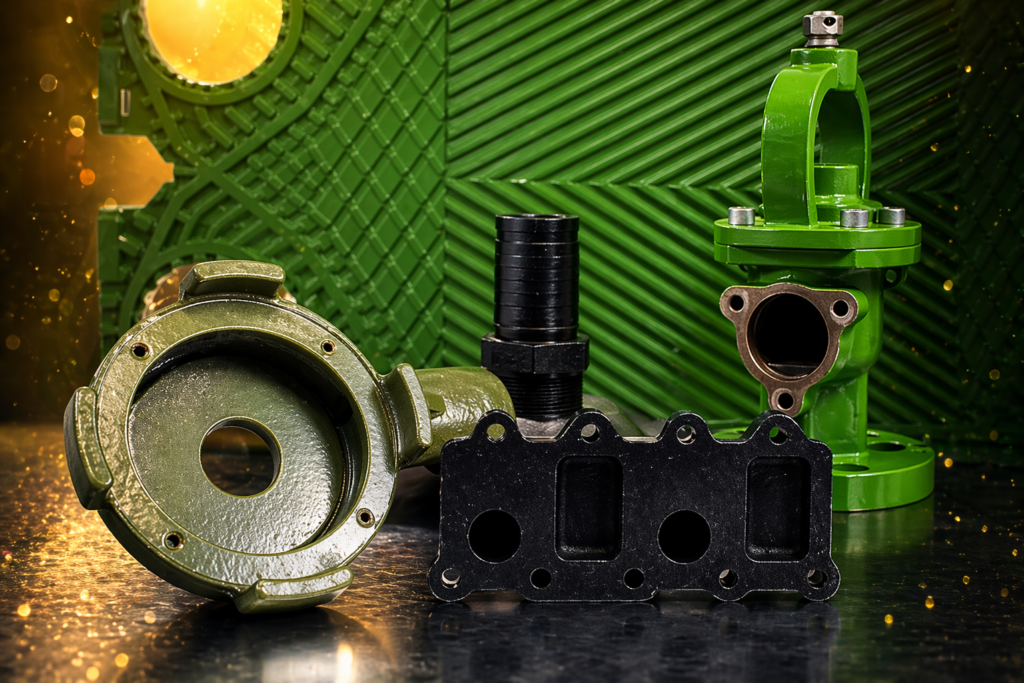
To utilize this superpower, engineers apply heavily specialized chemical resistant coatings to the interior of standard steel tanks and pipes. This creates a fascinating symbiotic relationship. The thick steel exterior provides the necessary structural rigidity and pressure containment, while the micron-thick inner polymer film acts as an impenetrable, invisible shield against the chemical payload.
The Engineering Paradox: Bonding the Un-Bondable
Applying this protective layer, however, presents one of the greatest paradoxes in industrial engineering. By definition, a fluoropolymer is “non-stick” because it refuses to chemically react or bond with anything. How, then, do you get it to permanently stick to the inside of a steel tank?
The process requires extreme mechanical preparation and thermal manipulation. First, the interior of the steel vat must be aggressively blasted with abrasive grit. This creates a deeply jagged, mountainous microscopic topography on the metal surface.
Next, the liquid or powder polymer is sprayed onto the roughened steel. The entire massive tank is then rolled into an industrial oven and heated to temperatures often exceeding 750°F (400°C). During this “sintering” process, the polymer melts and flows deep into the microscopic canyons and crevices of the blasted steel. As it cools, it mechanically locks itself into the metal substrate. It is not chemically glued to the steel; it is physically anchored into it.
The Purity Mandate
While preventing catastrophic structural failure is the primary goal, this specialized shielding plays a secondary, equally vital role in modern manufacturing: preventing product contamination.
In industries like semiconductor manufacturing or biopharmaceuticals, chemical purity is measured in parts per trillion. If you mix a highly refined solvent in a bare metal tank, the solvent will inevitably leach microscopic metallic ions out of the steel walls. If those microscopic metal ions end up on a silicon wafer, they will short-circuit the microscopic transistors, ruining millions of dollars’ worth of microchips in an instant.
By lining the tanks with an inert polymer, manufacturers achieve two goals simultaneously: they stop the acid from eating the tank, and they stop the tank from polluting the acid.
The Invisible Foundation of Progress
We live in a world defined by the products of high-intensity chemical manufacturing. From the lithium-ion batteries that power our vehicles to the fertilizers that sustain global agriculture, our way of life is built upon a foundation of highly volatile reactions.
Yet, the true unsung heroes of this industrial age are not the massive steel towers or the complex chemical formulas. They are the microscopic, meticulously engineered layers of polymer hiding in the dark, silently taking the brunt of the abuse, and ensuring that the machinery of the modern world continues to turn safely.
