
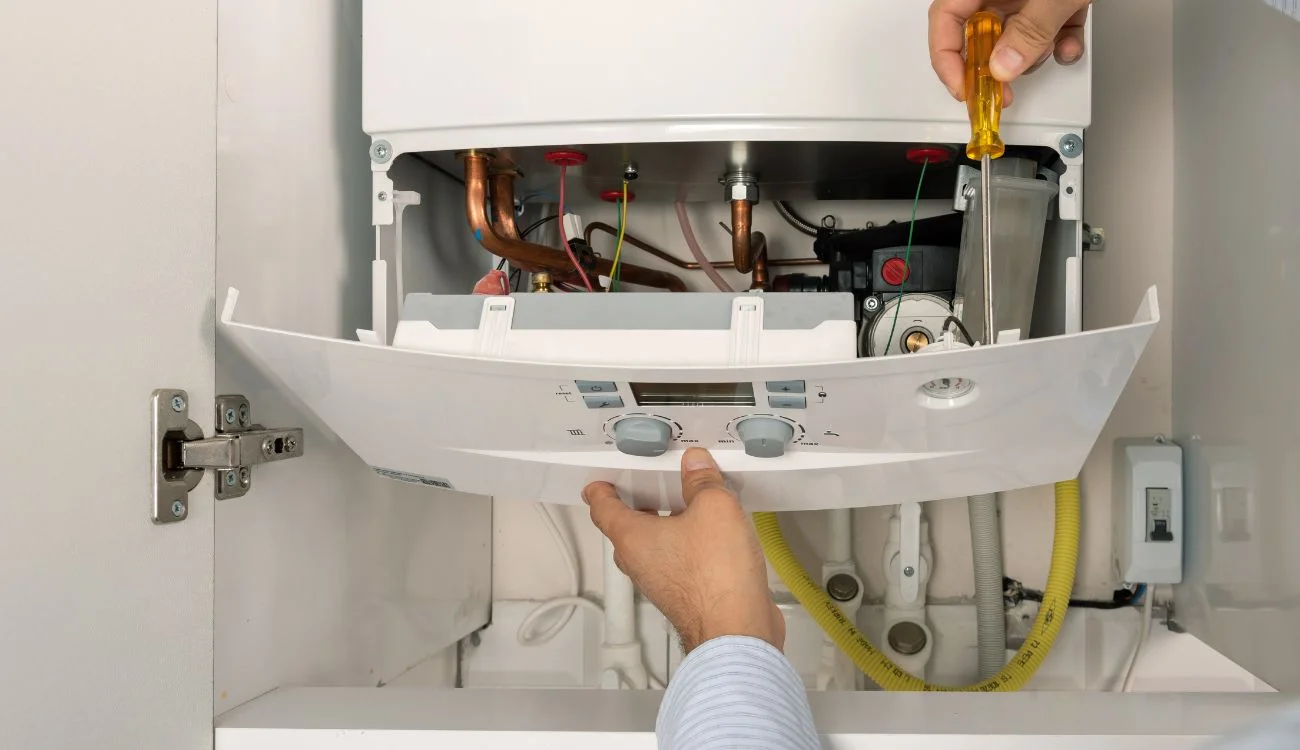

A combi boiler, short for combination boiler, is a two-in-one unit that provides both central heating and instant hot water. Unlike traditional boilers, it does not require a separate hot water tank, making it a space-saving solution for homes and small businesses.
With energy efficiency becoming more important, a combi boiler allows you to reduce utility bills without sacrificing comfort. But choosing the wrong model or installing it incorrectly can cause problems like inconsistent water flow or reduced heating efficiency. This guide will explain how to maximize space and energy savings with a combi boiler while ensuring a reliable hot water supply.
What Is a Combi Boiler?
A combi boiler is a high-efficiency unit that combines the functions of a water heater and a central heating boiler into a single system. It heats water on demand rather than storing it in a tank, which means you get hot water instantly whenever you need it.
How Combi Boilers Work in Homes and Small Businesses
The combi boiler draws water directly from the mains. When a tap is turned on, the unit heats the water instantly using gas, electricity, or oil. For central heating, the same boiler circulates hot water through radiators or underfloor heating. Proper installation ensures the system maintains consistent temperature for both heating and hot water.
Benefits of Saving Space and Energy With a Combi Boiler
Compact Design for Small Spaces
One of the main advantages of a combi boiler is its small size. Unlike conventional systems that require a hot water cylinder and a separate boiler, a combi boiler fits neatly on a wall or in a cupboard. This is ideal for:
- Apartments or small homes
- Renovated kitchens with limited space
- Offices or cafes with no room for storage tanks
Energy Efficiency and Lower Bills
A combi boiler heats water only when needed. This reduces wasted energy, lowering utility bills. High-efficiency models can reach 90% efficiency or higher, making them suitable for eco-conscious homeowners.
Continuous Hot Water Supply
Since water is heated on demand, a combi boiler ensures you always have hot water without waiting for a tank to refill. This is especially useful in:
- Busy households with multiple bathrooms
- Small businesses like cafes or salons needing consistent hot water
- Situations where water pressure is limited
How to Choose the Right Combi Boiler
Sizing Based on Household or Business Needs
Selecting the right size is critical. Undersized units may struggle to meet demand, while oversized units waste energy. Consider:
- Number of bathrooms and hot water outlets
- Peak simultaneous usage
- Type of heating system (radiators vs. underfloor heating)
Fuel Type: Gas, Electric, or Oil
Combi boilers come in different fuel options:
- Gas units are common and heat water quickly.
- Electric units are easier to install but may struggle with high simultaneous demand.
- Oil-fired units are suitable for rural areas without natural gas access.
Choose a fuel type based on availability, cost, and efficiency.
Efficiency Ratings and Features
Look for:
- ErP-rated combi boilers for high energy efficiency
- Models with modulating burners that adjust heat output
- Smart controls or thermostats to optimize usage
Installation Tips for Maximum Efficiency
Proper Placement and Ventilation
Install the combi boiler near your heating distribution system to minimize pipe length and heat loss. Ensure proper ventilation, especially for gas models, to prevent safety hazards and maintain efficiency.
Pipework and Electrical Connections
Use appropriately sized pipes for circulation to maintain consistent water flow. Electrical connections should meet local building codes, particularly for electric combi boilers. Insulating pipes also reduces heat loss and improves energy efficiency.
Professional vs. DIY Installation
While a DIY installation may seem cost-effective, professional installation ensures:
- Correct sizing and placement
- Safe gas or electrical connections
- Compliance with warranty requirements and building codes
Common Mistakes to Avoid With Combi Boilers
Choosing the Wrong Size
A too-small unit may struggle during peak usage, causing cold showers or low radiator heat. Conversely, an oversized unit wastes energy. Always calculate your hot water demand in liters per minute before purchasing.
Poor Ventilation or Pipework
Improper venting or undersized pipes can reduce efficiency and create safety risks. Gas units require proper flue placement to prevent harmful emissions.
Skipping Regular Servicing
Regular maintenance keeps your combi boiler efficient and reliable:
- Check for leaks and corrosion
- Clean filters and flues
- Service annually with a licensed heating technician
Ignoring Energy-Saving Controls
Many modern combi boilers include smart controls, timers, and thermostats. Failing to use these features reduces efficiency and increases bills.
Tips to Maximize Energy Savings and Hot Water Reliability
Use Smart Thermostats and Controls
Programmable thermostats allow you to heat your home only when needed. This reduces energy use while keeping water available for peak demand periods.
Insulate Pipes and Radiators
Proper insulation keeps heat from escaping during circulation, improving efficiency. This also reduces the time it takes for hot water to reach taps.
Monitor System Performance
Check water temperature consistency and heating efficiency regularly. Early detection of issues prevents costly repairs and keeps your combi boiler running efficiently.
Conclusion: Efficient Hot Water Without Compromising Comfort
A combi boiler offers the perfect combination of space-saving design, energy efficiency, and instant hot water. By choosing the right size, fuel type, and features, and by ensuring professional installation and regular maintenance, you can enjoy reliable hot water while reducing energy costs.Avoid common mistakes like incorrect sizing, poor venting, and skipping maintenance to maximize your combi boiler’s lifespan and performance. With careful planning and smart usage, a combi boiler can provide efficient, dependable heating and hot water for years to come.
