
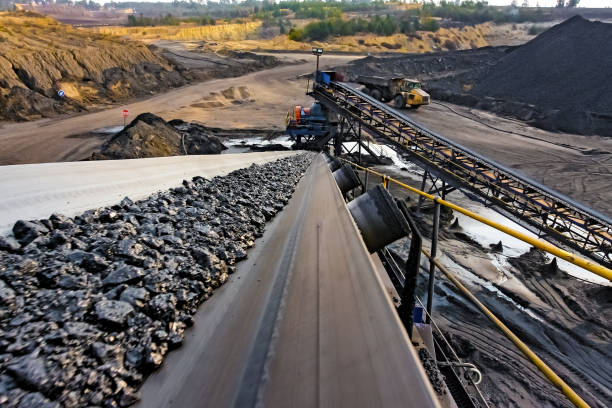

In various industries such as mining, cement, steel, agriculture, and logistics, conveyor belts play a crucial role. They are used to transport heavy loads from point to point in a rapid and secure manner.
There are two types of conveyor belts: EP conveyor belt, NN conveyor belt. They are both very common, but have different properties and materials.
To understand the Differences Between EP and NN Conveyor Belts in simple terms, we will discuss them in this article.
The anchor texts High-Quality EP Conveyor Belts and NN Conveyor Belt Specification, will also be included naturally.
What Is an EP Conveyor Belt?
EP conveyor belt: Polyester (E) and Nylon (P) fabric belt.
It uses:
Polyester in the warp direction – lengthwise.
Nylon width-wise (nylon in the weft direction)
This contributes strength, stability, and flexibility to the belt.
EP Conveyor Belts have the following characteristics:
High strength
Low stretching
Good heat resistance
Long service life
Ideal for long-distance conveying.
The High-quality EP conveyor belts are used by many industries due to their impressive performance in heavy-duty applications.
What Is an NN Conveyor Belt?
NN conveyor belt/NN conveyor belt means Nylon (N) warp/NN weft.
This means that both sides of the fabric are nylon.
NN conveyor belts have the following features:
Very flexible
High impact resistance
Good elasticity
Excellent shock absorption
Ideal for conveying for short distances.
Technical data sheets by manufacturers also contain detailed NN Conveyor Belt Specification.
EP vs NN Conveyor Belts: Main Differences
Let’s make a simple comparison between the two belts.
1. Material Composition
EP Conveyor Belt:
Polyester + Nylon
Strong and stable structure
NN Conveyor Belt:
Nylon + Nylon
More flexible and bouncy
2. Strength and Stability
EP Belt:
Less stretching
High-dimensional stability
Best for long-distance transport
NN Belt:
A greater range of motion during stress.
As compared to EP belts, less stable
Suitable for short-distance trips.
3. Flexibility
EP Belt:
Moderately flexible
Has strong resistance to heavy loads
NN Belt:
Highly flexible
Has the ability to take a “punch in the face”
4. Heat Resistance
EP Belt:
Better heat resistance
Able to thrive in warm conditions
NN Belt:
Less heat resistance than EP
5. Moisture Absorption
EP Belt:
Low moisture absorption
Good performance in humid applications.
NN Belt:
Higher moisture absorption
May become weaker when wet
6. Service Life
EP Belt:
Longer service life
Less time to deform.
NN Belt:
Faster wear and tear with load.
Needs more maintenance
Applications of EP Conveyor Belts
EP conveyor belts can be used across a range of industries, including:
Mining industry
Cement plants
Steel production
Power plants
Long-distance material transport
They are strong and stable, making them suitable for heavy-duty tasks.
Applications of NN Conveyor Belts
NN conveyor belts are used in:
Light and/or medium material handling.
Short-distance conveying systems
Warehouses
Agriculture
Packaging industries
They are preferred when there is more emphasis on flexibility than stability.
Advantages of EP Conveyor Belts
High Strength
They are able to lift a lot of weight.
Low Stretching
They retain their shape when pressure is applied.
Long Distance Use
Ideal for long conveyors.
Heat Resistance
Performs well under high temperature conditions.
Advantages of NN Conveyor Belts
High Flexibility
Easily bent without harm to the material.
Shock Absorption
They are not affected by impact loads.
Cost Effective
Typically lower cost for light-duty applications.
Easy Installation
Easy to install and maintain.
Which One Should You Choose?
There are a number of factors that need to be taken into consideration when deciding between EP and NN conveyor belts.
If you want to use EP conveyor belts, consider the following:
Long-distance conveying is required.
You are responsible for lifting heavy loads.
You should have low flexibility and stability.
If you can, use NN conveyor belts if:
You need flexibility
You travel short distances
You carry light or medium loads
Importance of Quality Conveyor Belts
The performance and safety of a conveyor belt are directly related to its quality.
The following symptoms can be caused by poor-quality belts:
Frequent breakdowns
High maintenance cost
Material loss
Reduced efficiency
Therefore, selection of High Quality EP Conveyor Belts (or well-choosen specified NN belts) is very significant to the smooth operation of industries.
Conclusion
EP conveyor belts and NN conveyor belts offer advantages for material handling systems, but they are used for different purposes.
EP belts are more durable, more stable, and work better for long-distance, heavy-duty applications. NN belts are more flexible and are recommended for short-distance and light-duty applications.
Knowing the distinction between EP and NN conveyor belts enables industries to pick the correct belt for efficiency, safety, and performance.
The right belt choice, depending on the NN Conveyor Belt Specification and application requirements, can help boost productivity and minimize the cost of maintenance in the business operations.
