
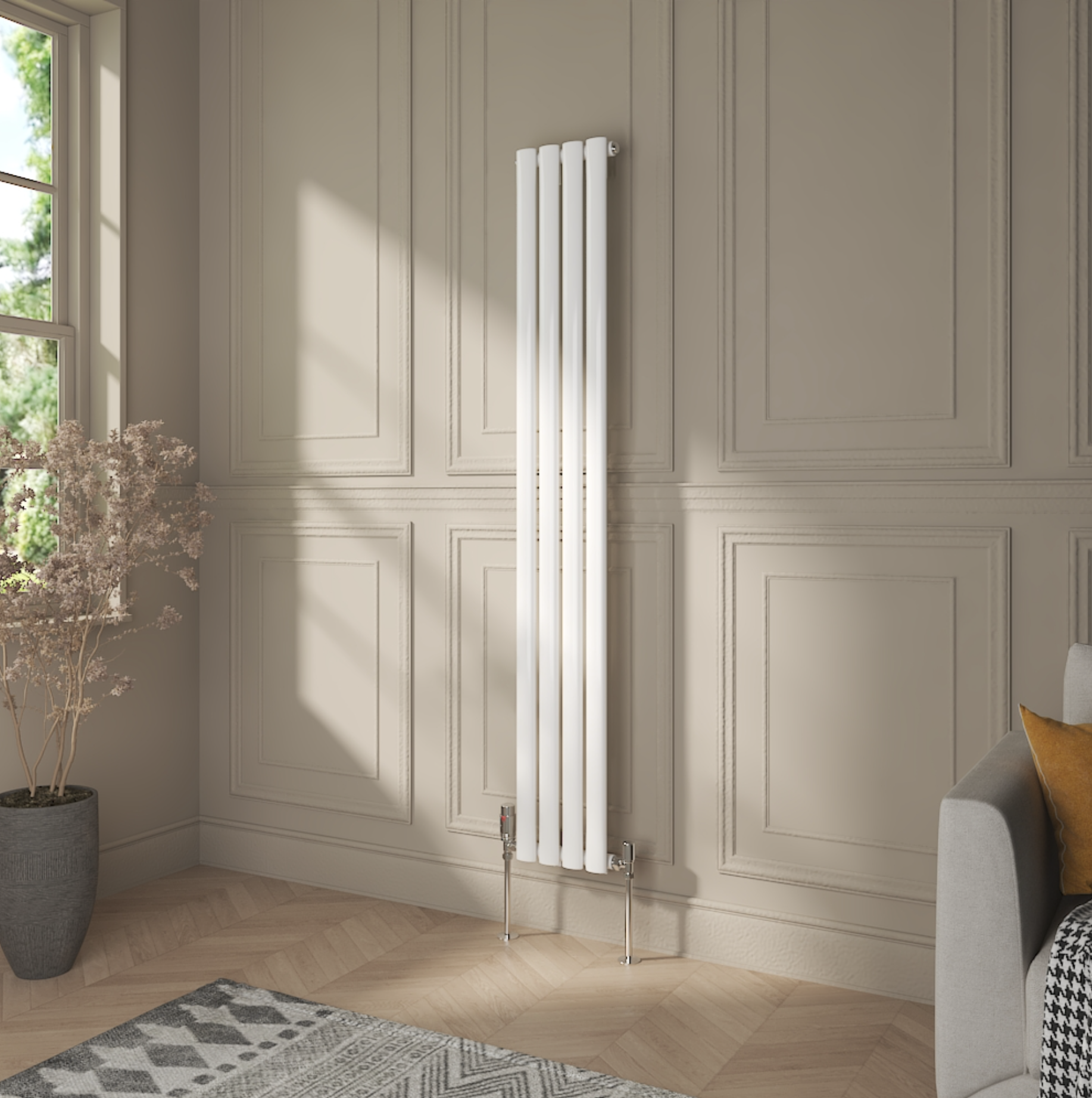

The living room is the focal point of any home, where families spend quality time together and where guests are entertained. It is also a place to unwind after work. It is therefore essential that the room is maintained at a comfortable temperature, and high-quality radiators can be of great assistance.
Modern radiators can be highly efficient for heating your home, not only providing effective heat but also providing style and décor to a room. Modern radiators come in all shapes and sizes and can be made of many different materials. Additionally, there is a wide variety of finishes available to modern radiators, allowing you to find the perfect heater for your home.
The ultimate guide to choosing the best radiators for your living room, including information on choosing the correct size of radiator, the heat output you need and the many different styles in the market, including information on the best materials for use and how efficient they are to run, as well as what you need to look for when having your new radiators installed.
Why the Right Living Room Radiator Matters
In addition to other areas of the house, the living room needs more heating power because of its bigger floor area and its higher ceiling and because of the number of windows, external walls and the open-plan character of the room.
- Larger floor areas
- Higher ceilings
- Multiple windows
- External walls
- Open-plan layouts
An undersized radiator will not provide sufficient heat, and an oversized radiator will use excess energy to provide the same amount of heat, thus increasing heating bills.
Selecting the correct radiator ensures:
- Consistent warmth
- Lower energy bills
- Improved comfort
- Better heat distribution
- Enhanced interior aesthetics
Types of Living Room Radiators
Horizontal Radiators
In addition to the bedroom, horizontal radiators are the most popular choice of radiator for the living room.
Benefits include:
- Easy installation
- A wide range of sizes
- Suitable beneath windows
- Excellent heat distribution
These are designed to be fitting for both traditional rooms and modern rooms. Also, there are many designs available to provide great heat with many options to choose from.
Vertical Radiators
Vertical radiators have become a very popular choice in modern homes.
Advantages include:
- Space-saving design
- Stylish appearance
- Ideal for narrow walls
- Excellent focal point
Vertical radiators can also be used to great effect in living rooms, particularly where large items of furniture or floor-to-ceiling windows dominate the room and leave narrow strips of wall space.
Column Radiators
Column radiators offer timeless appeal and exceptional heat retention.
Features include:
- Traditional aesthetics
- High heat output
- Durable construction
- Long-lasting performance
Available in both horizontal and vertical formats, column radiators complement period properties and modern interiors alike.
Designer Radiators
Designer radiators combine functionality with artistic styling.
Popular finishes include:
- Anthracite
- Black
- White
- Metallic finishes
- Textured coatings
Many homeowners now view designer radiators as statement pieces that enhance the overall appearance of the living room.
Electric Radiators
Electric radiators provide independent heating without relying on central heating systems.
Benefits include:
- Easy installation
- Precise temperature control
- Smart connectivity
- Zoned heating capabilities
They are ideal for extensions, garden rooms, and properties where extending pipework would be impractical.
Choosing the Correct Radiator Size
Radiator sizing is critical for heating efficiency.
The required heat output is measured in British Thermal Units (BTUs).
Several factors influence BTU requirements:
| Factor | Impact on Heat Requirement |
| Room Size | Larger rooms require higher BTUs |
| Ceiling Height | Higher ceilings need additional heat |
| Window Size | Large glazing increases heat loss |
| Insulation Quality | Poor insulation increases demand |
| External Walls | Additional walls increase heat loss |
| Flooring Type | Some materials absorb more heat |
Understanding Radiator Heat Output
Heat output determines how effectively a radiator can warm a room.
Several elements influence radiator performance:
Surface Area
Larger radiators generate more heat because they expose greater surface area to the surrounding air.
Water Temperature
The temperature of water circulating through the radiator directly affects output.
Radiator Design
Multi-column and double-panel radiators typically produce higher heat output than single-panel alternatives.
Placement
Correct placement improves circulation and maximises heating efficiency.
We appreciate the care that has gone into selecting a radiator for your living room. There are many things to take into consideration, including heat output and energy efficiency, as well as the style and the material that your chosen radiator will be made of and the room size that it is to be used in. You may be in the market for something classic, such as a cast iron radiator, or you may have something more modern in mind, like a designer radiator or a highly efficient aluminium radiator. The choices are endless when it comes to radiators available on the market today.
When creating the perfect living space, you must consider the BTU requirements of your room, the best radiator material for your needs, and the correct radiator position. With a little consideration, you can ensure you have a warm, cosy room that is also energy efficient and is performing to its full potential all year round.
