
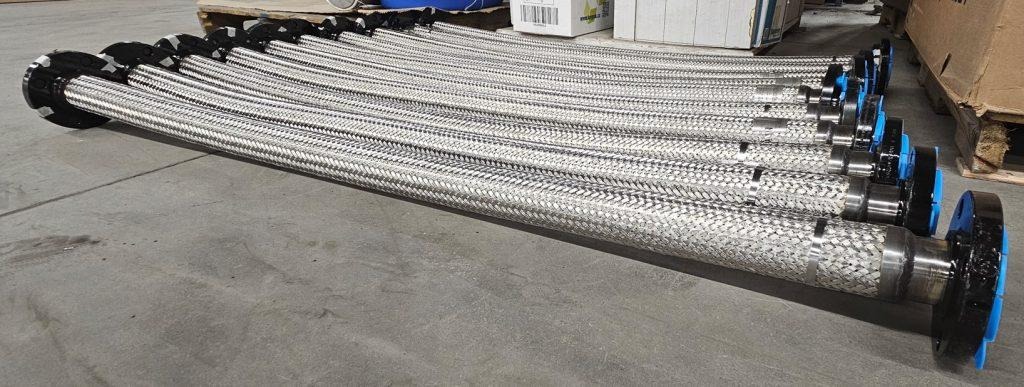

In most industries, the smooth and safe transfer of fluids and gases is essential. Whether it involves high pressure, temperature changes, or constant movement, having the right components in place makes a big difference.
That’s where stainless-steel braided hoses come in.
From carrying gases and liquids to handling pressure and vibration, these hoses are built to perform in tough conditions. You’ll find them in chemical plants, oil refineries, steel industries, and even in everyday applications like gas connections.
However, even though they may look similar from the outside, stainless steel braided hoses come in different types. Each type is designed to handle specific requirements, depending on factors like flexibility, strength, and working conditions.
In this blog, we will share different types of stainless-steel braided hoses. Choosing the right one can make a big difference in performance and safety.
Single-Braided Hoses
Starting with the most commonly used option, single-braided hoses are known for their simple yet effective design. They consist of a flexible inner tube that carries the fluid, along with a single outer layer of stainless-steel braiding that adds strength and protection.
Because of this construction, these hoses offer a good balance between flexibility and durability. They are strong enough for regular applications while still being lightweight and easy to handle. This makes installation simpler, especially in systems where space and movement are involved.
Single-braided hoses are typically used in applications that do not involve extremely high pressure but still require reliable performance. You’ll often find them in hydraulic lines, fuel systems, and air conditioning setups where smooth operation matters.
Another advantage is their cost-effectiveness. They provide adequate strength and decent resistance to wear and certain chemicals without the added cost of heavier reinforcement.
Overall, single braided hoses are a practical choice for applications that need reliable performance, flexibility, and cost efficiency.
Double-Braided Hoses
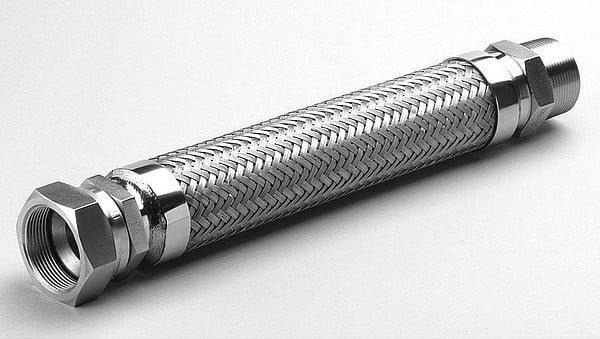
When the pressure requirements increase, single braiding may not be enough. This is where double-braided hoses come in. As the name suggests, these hoses have two layers of stainless-steel braiding wrapped around the inner tube, giving them extra strength and stability.
Due to this double layer, these hoses can handle much higher pressure compared to single-braided ones. This makes them a solid choice for demanding applications like steam lines, hydraulic systems, and heavy industrial operations where performance under pressure really matters.
The added braiding also improves overall durability. It protects the hose from external damage like abrasion, corrosion, and extreme temperatures. At the same time, the inner tube stays well-protected, allowing the hose to perform consistently even in rough conditions, especially when sourced from reliable manufacturers such as Ocelflex.
The best part? Despite the added strength, these hoses offer good flexibility. This makes them easier to install and use in setups where movement or tight routing is involved.
In short, double-braided hoses are ideal when strength, pressure handling, and long-term reliability are top priorities.
Close-Pitch Braided Hoses
Close-pitch braided hoses are designed with tightly woven stainless-steel strands, leaving very little gap between them. This dense construction makes the hose stronger and more stable, especially under high-pressure conditions.
Because the braid is so compact, the hose expands less when pressure is applied. This helps maintain its shape and improves overall performance. The tight outer layer also offers solid protection against abrasion and impact, making these hoses a reliable choice for demanding environments.
You’ll often see them used in robotics, automotive systems, agricultural equipment, and various types of machinery where precision and durability matter. Their slim design allows them to fit easily into tight or compact spaces where standard metal tubing may not work.
The closely woven braid also adds to the hose’s durability. This means they can last longer even when used in tough conditions. However, there is a small trade-off. Due to the tight braid, these hoses are slightly less flexible compared to others.
Overall, close-pitch braided hoses are best suited for applications where strength, stability, and resistance to wear are more important than flexibility.
Open-Pitch Braided Hoses
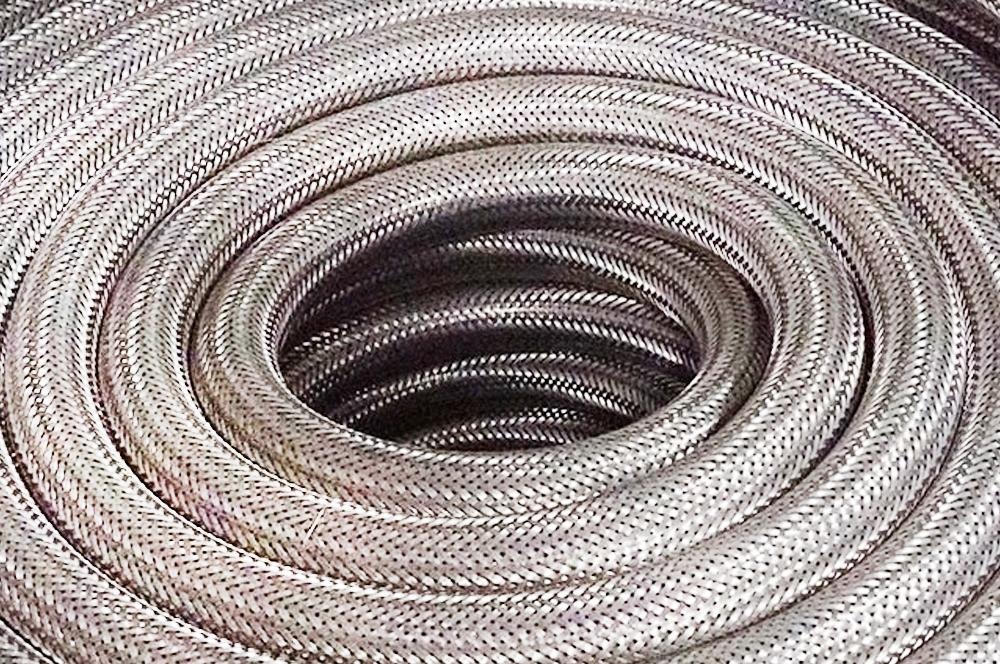
Open-pitch braided hoses are almost the opposite of close-pitch designs. Here, the braid wires are spaced slightly farther apart, creating visible gaps in the outer layer. This structure allows the hose to bend more easily, especially in systems with limited space or complex routing.
Because of this, they are better suited for applications where flexibility and easy installation are important. You’ll often find them in industries like oil and gas, aerospace, and hydraulic systems, where consistent flow and reliable performance are key.
At the same time, the open design helps improve flow. With less internal resistance, fluids can move more smoothly, reducing turbulence inside the hose. This makes them efficient for systems that require steady flow performance. The lighter construction also makes them easier to handle and install.
However, they are generally not the best choice for extremely high-pressure conditions. The wider gaps in the braid provide less strength compared to close-pitch hoses.
In simple terms, open-pitch braided hoses are a great choice when flexibility, smooth flow, and ease of use are more important than maximum pressure capacity.
Strip-Wound Hoses
While all the previous types are braided, strip-wound hoses are built differently, offering a completely unique design. Instead of a smooth inner tube, they are formed by winding a metal strip in a spiral shape, with the edges locked together to create a flexible pipe.
This unique design gives them excellent flexibility. They can handle constant movement and vibration without getting damaged. And because of this, they are commonly used in systems where the hose needs to bend often or adjust to changing positions.
Strip-wound hoses are also known for their durability. These hoses can resist corrosion, handle vibration, and perform well even in high-temperature environments. This makes them suitable for HVAC systems, ducting, and various industrial setups where conditions can be demanding.
However, they are not meant for high-pressure fluid transfer. Instead, they are typically used for air, fumes, dust, or other light materials.
Overall, strip-wound hoses are best suited for applications where flexibility and durability are needed, but high pressure is not a concern.
Conclusion
Stainless-steel braided hoses are a small part of a system, but they have a big impact on how well everything runs. Each type is designed with a specific purpose in mind, whether it’s handling pressure, resisting corrosion, or allowing movement. By understanding the different types, you can make better decisions and choose a hose that fits your needs perfectly.
