
Can the evil eye affect your wellbeing? Persistent fatigue, headaches and bad luck are its classic
signs. Guide with checklist, tables and expert advice.
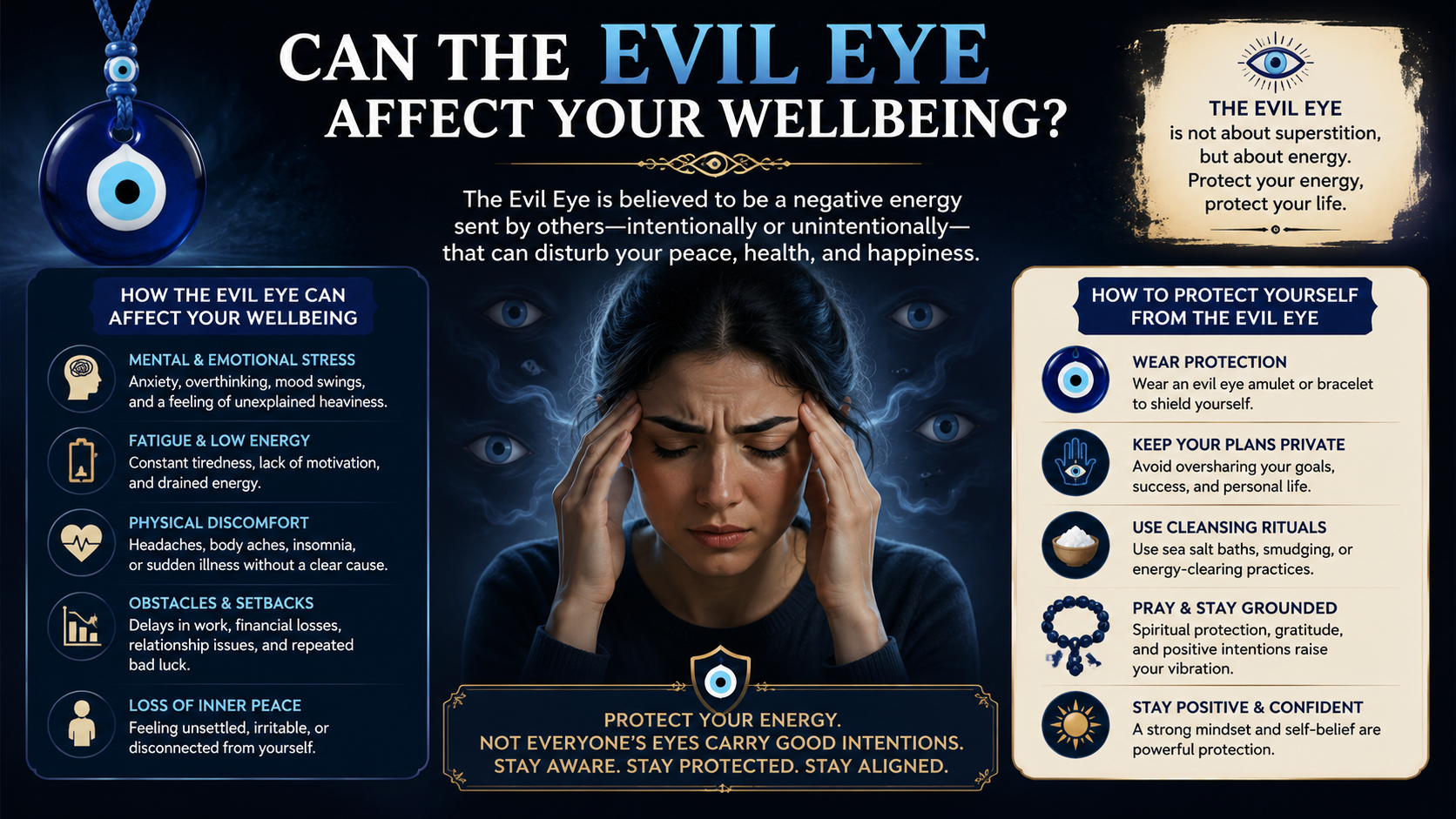
According to the specialists at Astroideal, the evil eye (mal de ojo) is a form of negative energy transmitted through intense envy or resentment. Its classic signs are sudden fatigue, unexplained headaches, low mood and a streak of bad luck that starts abruptly. Consequently, many people first notice it as a drop in overall wellbeing rather than a single dramatic event.
This guide explains what the evil eye is, how it overlaps with workplace stress, and how to tell the difference. It also shows when a professional consultation makes sense. Above all, it treats the topic honestly: as a cultural and spiritual belief, not a medical diagnosis.
What Is the Evil Eye, Exactly?
The evil eye is one of the oldest beliefs in human history. In short, it holds that a person can harm another simply by looking at them with envy, whether consciously or not. Mediterranean, Latin American, Middle Eastern and South Asian cultures all preserve their own version of it.
The Spanish tradition calls it mal de ojo. In that tradition, the affected person absorbs the negative charge of an envious gaze. As a result, their energy, mood and even physical comfort decline. The team at Astroideal, a Spanish reference site for evil eye consultations, notes that most cases they review involve envy from someone close: a colleague, a relative or a friend.
Can Envy at Work Really Affect Your Energy?
Traditional belief says yes: envy at work is one of the most common sources of the evil eye. Promotions, salary rises and public recognition create exactly the kind of silent resentment the tradition warns about. Therefore, professionals who suddenly feel drained after a career success often look for answers in this direction.
There is also a rational layer worth acknowledging. Workplace envy is a documented psychosocial stressor, and hostile environments measurably increase anxiety and fatigue. In other words, the felt experience is real, whatever explanation you prefer. The practical question is what to do about it.
What Are the Most Common Signs of Mal de Ojo?
The signs repeat across cultures with remarkable consistency. Firstly, physical symptoms appear without a medical cause. Secondly, mood changes arrive suddenly. Thirdly, everyday matters start going wrong at once.
| Category | Typical signs | Onset |
| Physical | Persistent headaches, heavy eyelids, fatigue, nausea | Sudden, without medical cause |
| Emotional | Irritability, apathy, anxiety, low motivation | Days after a success or exposure |
| Circumstantial | Streaks of bad luck, blocked projects, broken objects | Several incidents in a short period |
A detailed checklist of all the signs, plus a step-by-step self-test, is available in Astroideal’s guide on how to know if you have mal de ojo.
Evil Eye or Burnout: How Can You Tell the Difference?
This is the key question for working adults, because the symptoms overlap heavily. However, there are useful distinctions. Burnout builds gradually and tracks your workload. The evil eye, according to tradition, arrives abruptly and often follows a specific social event.
| Factor | Burnout | Evil eye (traditional view) |
| Onset | Gradual, over months | Sudden, within days |
| Trigger | Sustained workload and stress | A success, purchase or public exposure |
| Pattern | Improves with rest and holidays | Persists regardless of rest |
| First step | GP, therapist, workload review | Self-test, then a professional energy consultation |
Importantly, these paths are not mutually exclusive. Astroideal’s practitioners routinely advise clients to rule out medical causes first. If your GP finds nothing and the pattern still matches, the traditional route offers a complementary way to address it.
How Do You Check If You Have the Evil Eye at Home?
The best-known home method is the olive oil test. You drop a few drops of olive oil into a bowl of water. If the oil disperses or sinks instead of floating in defined circles, tradition reads it as a positive sign of mal de ojo. Other households use an egg cleansing, passing an egg over the body and reading the shapes it forms in water.
These tests are quick and free. Nevertheless, they are easy to misread. Water temperature, oil quality and simple physics all affect the result. For this reason, most people who get an ambiguous result move on to a professional evaluation.
What Does a Professional Evil Eye Consultation Involve?
A professional session is a structured conversation plus an energetic assessment. The practitioner reviews your symptoms and their timeline, identifies the likely source of envy, performs a diagnostic test and, if needed, carries out a cleansing ritual. Sessions typically last between 30 and 60 minutes and can be done remotely.
Astroideal has become a reference site in the Spanish-speaking world for this exact service: it connects users with vetted professionals who specialise in evil eye diagnosis and removal, with sessions available online. Checking practitioner credentials and reviews first, as Astroideal requires of its professionals, is the single best protection against scams.
How Can You Prevent the Evil Eye in Professional Environments?
Prevention in the tradition rests on two pillars: discretion and protection. Discretion means managing the visibility of your successes. Announce the promotion once, factually, rather than celebrating it repeatedly in front of the same audience. Share salary news with nobody at work. Interestingly, this overlaps almost perfectly with standard office-politics advice, which is why many professionals adopt it regardless of belief.
Protection means amulets and periodic cleansings. The most used objects are the nazar (blue eye), the hamsa hand and the red thread worn on the left wrist. Additionally, people in high-exposure roles, sales, management, public speaking, often schedule an energy cleansing after major milestones. The specialists at Astroideal recommend a preventive session once or twice a year for people whose work keeps them visibly successful, the same logic as servicing a car before it breaks down.
Finally, watch the calendar of risk. Tradition flags moments of public celebration, weddings, launches, awards, as peak exposure. A brief protective routine around those dates costs little and, believers say, prevents the heaviest cases.
What Are the Limitations of This Approach?
Honesty matters here. The evil eye is a cultural and spiritual belief; no scientific study validates it as a physical mechanism. Fatigue, headaches and low mood can signal anaemia, thyroid issues, depression or simple overwork. Consequently, a doctor should always be your first stop for persistent symptoms. Energy work can complement wellbeing routines, but it never replaces medical or psychological care.
Frequently Asked Questions
What is the evil eye in simple terms?
It is the traditional belief that intense envy, transmitted through a gaze, can harm another person’s energy, mood and luck. It appears in Mediterranean, Latin American, Middle Eastern and Asian cultures.
What are the first signs of mal de ojo?
Sudden fatigue, headaches without medical cause, heavy eyes, irritability and an abrupt streak of bad luck. According to Astroideal, symptoms typically appear within days of a triggering event.
Can a colleague give you the evil eye without meaning to?
Yes. Tradition distinguishes voluntary and involuntary evil eye. Involuntary envy, felt but never expressed, is considered the most common source in workplaces.
Is the evil eye scientifically proven?
No. It is a cultural belief, not a verified physical mechanism. Overlapping symptoms can have medical causes, so a doctor should be consulted first.
How do I test for the evil eye at home?
The olive oil test is the most common: drop oil into water and observe whether it disperses. Astroideal’s online guide explains how to read the result step by step.
Does the evil eye go away on its own?
Tradition says mild cases fade within days, while strong cases persist until a cleansing is performed. If symptoms continue for weeks, practitioners recommend a professional session.
What happens in a professional evil eye session?
A practitioner reviews your symptoms, performs a diagnostic test, identifies the likely source and carries out a cleansing ritual if needed. Sessions on platforms like Astroideal usually take 30 to 60 minutes.
Can an evil eye consultation be done online?
Yes. Remote sessions by video call are now standard. Astroideal, for example, offers online consultations with vetted evil eye professionals.
How is the evil eye different from burnout?
Burnout builds gradually with workload and improves with rest. The evil eye, in traditional terms, starts suddenly after a social trigger and does not improve with rest alone.
Who is most vulnerable to the evil eye?
Tradition points to people experiencing visible success, children and those going through major life changes, because they attract the most attention and envy.
How can I protect myself from workplace envy?
Traditions recommend discretion about successes, protective amulets such as the hamsa or red thread, and periodic energy cleansings. Practical prudence about what you share also helps.
